Wang Zhongke, Wang Li, Wang Sihan, Chen Hongmei, Wang Danni, Li Aodi, Huang Ying, Pu Yifan, Xiong Xinlei, Lui Xiangrui, Huang Yuwen, Guo Ling
Department of Prosthodontics, The Affiliated Stomatological Hospital of Southwest Medical University, Luzhou 646000, China.
School of Stomatology, Southwest Medical University, Luzhou, Sichuan, China.
Biomater Res. 2025 Mar 19;29:0169. doi: 10.34133/bmr.0169. eCollection 2025.
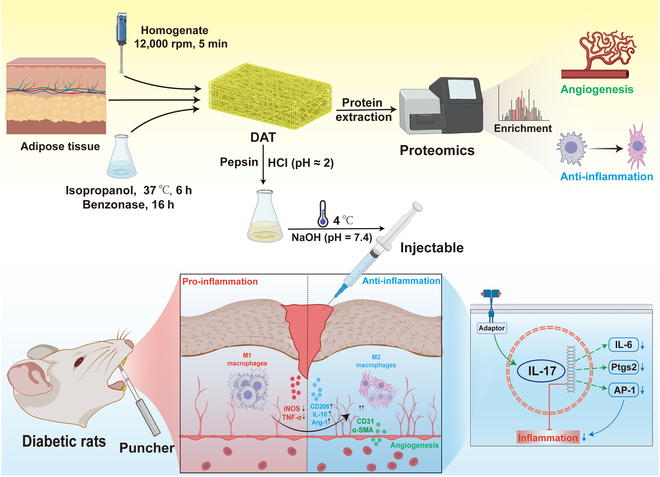
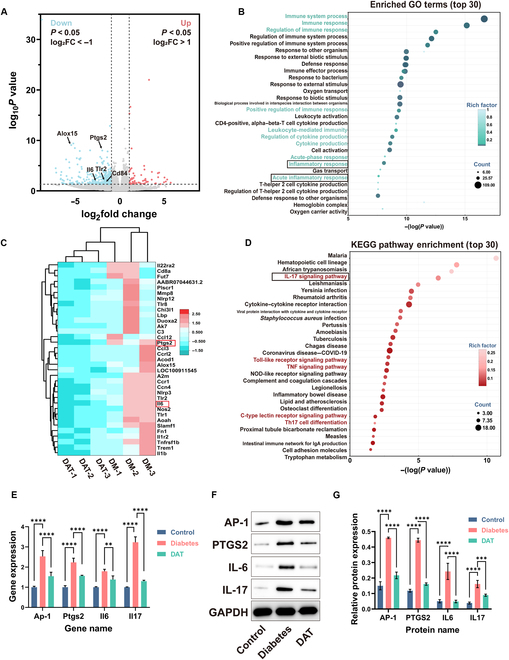
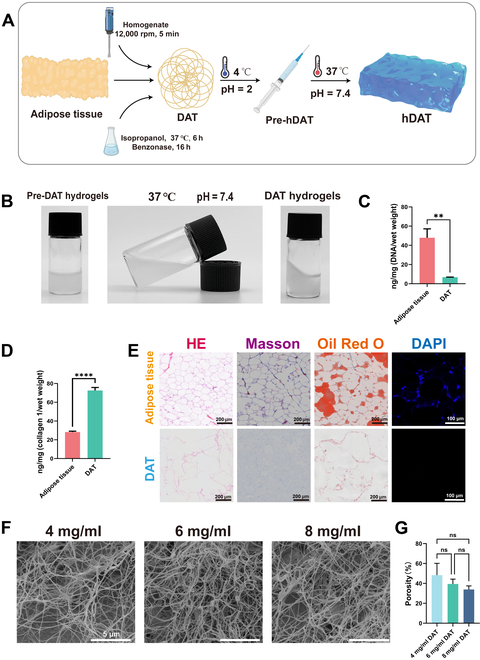
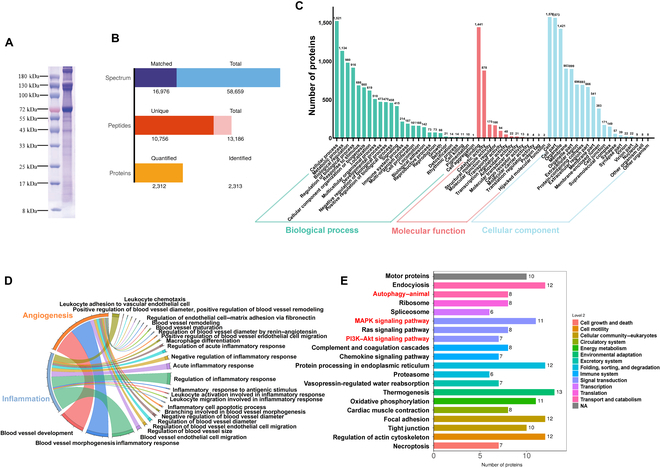
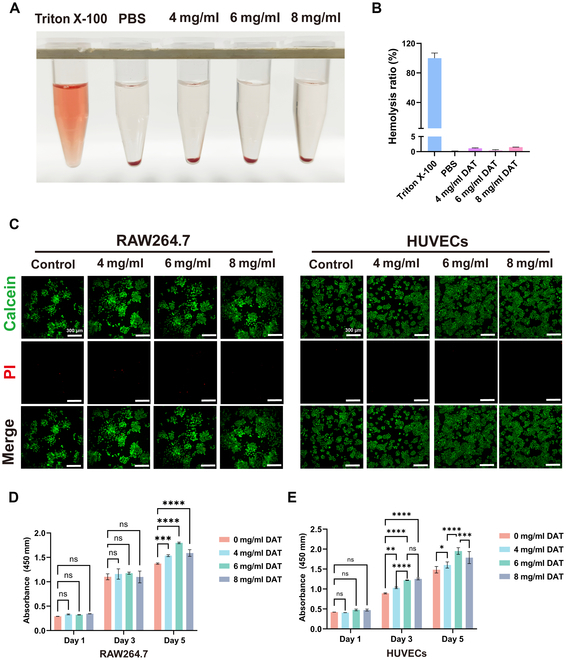
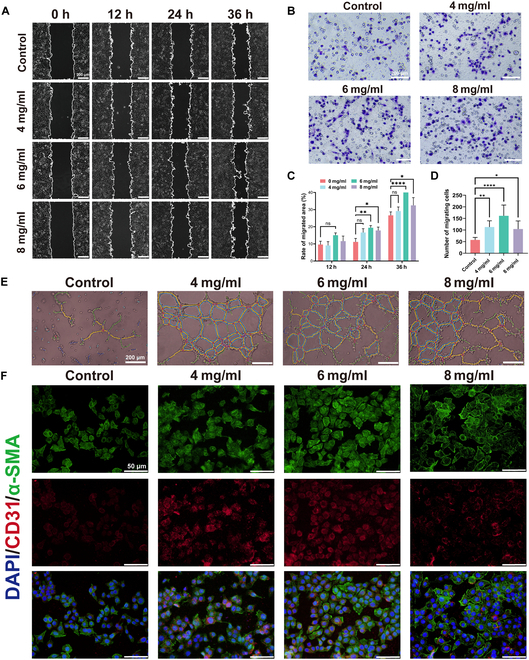
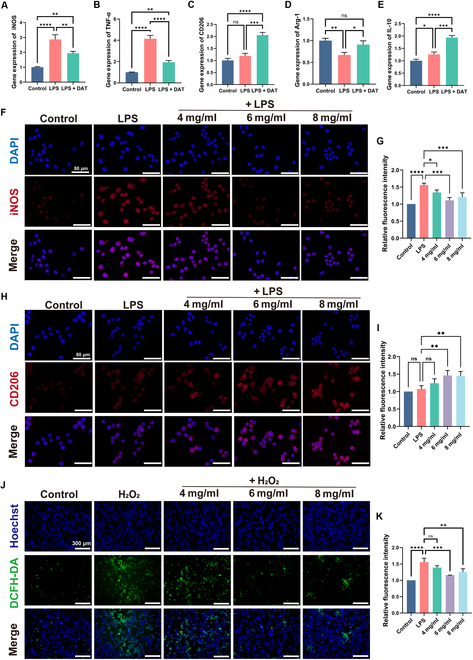
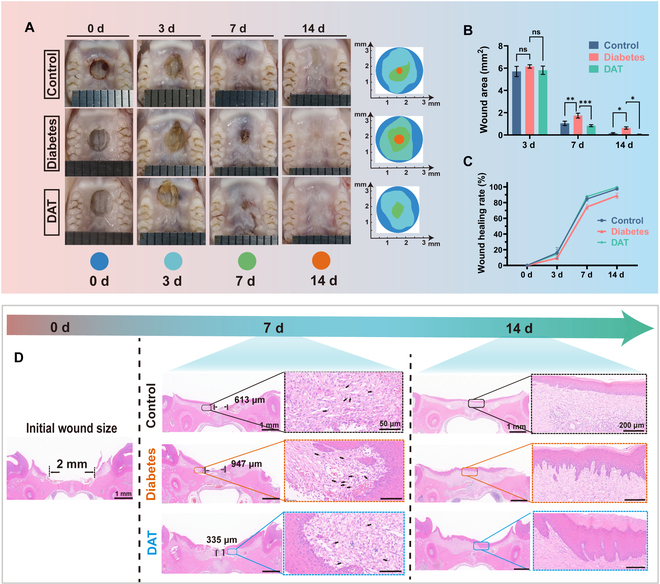
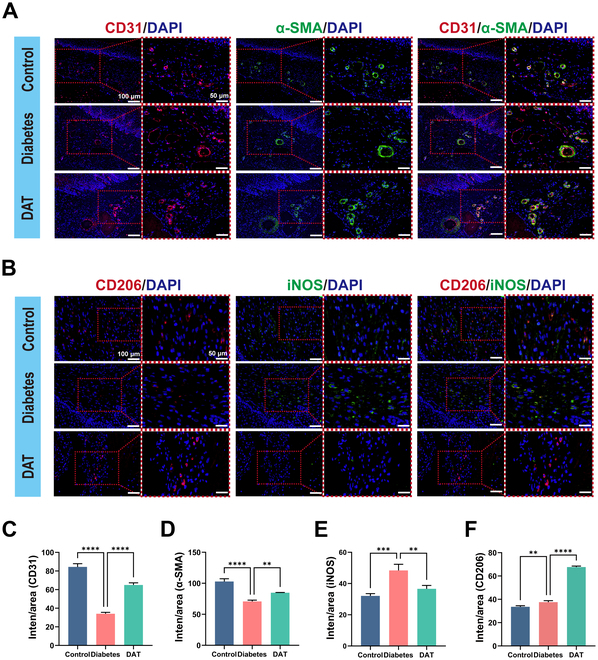
Oral wounds in diabetes mellitus (DM) often delay healing due to reduced angiogenesis and increased inflammatory response in the local microenvironment, even leading to graft necrosis and implant failure. Therefore, developing an effective program to promote healing is of great clinical value. Much of the current research is focused on promoting wound healing through surface adhesive materials that exert a pro-angiogenic, anti-inflammatory effect. However, the application of surface bonding materials in the oral cavity is very limited due to the humid and friction-prone environment. Decellularized extracellular adipose tissue (DAT) is an easily accessible and biocompatible material derived from adipose tissue. To further explore the potential of DAT, we used multi-omics to analyze its composition and possible mechanisms. Proteomic studies revealed that DAT contains anti-inflammatory, pro-angiogenic proteins that promote DM tissue regeneration. To adapt to the moist and chewing friction environment of the mouth, we modified DAT into a temperature-sensitive hydrogel material that can be injected intramucosally. DAT hydrogel has been verified to promote angiogenesis and exert anti-inflammatory effects through macrophage phenotypic transformation. Meanwhile, transcriptome analysis suggested that the inhibitory effect of DAT on the interleukin 17 signaling pathway might be a key factor in promoting DM oral wound healing. In conclusion, after multi-omic analysis, DAT hydrogel can exert good pro-angiogenic and anti-inflammatory effects through the interleukin 17 signaling pathway and can be adapted to the specific environment of the oral cavity. This provides a potential way to promote DM oral wound healing in a clinical setting.
糖尿病(DM)患者的口腔伤口由于局部微环境中血管生成减少和炎症反应增加,常常延迟愈合,甚至导致移植组织坏死和植入失败。因此,制定有效的促进愈合方案具有重要的临床价值。目前的许多研究都集中在通过具有促血管生成、抗炎作用的表面粘附材料来促进伤口愈合。然而,由于口腔环境潮湿且易受摩擦,表面粘结材料在口腔中的应用非常有限。脱细胞细胞外脂肪组织(DAT)是一种易于获取且具有生物相容性的脂肪组织衍生材料。为了进一步探索DAT的潜力,我们使用多组学技术分析其组成和可能的机制。蛋白质组学研究表明,DAT含有促进DM组织再生的抗炎、促血管生成蛋白。为了适应口腔的潮湿和咀嚼摩擦环境,我们将DAT改性为一种可经黏膜注射的温度敏感水凝胶材料。DAT水凝胶已被证实可通过巨噬细胞表型转化促进血管生成并发挥抗炎作用。同时,转录组分析表明,DAT对白细胞介素17信号通路的抑制作用可能是促进DM口腔伤口愈合的关键因素。总之,经过多组学分析,DAT水凝胶可通过白细胞介素17信号通路发挥良好的促血管生成和抗炎作用,并可适应口腔的特殊环境。这为临床环境中促进DM口腔伤口愈合提供了一种潜在途径。