Anzilotti Serenella, Franco Cristina, Valsecchi Valeria, Cuomo Ornella, Lombardi Giovanna, Di Muraglia Noemi, De Iesu Nunzia, Laudati Giusy, Annunziato Lucio, Canzoniero Lorella Maria Teresa, Pignataro Giuseppe
Department of Human Sciences and Quality of Life Promotion, San Raffaele University, 00166 Rome, Italy; Department of Science and Technology, University of Sannio, Benevento, Italy.
Department of Science and Technology, University of Sannio, Benevento, Italy.
Neurotherapeutics. 2025 Apr;22(3):e00571. doi: 10.1016/j.neurot.2025.e00571. Epub 2025 Mar 19.
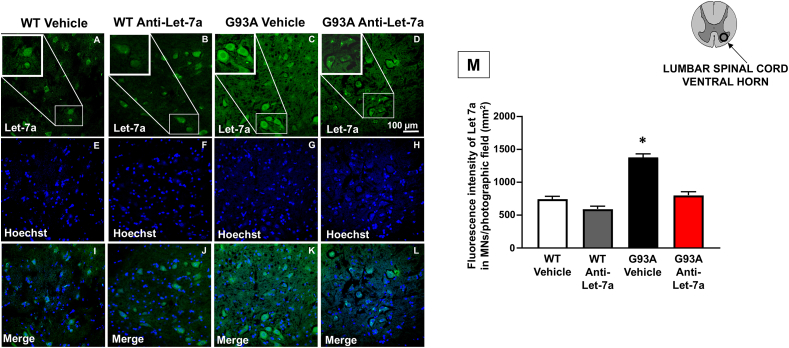
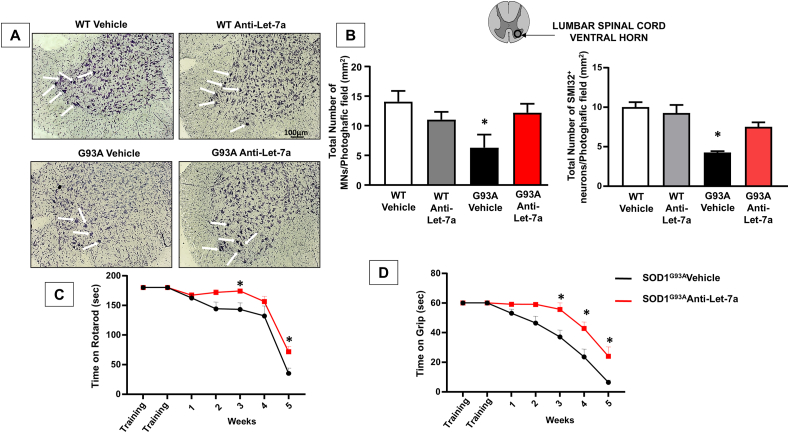
The imbalance in cellular ionic homeostasis represents a hallmark of several neurodegenerative diseases, including Amyotrophic Lateral Sclerosis (ALS). Zinc Transporter 1 (ZnT1), the first described member of the ZnT family, stands out as the sole member of the SLC30 family responsible for exporting cytosolic zinc to the extracellular space. While ZnT1 is expressed across all tissues and cell types studied, it exhibits the highest prominence within the central nervous system. In ALS SOD1 mice, a reduction in ZnT1 expression consistent with disease progression has been observed, prompting our investigation into its role in ALS pathophysiology. Remarkably, through the use of a sequence complementary to the microRNA let-7a (anti-Let-7a) able to modulate ZnT1 expression, we demonstrated in ALS mice its capability to: (1) prevent the reduction in ZnT1 levels in the spinal cord; (2) preserve motor neuron survival in the ventral spinal horn; (3) decrease astroglial and microglial activation while sparing resident microglial cells in the spinal cord; and (4) improve the lifespan and alleviate motor symptoms.
细胞离子稳态失衡是包括肌萎缩侧索硬化症(ALS)在内的几种神经退行性疾病的一个标志。锌转运体1(ZnT1)是锌转运体家族中首个被描述的成员,是溶质载体家族30(SLC30)中负责将胞质锌输出到细胞外空间的唯一成员。虽然在所有研究的组织和细胞类型中都有ZnT1的表达,但它在中枢神经系统中表现最为突出。在ALS SOD1小鼠中,观察到ZnT1表达随疾病进展而降低,这促使我们研究其在ALS病理生理学中的作用。值得注意的是,通过使用与微小RNA let-7a互补的序列(抗Let-7a)来调节ZnT1的表达,我们在ALS小鼠中证明了它能够:(1)防止脊髓中ZnT1水平的降低;(2)维持腹侧脊髓角运动神经元的存活;(3)减少星形胶质细胞和小胶质细胞的激活,同时使脊髓中的驻留小胶质细胞不受影响;以及(4)延长寿命并减轻运动症状。