
添加二氧化锆(ZrO)和磁铁矿(FeO)对用于金属植入涂层的生物玻璃的结构、电学和生物学性能的影响。
Influence of zirconium dioxide (ZrO) and magnetite (FeO) additions on the structural, electrical, and biological properties of Bioglass for metal implant coatings.
作者信息
Hammami Imen, Fernandes Graça Manuel Pedro, Gavinho Sílvia Rodrigues, Regadas Joana Soares, Jakka Suresh Kumar, Pádua Ana Sofia, Silva Jorge Carvalho, Sá-Nogueira Isabel, Borges João Paulo
机构信息
I3N and Physics Department, Aveiro University, Aveiro, Portugal.
I3N-CENIMAT and Materials Science Department, NOVA School of Science and Technology, Campus de Caparica, Caparica, Portugal.
出版信息
Front Bioeng Biotechnol. 2025 Mar 6;13:1537856. doi: 10.3389/fbioe.2025.1537856. eCollection 2025.
BACKGROUND
The growing need for durable implants, driven by aging populations and increased trauma cases, highlights challenges such as limited osseointegration and biofilm formation. 45S5 Bioglass has shown promise due to its bioactivity, antimicrobial properties, and ability to enhance osseointegration through electrical polarization. This study investigates the effects of incorporating different concentrations of ZrO and FeO into 45S5 Bioglass to enhance its electrical and biological properties.
METHODS
Raman analysis was used to evaluate how these oxides influenced the amount of non-bridging oxygens (NBOs) and glass network connectivity. Electrical characterization was performed using impedance spectroscopy to measure conductivity and ion mobility. Antibacterial activity was assessed using the agar diffusion method, and bioactivity was evaluated through simulated body fluid (SBF) immersion tests.
RESULTS
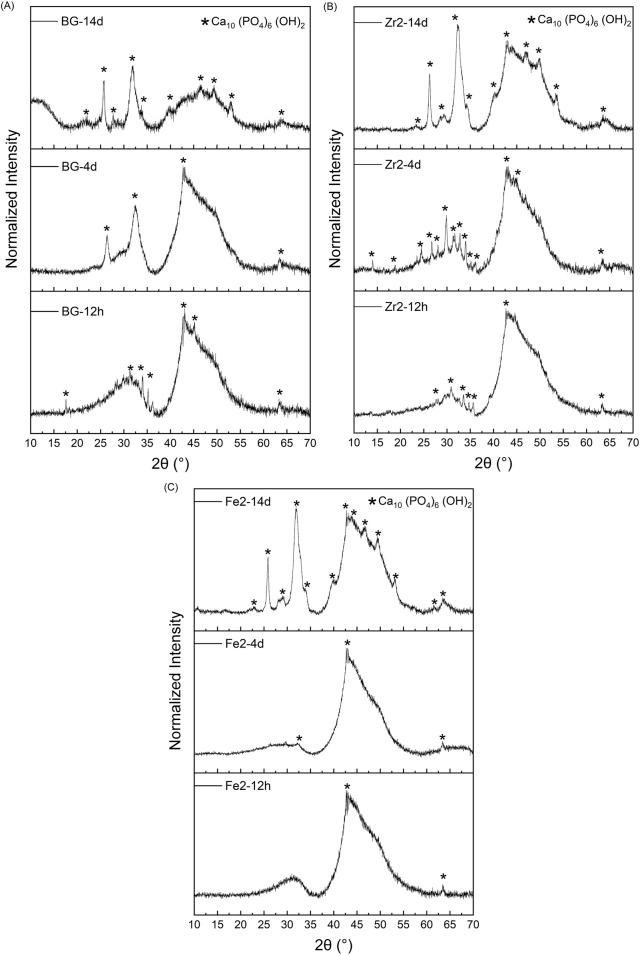
The results revealed that bioglasses containing ZrO exhibited higher NBO content compared to FeO, leading to improved electrical and biological properties. ZrO, particularly at 2 mol%, significantly enhanced conductivity, antibacterial activity, and bioactivity. In contrast, FeO reduced both antibacterial activity and bioactivity.
CONCLUSION
The findings demonstrate that ZrO addition improves the electrical and biological performance of 45S5 Bioglass, making it a promising candidate for durable implants. FeO, however, showed limited benefits.
背景
随着人口老龄化和创伤病例的增加,对耐用植入物的需求不断增长,这凸显了诸如骨整合有限和生物膜形成等挑战。45S5生物玻璃因其生物活性、抗菌特性以及通过电极化增强骨整合的能力而展现出应用前景。本研究调查了将不同浓度的ZrO和FeO掺入45S5生物玻璃中对其电学和生物学性能的影响。
方法
使用拉曼分析来评估这些氧化物如何影响非桥氧(NBO)的数量和玻璃网络连通性。使用阻抗谱进行电学表征以测量电导率和离子迁移率。使用琼脂扩散法评估抗菌活性,并通过模拟体液(SBF)浸泡试验评估生物活性。
结果
结果显示,与FeO相比,含ZrO的生物玻璃具有更高的NBO含量,从而改善了电学和生物学性能。ZrO,特别是在2mol%时,显著提高了电导率、抗菌活性和生物活性。相比之下,FeO降低了抗菌活性和生物活性。
结论
研究结果表明,添加ZrO可改善45S5生物玻璃的电学和生物学性能,使其成为耐用植入物的有前景的候选材料。然而,FeO的益处有限。


 Zotero 插件