Guo Mingliang, Zheng Chun, Shi Chao, Lu Xiaozhuan, She Zeyuan, Jiang Shuyu, Tian Dagang, Qin Yuan
State Key Laboratory for Conservation and Utilization of Subtropical Agro-Bioresources, Guangxi Key Lab of Sugarcane Biology, College of Agriculture, Guangxi University, Nanning, 530004, China.
Biotechnology Research Institute, Fujian Provincial Key Laboratory of Genetic Engineering for Agriculture, Fujian Academy of Agricultural Sciences, Fuzhou, 350003, China.
Rice (N Y). 2025 Mar 22;18(1):20. doi: 10.1186/s12284-025-00774-8.
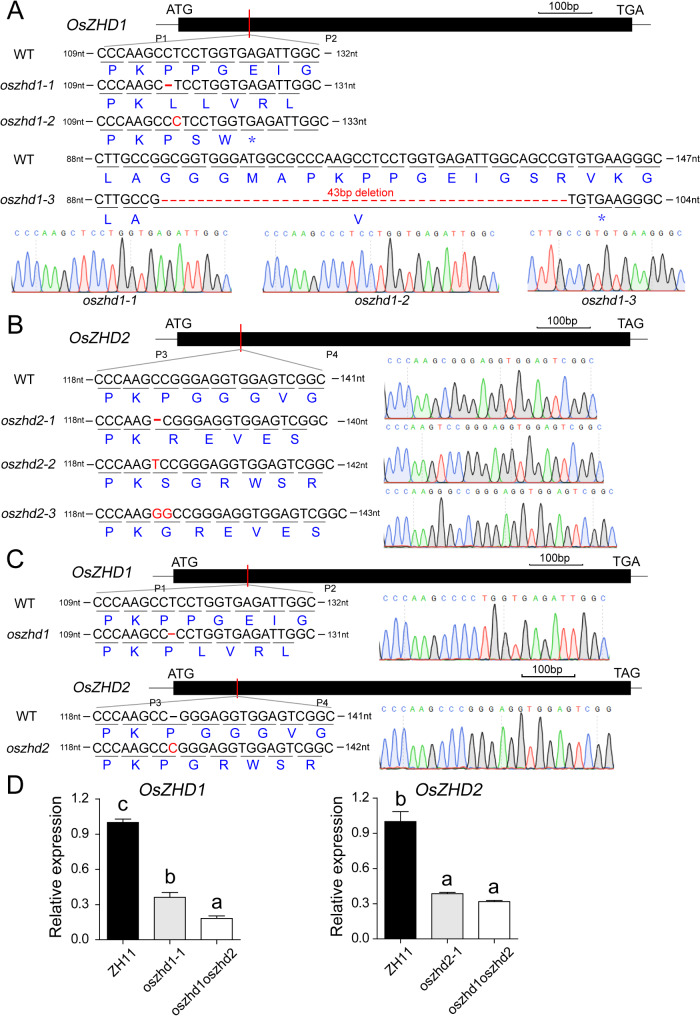
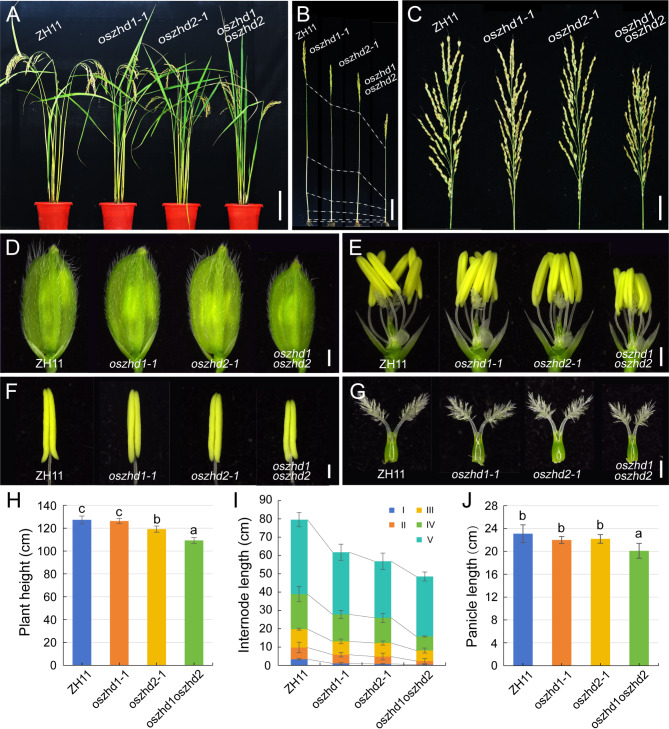
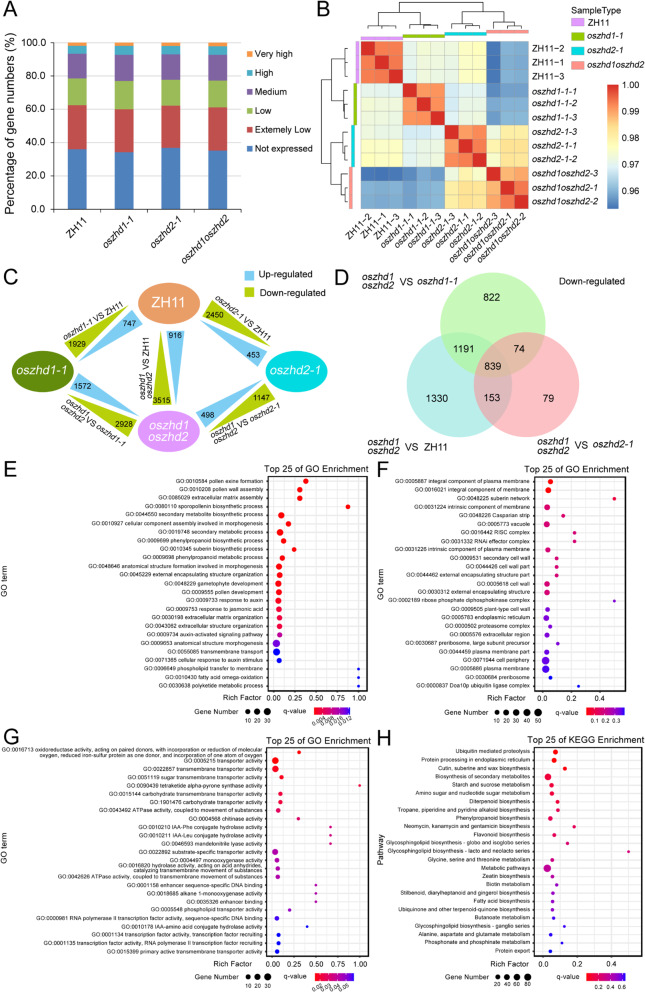
Grain size is vital determinant for grain yield and quality, which specified by its three-dimensional structure of seeds (length, width and thickness). The ZINC FINGER-HOMEODOMAIN (ZHD) proteins play critical roles in plant growth and development. However, the information regarding the function in reproductive development of ZHD proteins is scarce. Here, we deeply characterized the phenotype of oszhd1, oszhd2, and oszhd1oszhd2. The single mutants of OsZHD1/2 were similar with wild type. Nevertheless, the double mutant displayed dwarfism and smaller reproductive organs, and shorter, narrower, and thinner grain size. oszhd1oszhd2 revealed a significant decrease in total cell length and number, and single cell width in outer parenchyma; reducing the average width of longitudinal epidermal cells, but the length were increased in outer and inner glumes of oszhd1oszhd2 compared with wild-type, oszhd1-1, oszhd2-1, respectively. OsZHD1 and OsZHD2 encoded the nucleus protein and were distributed predominately in stem and the developing spikelets, asserting their roles in grain size. Meanwhile, yeast two-hybrid, bimolecular fluorescence complementation, and Co-immunoprecipitation assay clarified that OsZHD1 could directly interacted with OsZHD2. The differential expression analysis showed that 839 DEGs, which were down-regulated in oszhd1oszhd2 than wild type and single mutants, were mainly enriched in secondary metabolite biosynthetic, integral component of membrane, and transporter activity pathway. Moreover, it is reliable that the altered expression of cell cycle and expansion-related and grain size-related genes were observed in RNA-seq data, highly consistent with the qRT-PCR results. Altogether, our results suggest that OsZHD1/2 are functional redundancy and involved in regulating grain size by influencing cell proliferation in rice.
籽粒大小是决定粮食产量和品质的关键因素,它由种子的三维结构(长度、宽度和厚度)所决定。锌指-同源结构域(ZHD)蛋白在植物生长发育中起关键作用。然而,关于ZHD蛋白在生殖发育中的功能信息却很少。在此,我们深入研究了oszhd1、oszhd2和oszhd1oszhd2的表型。OsZHD1/2的单突变体与野生型相似。然而,双突变体表现出矮化和较小的生殖器官,以及更短、更窄和更薄的籽粒大小。oszhd1oszhd2的外皮层总细胞长度和数量以及单细胞宽度显著减少;与野生型、oszhd1-1、oszhd2-1相比,oszhd1oszhd2的外稃和内稃纵向表皮细胞的平均宽度减小,但长度增加。OsZHD1和OsZHD2编码核蛋白,主要分布在茎和发育中的小穗中,表明它们在籽粒大小方面发挥作用。同时,酵母双杂交、双分子荧光互补和免疫共沉淀分析表明,OsZHD1可以直接与OsZHD2相互作用。差异表达分析表明,与野生型和单突变体相比,oszhd1oszhd2中839个下调的差异表达基因主要富集在次生代谢物生物合成、膜的整体成分和转运活性途径中。此外,在RNA-seq数据中观察到细胞周期和扩展相关以及籽粒大小相关基因的表达改变是可靠的,与qRT-PCR结果高度一致。总之,我们的结果表明,OsZHD1/2具有功能冗余性,并通过影响水稻中的细胞增殖参与调节籽粒大小。