Deng Linyan, Wang Tingting, Zhang Qiaofeng, Shu Shaofang, Chen Xiangdong
Department of Anesthesiology, Union Hospital, Tongji Medical College, Huazhong University of Science and Technology, Wuhan, China.
Institute of Anesthesia and Critical Care Medicine, Union Hospital, Tongji Medical College, Huazhong University of Science and Technology, Wuhan, China.
Front Pharmacol. 2025 Mar 10;16:1536663. doi: 10.3389/fphar.2025.1536663. eCollection 2025.
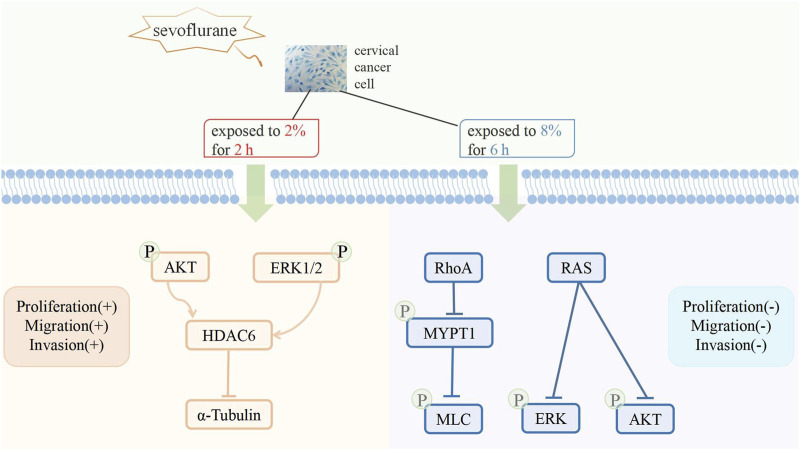
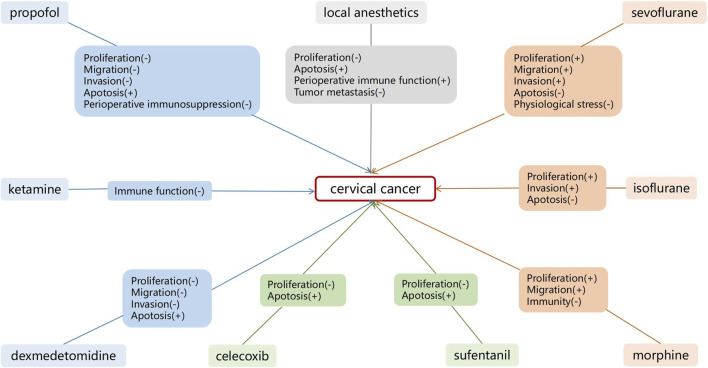
Cervical cancer is a common malignancy among women, and tumor excision is the most common surgical intervention. Anesthetics used during surgery include general intravenous, volatile, local anesthetics, sedative and analgesic. Studies have shown that the selection of perioperative surgical methods and anesthetics may influence postoperative metastasis and cancer recurrence through their effects on the immune response and tumor cells. Therefore, the selection of perioperative anesthetic has a significant impact on patients undergoing surgery for cervical cancer. This study summarizes the effects and related mechanisms of common anesthetics on the prognosis of patients undergoing surgery for cervical cancer to provide a basis for developing more optimal anesthesia protocols.
宫颈癌是女性常见的恶性肿瘤,肿瘤切除是最常见的外科手术干预方式。手术中使用的麻醉剂包括全身静脉麻醉药、挥发性麻醉药、局部麻醉药、镇静药和镇痛药。研究表明,围手术期手术方法和麻醉剂的选择可能通过对免疫反应和肿瘤细胞的影响来影响术后转移和癌症复发。因此,围手术期麻醉剂的选择对接受宫颈癌手术的患者有重大影响。本研究总结了常用麻醉剂对宫颈癌手术患者预后的影响及相关机制,为制定更优化的麻醉方案提供依据。