Khoddam Homeira, Ebadi Abbas, Modanloo Mahnaz, Kalantari Soheyla
Nursing Research Center, Golestan University of Medical Sciences, Gorgan, Iran.
Nursing Care Research Center, Clinical Sciences Institute, Baqiyatallah University of Medical Sciences, Tehran, Iran.
Front Psychol. 2025 Mar 11;16:1507647. doi: 10.3389/fpsyg.2025.1507647. eCollection 2025.
It is clear that nurses' conscience plays an important role in guiding professional decision-making and ensuring quality patient care. Additionally, it positively impacts nursing performance and promotes ethical care in clinical settings.
This study aimed to develop and validate the conscience-based nursing care scale (CNS) based on the clinical nurse care setting in Iran.
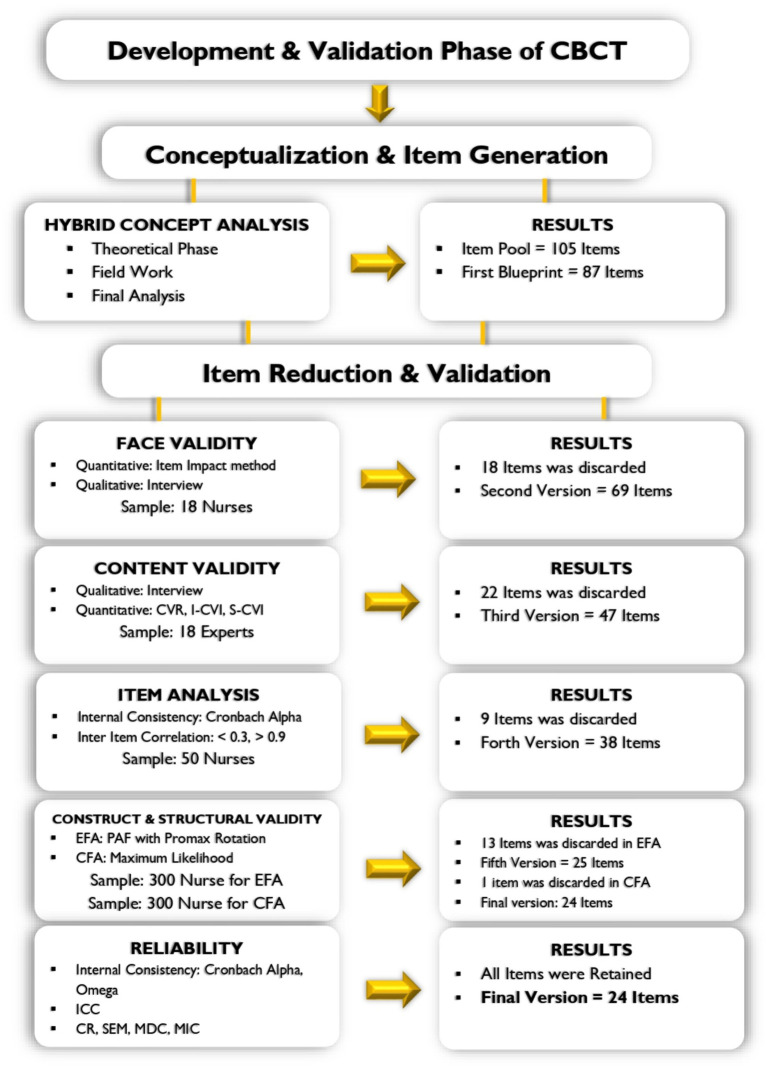
This study is a sequential exploratory mixed-methods study. The concept of "conscience-based care" was clarified using Schwartz-Barcott and Kim's hybrid concept analysis method, which included a comprehensive literature review and qualitative fieldwork involving in-depth interviews with five nurses. Then, the psychometric properties of a newly developed scale, based on the themes identified in the first phase, were evaluated. This included item generation, face and content validity assessments, a pilot study, and both exploratory and confirmatory factor analyses.
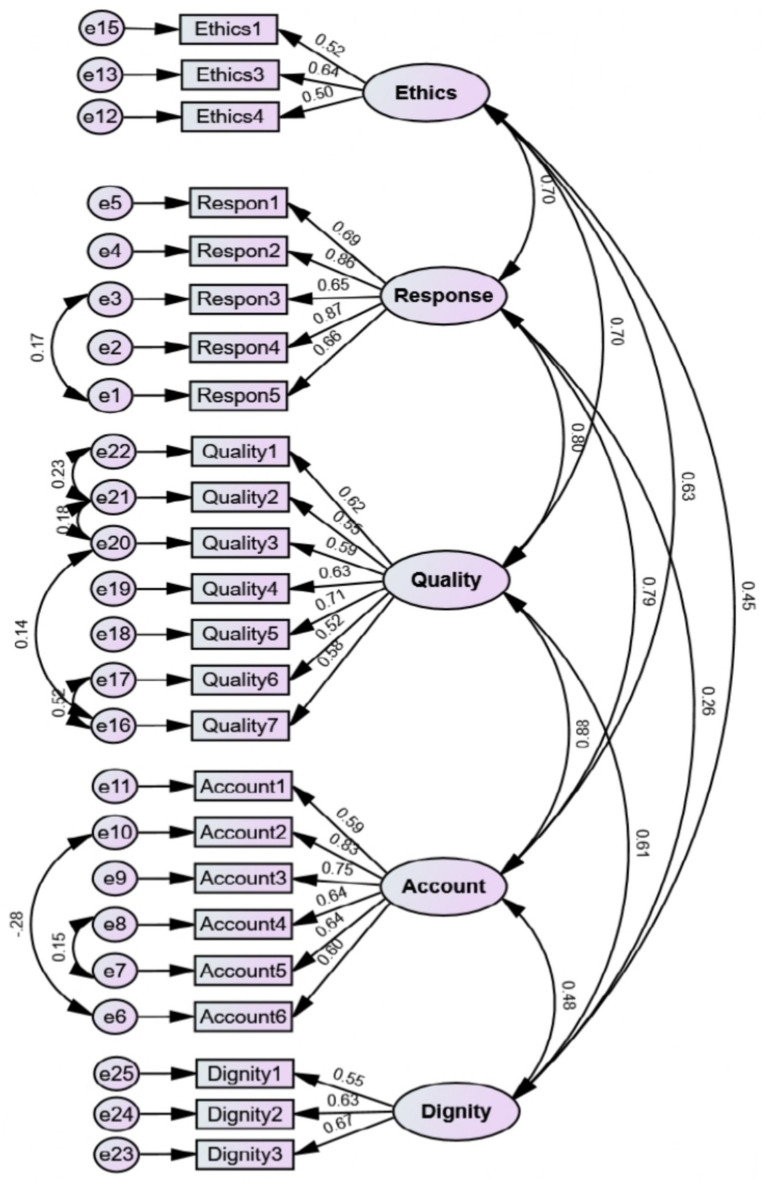
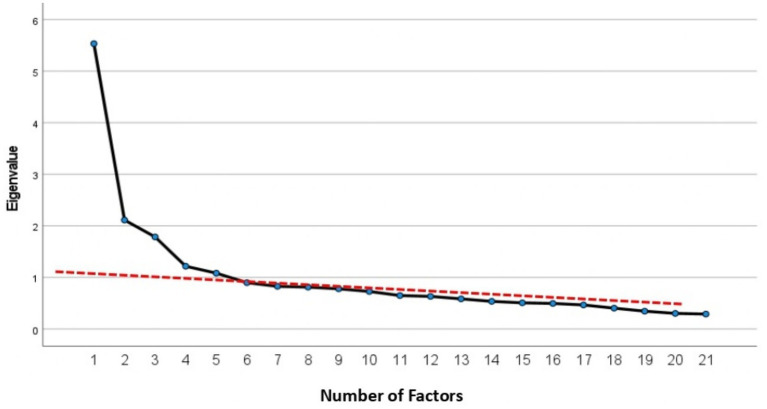
The developed scale has 24 items spread across five factors, namely accountability in conscientious care, responsibilities in care, attention to the quality of care and teamwork, importance to the reputation and dignity of the profession, and ethics in care. For each item, five options (always, most of the time, sometimes, rarely, and never) were considered, with the numerical value of each being always = 5, most of the time = 4, sometimes = 3, rarely = 2, and never = 1 determined based on the meaning of the item. Exploratory and confirmatory factor analyses confirmed its structure, explaining 43.79% of the variance in conscience-based care. The scale demonstrated high reliability (ICC = 0.959) and responsiveness to change, with minimal ceiling and floor effects.
This study validated the CNS in an Iranian clinical setting, demonstrating its reliability and validity. Nursing managers and policymakers can confidently use this scale to assess the quality of nursing care and encourage nurses to provide conscience-based care.
显然,护士的良知在指导专业决策和确保优质患者护理方面发挥着重要作用。此外,它对护理绩效产生积极影响,并在临床环境中促进道德护理。
本研究旨在基于伊朗临床护士护理环境开发并验证基于良知的护理量表(CNS)。
本研究是一项序贯探索性混合方法研究。使用施瓦茨 - 巴科特和金的混合概念分析法阐明“基于良知的护理”概念,该方法包括全面的文献综述和对五名护士进行深入访谈的定性实地调查。然后,根据第一阶段确定的主题,对新开发量表的心理测量特性进行评估。这包括项目生成、表面效度和内容效度评估、预试验以及探索性和验证性因素分析。
所开发的量表有24个项目,分布在五个因素中,即尽责护理中的问责制、护理责任、对护理质量和团队合作的关注、对职业声誉和尊严的重视以及护理中的伦理。对于每个项目,考虑了五个选项(总是、大部分时间、有时、很少、从不),根据项目含义确定每个选项的数值分别为总是 = 5、大部分时间 = 4、有时 = 3、很少 = 2、从不 = 1。探索性和验证性因素分析证实了其结构,解释了基于良知护理中43.79%的方差。该量表显示出高可靠性(ICC = 0.959)和对变化的反应性,天花板效应和地板效应最小。
本研究在伊朗临床环境中验证了CNS,证明了其可靠性和有效性。护理管理者和政策制定者可以放心地使用该量表来评估护理质量,并鼓励护士提供基于良知的护理。