Vašíček Jaromír, Baláži Andrej, Tirpáková Mária, Tomka Marián, Chrenek Peter
National Agricultural and Food Center, Research Institute for Animal Production Nitra, Hlohovecká 2, 951 41 Lužianky, Slovakia.
Faculty of Biotechnology and Food Science, Slovak University of Agriculture in Nitra, Tr. A. Hlinku 2, 949 76 Nitra, Slovakia.
J Dev Biol. 2025 Feb 21;13(1):6. doi: 10.3390/jdb13010006.
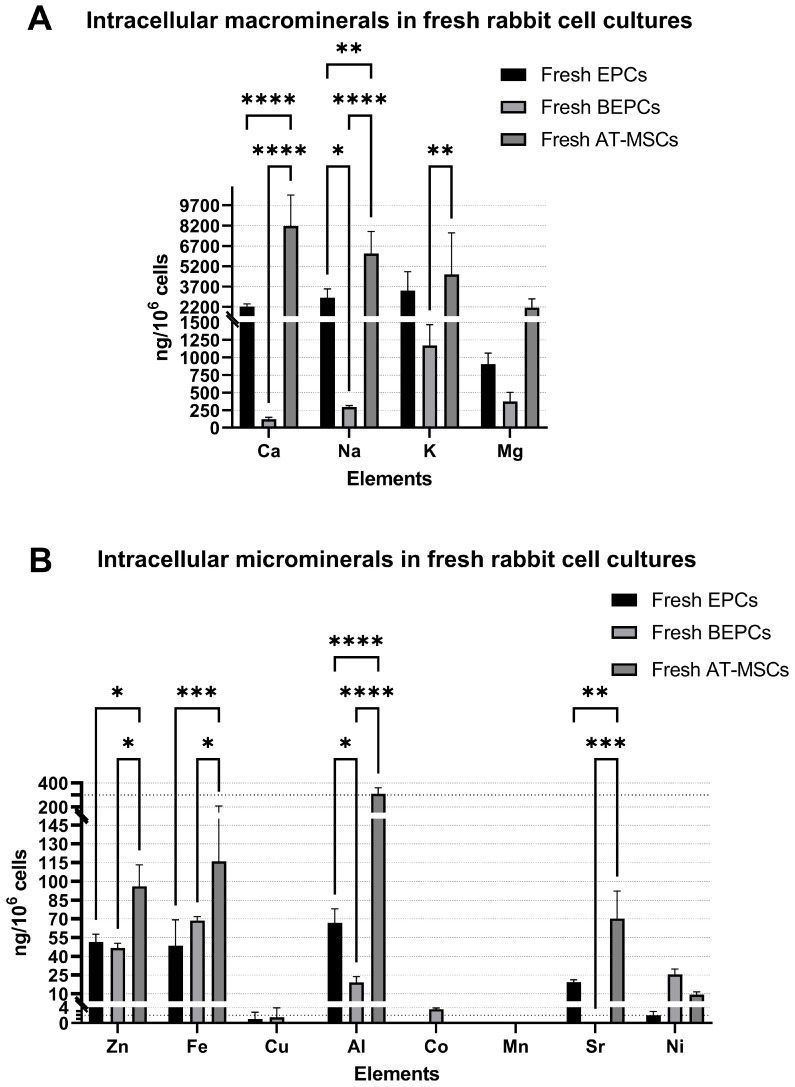
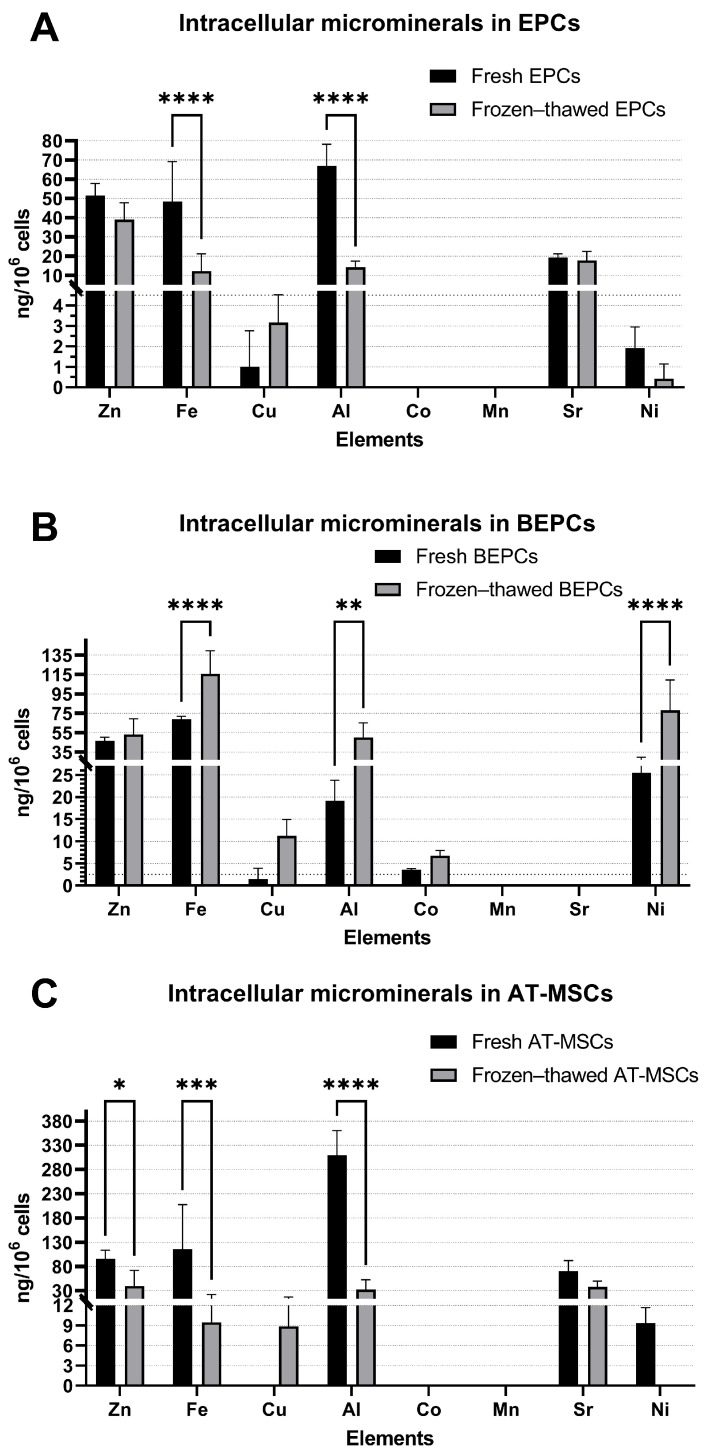
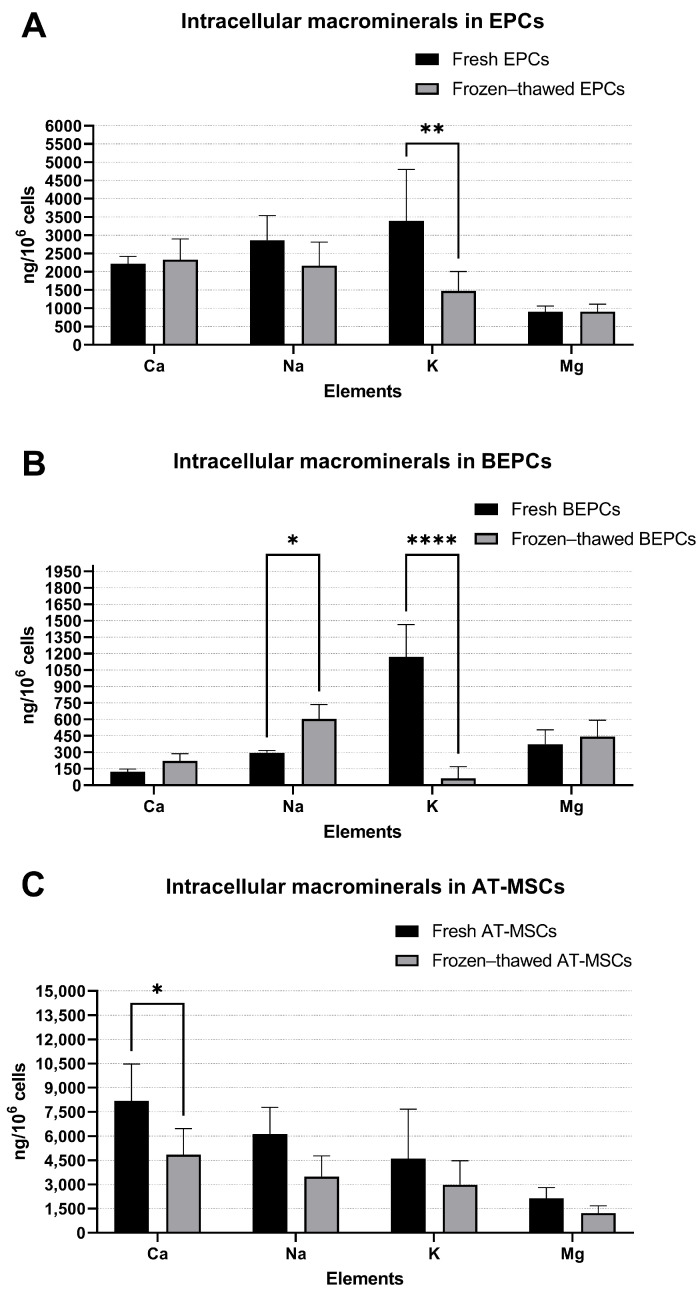
Cryopreservation is a widely used method for the long-term preservation of reproductive or somatic cells. It is known that this storage method may negatively affect cell viability, proliferation, differentiation, etc. However, there is a lack of information about whether cryostorage can alter the content of intracellular minerals. Therefore, we focused this study on the analysis of the mineral composition of living cells before and after long-term cold storage. Briefly, three different primary cell lines were established from rabbits as follows: endothelial progenitor cells from peripheral blood (EPCs), endothelial progenitor cells from bone marrow (BEPCs), and mesenchymal stem cells from adipose tissue (AT-MSCs), which were cultured until passage 3 prior to cryopreservation in liquid nitrogen. Samples from freshly cultured and frozen-thawed cells were mineralized and analyzed using inductively coupled plasma-optical emission spectroscopy (ICP-OES) for the content of minerals (macro: Ca, Na, K, and Mg, and micro: Zn, Fe, Cu, Al, Co, Mn, Sr, and Ni). After cryopreservation, we found significantly decreased content of K in frozen-thawed EPCs ( < 0.01) and BEPCs ( < 0.0001) and Ca in AT-MSCs ( < 0.05), while Na was increased in frozen-thawed BEPCs ( < 0.05). Concentrations of Fe and Al were reduced significantly in frozen-thawed EPCs (both < 0.0001) and AT-MSCs ( < 0.001 and < 0.0001, respectively). On the contrary, Fe and Al were elevated in frozen-thawed BEPCs ( < 0.0001 and < 0.01, respectively) together with Ni ( < 0.0001). In addition, decreased Zn ( < 0.05) was observed in cryopreserved AT-MSCs. In conclusion, the ICP-OES technique might be used to analyze the basic elemental composition of animal cells in fresh or frozen-thawed conditions. Nevertheless, additional studies are needed to reveal the possible impact of cryopreservation on cell fate by changing the content of intracellular minerals.
冷冻保存是一种广泛用于长期保存生殖细胞或体细胞的方法。已知这种储存方法可能会对细胞活力、增殖、分化等产生负面影响。然而,关于冷冻保存是否会改变细胞内矿物质含量的信息却很缺乏。因此,我们将这项研究重点放在分析长期冷藏前后活细胞的矿物质组成上。简要来说,从兔子身上建立了三种不同的原代细胞系,具体如下:外周血来源的内皮祖细胞(EPCs)、骨髓来源的内皮祖细胞(BEPCs)以及脂肪组织来源的间充质干细胞(AT-MSCs),在液氮中冷冻保存前,将它们培养至第3代。对新鲜培养细胞和冻融细胞的样本进行矿化处理,并使用电感耦合等离子体发射光谱法(ICP-OES)分析矿物质含量(常量元素:钙、钠、钾和镁,微量元素:锌、铁、铜、铝、钴、锰、锶和镍)。冷冻保存后,我们发现冻融后的EPCs中钾含量显著降低(<0.01),BEPCs中钾含量显著降低(<0.0001),AT-MSCs中钙含量降低(<0.05),而冻融后的BEPCs中钠含量升高(<0.05)。冻融后的EPCs(均<0.0001)和AT-MSCs(分别<0.001和<0.0001)中,铁和铝的浓度显著降低。相反,冻融后的BEPCs中铁和铝含量升高(分别<0.0001和<0.01),镍含量也升高(<0.0001)。此外,在冷冻保存的AT-MSCs中观察到锌含量降低(<0.05)。总之,ICP-OES技术可用于分析新鲜或冻融状态下动物细胞的基本元素组成。然而,还需要进一步的研究来揭示冷冻保存通过改变细胞内矿物质含量对细胞命运可能产生的影响。