Bai Fengwei, Denyoh Prince M D, Urquhart Cassandra, Shrestha Sabin, Yee Donald A
School of Biological, Environmental, and Earth Sciences, The University of Southern Mississippi, Hattiesburg, MS 39406, USA.
Viruses. 2025 Mar 19;17(3):439. doi: 10.3390/v17030439.
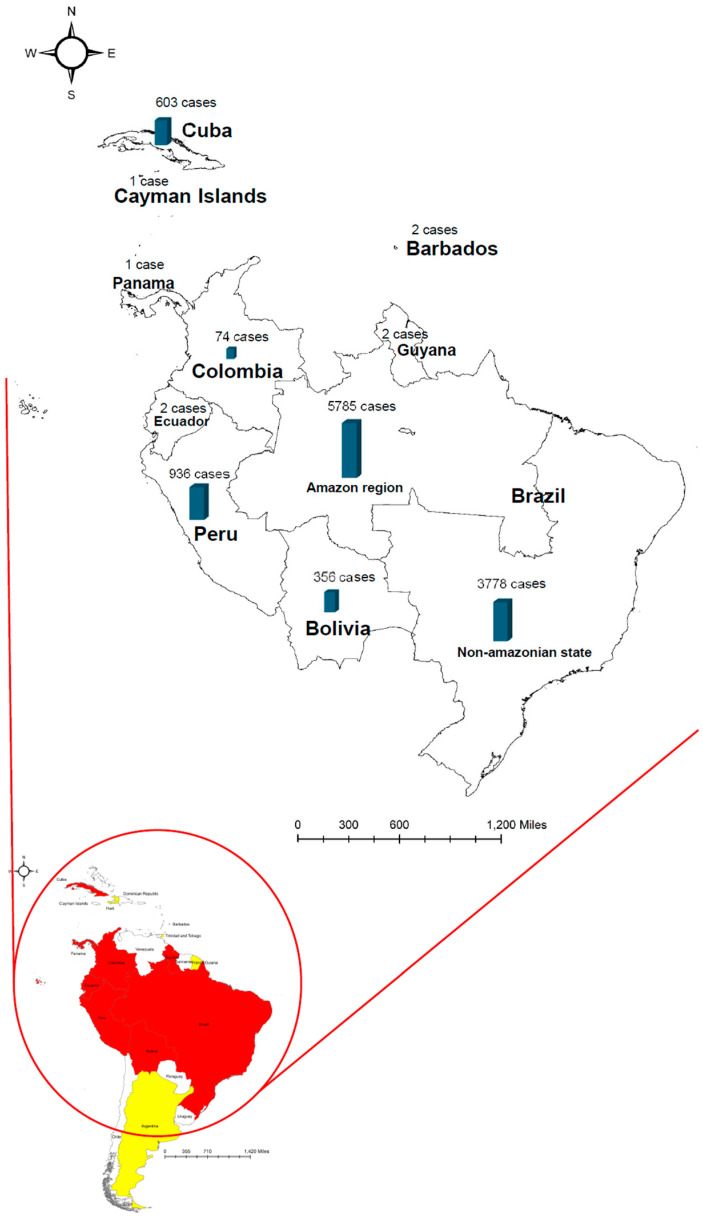
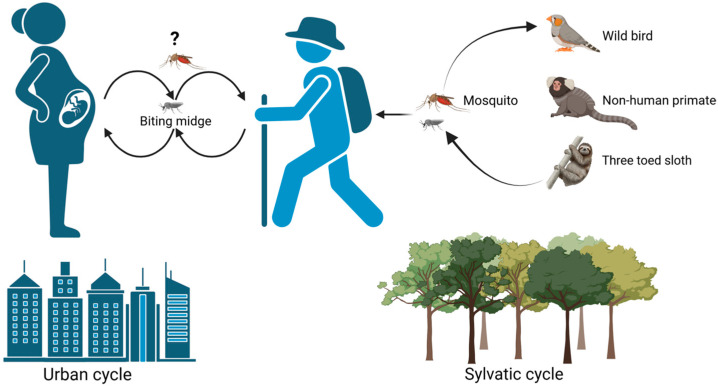
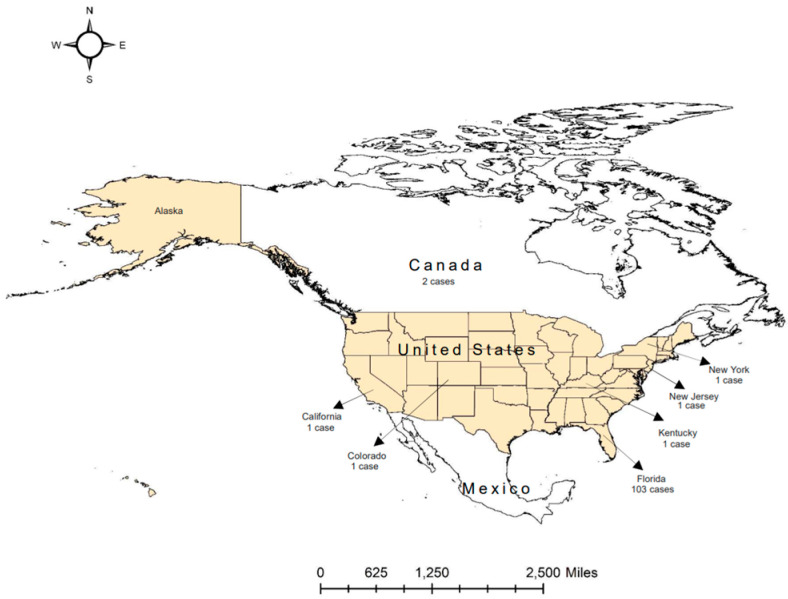
Oropouche virus (OROV) is a neglected and emerging arbovirus that infects humans and animals in South and Central America. OROV is primarily transmitted to humans through the bites of infected midges and possibly some mosquitoes. It is the causative agent of Oropouche fever, which has high morbidity but low mortality rates in humans. The disease manifests in humans as high fever, headache, myalgia, arthralgia, photophobia, and, in some cases, meningitis and encephalitis. Additionally, a recent report suggests that OROV may cause fetal death, miscarriage, and microcephaly in newborns when women are infected during pregnancy, similar to the issues caused by the Zika virus (ZIKV), another mosquito-borne disease in the same regions. OROV was first reported in the mid-20th century in the Amazon basin. Since then, over 30 epidemics and more than 500,000 infection cases have been reported. The actual case numbers may be much higher due to frequent misdiagnosis, as OROV infection presents similar clinical symptoms to other co-circulating viruses, such as dengue virus (DENV), chikungunya virus (CHIKV), ZIKV, and West Nile virus (WNV). Due to climate change, increased travel, and urbanization, OROV infections have occurred at an increasing pace and have spread to new regions, with the potential to reach North America. According to the World Health Organization (WHO), over 10,000 cases were reported in 2024, including in areas where it was not previously detected. There is an urgent need to develop vaccines, antivirals, and specific diagnostic tools for OROV diseases. However, little is known about this surging virus, and no specific treatments or vaccines are available. In this article, we review the most recent progress in understanding virology, transmission, pathogenesis, diagnosis, host-vector dynamics, and antiviral vaccine development for OROV, and provide implications for future research directions.
奥罗普切病毒(OROV)是一种被忽视的新兴虫媒病毒,在南美洲和中美洲感染人类和动物。OROV主要通过受感染蠓虫的叮咬传播给人类,也可能通过一些蚊子传播。它是奥罗普切热的病原体,该病在人类中的发病率高但死亡率低。该疾病在人类中的表现为高热、头痛、肌痛、关节痛、畏光,在某些情况下还会出现脑膜炎和脑炎。此外,最近一份报告表明,孕妇感染OROV时,可能会导致新生儿死亡、流产和小头畸形,这与同一地区另一种蚊媒疾病寨卡病毒(ZIKV)所引发的问题类似。OROV于20世纪中叶首次在亚马逊盆地被报道。从那时起,已报告了30多次疫情和超过50万例感染病例。由于频繁误诊,实际病例数可能要高得多,因为OROV感染的临床症状与其他共同传播的病毒相似,如登革病毒(DENV)、基孔肯雅病毒(CHIKV)、寨卡病毒(ZIKV)和西尼罗河病毒(WNV)。由于气候变化、旅行增加和城市化,OROV感染的发生频率不断上升,并已传播到新的地区,有可能蔓延到北美。据世界卫生组织(WHO)称,2024年报告了超过10000例病例,包括在以前未检测到的地区。迫切需要开发针对OROV疾病的疫苗、抗病毒药物和特定诊断工具。然而,人们对这种迅速传播的病毒知之甚少,目前还没有特效治疗方法或疫苗。在本文中,我们综述了在OROV病毒学、传播、发病机制、诊断、宿主-媒介动态以及抗病毒疫苗开发等方面的最新研究进展,并对未来的研究方向提出了建议。