Baek Insuck, Lim Seunghyun, Jang Jae Hee, Hong Seok Min, Prom Louis K, Kirubakaran Silvas, Cohen Stephen P, Lakshman Dilip, Kim Moon S, Meinhardt Lyndel W, Park Sunchung, Ahn Ezekiel
Environmental Microbial and Food Safety Laboratory, Agricultural Research Service, United States, Department of Agriculture, Beltsville, MD, 20705, USA.
Sustainable Perennial Crops Laboratory, Agricultural Research Service, United States, Department of Agriculture, Beltsville, MD, 20705, USA.
Sci Rep. 2025 Mar 27;15(1):10584. doi: 10.1038/s41598-025-94859-5.
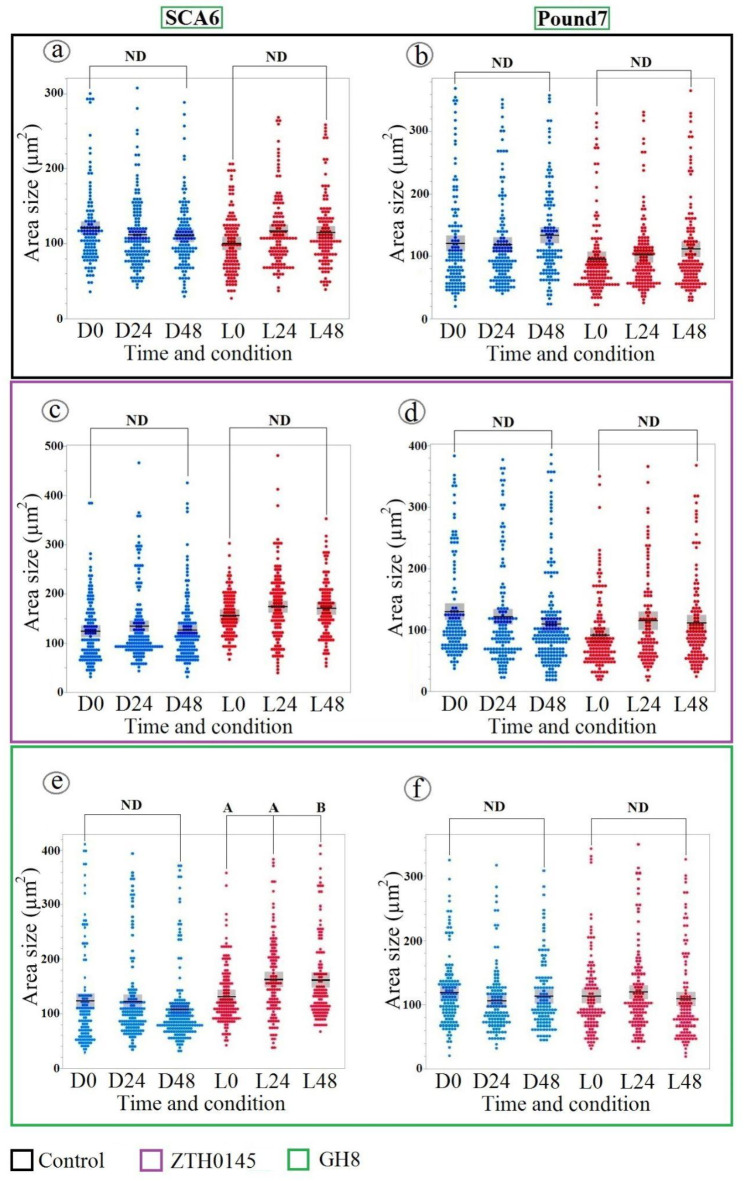
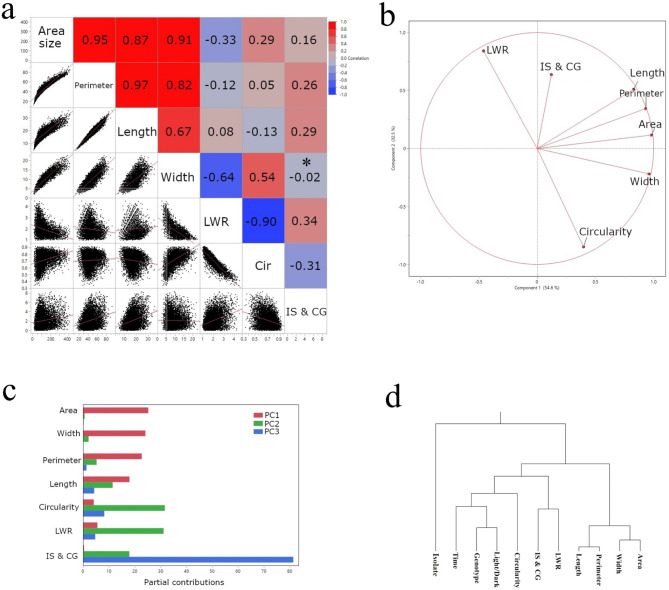
Cacao is a globally significant crop, but its production is severely threatened by diseases, particularly Black Pod Rot (BPR) caused by Phytophthora spp. Understanding plant-pathogen interactions, especially stomatal responses, is crucial for disease management. Machine learning offers a powerful, yet largely untapped, approach to analyze and interpret complex plant responses in plant biology and pathology, particularly in the context of plant-pathogen interactions. This study explores the use of machine learning to analyze and interpret complex stomatal responses in cacao leaves during pathogen interactions. We investigated the impact of the black pod rot pathogen (Phytophthora megakarya) and a non-pathogenic fungus (Rhizoctonia solani) on stomatal aperture in two cacao genotypes (SCA6 and Pound7) under varying light conditions. Image analysis revealed diverse stomatal responses, including no change, opening, and closure, that were influenced by the interplay of genotype, pathogen isolate, and light conditions. Notably, SCA6 exhibited stomatal opening in response to P. megakarya specifically under a 12-hour light/dark cycle, suggesting a light-dependent activation of pathogen virulence factors. In contrast, Pound7 displayed stomatal closure in response to both P. megakarya and R. solani, indicating the potential recognition of conserved Pathogen-Associated Molecular Patterns (PAMPs) and a broader defense response. To further analyze these interactions, we employed machine learning techniques to predict stomatal area size. Our analysis identified key morphological features, with size-related traits being the strongest predictors. Shape-related traits also played a significant role when size-related traits were excluded from the prediction. This study demonstrates the power of combining image analysis and machine learning for discerning subtle, multivariate traits in stomatal dynamics during plant-pathogen interactions, paving the way for future applications in high-throughput disease phenotyping and the development of resistant crop varieties.
可可树是一种具有全球重要意义的作物,但其产量受到疾病的严重威胁,尤其是由疫霉菌引起的黑荚果腐烂病(BPR)。了解植物与病原体的相互作用,特别是气孔反应,对于病害管理至关重要。机器学习提供了一种强大但在很大程度上尚未被充分利用的方法,可用于分析和解释植物生物学和病理学中复杂的植物反应,特别是在植物与病原体相互作用的背景下。本研究探索了使用机器学习来分析和解释可可树叶在病原体相互作用过程中复杂的气孔反应。我们研究了黑荚果腐烂病原体(巨大疫霉)和一种非致病真菌(立枯丝核菌)在不同光照条件下对两种可可基因型(SCA6和庞特7)气孔孔径的影响。图像分析揭示了多种气孔反应,包括无变化、开放和关闭,这些反应受到基因型、病原体分离株和光照条件相互作用的影响。值得注意的是,SCA6在12小时光照/黑暗周期下对巨大疫霉表现出气孔开放,这表明病原体毒力因子的激活依赖于光照。相比之下,庞特7对巨大疫霉和立枯丝核菌都表现出气孔关闭,这表明可能识别了保守的病原体相关分子模式(PAMPs)以及更广泛的防御反应。为了进一步分析这些相互作用,我们采用机器学习技术来预测气孔面积大小。我们的分析确定了关键的形态特征,其中与大小相关的特征是最强的预测因子。当从预测中排除与大小相关的特征时,与形状相关的特征也发挥了重要作用。本研究证明了将图像分析和机器学习相结合以识别植物与病原体相互作用过程中气孔动态中微妙的多变量特征的能力,为未来在高通量病害表型分析和抗性作物品种开发中的应用铺平了道路。