Singh A K, Yadav Vikas, Rao V V Appa, Mishra Daya Shankar, Yadav Lalu Prasad, Gangadhara K, Rane Jagadish, Sahil A, Ravat Prakashbhai, Janani P, Kaushik Prashant, Khadivi Ali, Tunç Yazgan
ICAR-Central Horticultural Experiment Station (CIAH RS), Godhra, Gujarat, 389340, India.
ICAR-Central Institute for Arid Horticulture, Beechwal, Bikaner, Rajasthan, 334006, India.
BMC Plant Biol. 2025 Mar 28;25(1):396. doi: 10.1186/s12870-025-06415-y.
Tamarind (Tamarindus indica L.; Fabaceae) a unique tree is valued not only for its fruits and timber but also for its shade, making it a popular avenue tree. It thrives in diverse climates and soils, particularly in semiarid regions, due to its deep root system, making it valuable in areas prone to water scarcity and high temperatures. It is now extensively grown in subtropical and semi-arid tropical regions of the world particularly common in India, Africa, and Southeast Asia. In this study, the morpho-physico-chemical variations of 30 tamarind genotypes were evaluated using multivariate analysis based on 28 variables which is essential for tree improvement.
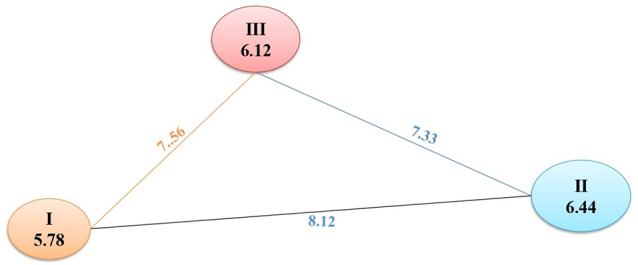
This study characterizes a collection of 30 tamarind genotypes based on a range of qualitative and quantitative traits to assess phenotypic diversity. The analysis revealed wide variation across most of the traits, indicating their potential for distinguishing germplasm diversity. High phenotypic coefficient of variation (PCV) and genotypic coefficient of variation (GCV) were observed for tree height (24.34 and 21.26), stem girth (26.63 and 23.72), tree spread E-W (23.50 and 21.68), tree spread N-S (27.46 and 24.38), pod yield kg/tree (29.98 and 27.56), pod length (25.29 and 24.51), pod breadth (22.08 and 21.92), pulp weight (30.49 and 28.58), and pod weight 31.03 and 29.74), which indicates these traits display high variation, suggesting significant potential for selection. High heritability coupled with high genetic advance were observed for the most of traits which were influenced by additive or fixable genetic variation. Path coefficient analysis revealed that traits, such as stem girth and tree spread showed direct effects on pod yield, while other characters contributed indirectly. Principal component analysis (PCA) indicated that PC-1 accounted for approximately 27.648% of the total variance, followed by PC-2 (18.250%), and PC-3 (15.835%), and hierarchical clustering uncovered crucial genetic components and distinct clusters, which can be considered for targeted breeding strategies. Cluster II emerged as the most divergent cluster, due to its the highest inter-cluster distances with other clusters and the highest intra-cluster distance.
The results demonstrate how varied germplasm might be used to improve tamarind cultivars. To overcome heterogeneity in desired features, a complete collection of 28 morphological descriptors is provided to characterize, evaluate, and identify tamarind genotypes. The results underscore the importance of phenotypic diversity for developing core collections with enhanced variability and for designing targeted tamarind tree breeding strategies. This study provides valuable insights for the improvement and conservation of tamarind germplasm, a valuable species with considerable potential for fruit production and other economic uses.
Not applicable.
Not applicable.
罗望子(酸豆属罗望子;豆科)是一种独特的树种,不仅因其果实和木材受到重视,还因其树荫而备受青睐,成为一种受欢迎的行道树。由于其根系发达,它能在多种气候和土壤条件下茁壮成长,尤其在半干旱地区,这使其在易缺水和高温的地区具有重要价值。目前它在世界亚热带和半干旱热带地区广泛种植,在印度、非洲和东南亚尤为常见。在本研究中,基于28个变量,利用多变量分析评估了30个罗望子基因型的形态 - 物理 - 化学变异,这对树木改良至关重要。
本研究基于一系列定性和定量性状对30个罗望子基因型进行了特征描述,以评估表型多样性。分析表明,大多数性状存在广泛变异,表明它们在区分种质多样性方面具有潜力。观察到树高(24.34和21.26)、茎围(26.63和23.72)、东西向树冠扩展(23.50和21.68)、南北向树冠扩展(27.46和24.38)、单株荚果产量(29.98和27.56)、荚果长度(25.29和2