Saliba Thomas, Tack Denis
Centre hospitalier universitaire vaudois (CHUV), Lausanne, Switzerland.
Hopital D'Ath (EpiCURA), Ath, Belgium.
J Belg Soc Radiol. 2025 Mar 25;109(1):14. doi: 10.5334/jbsr.3868. eCollection 2025.
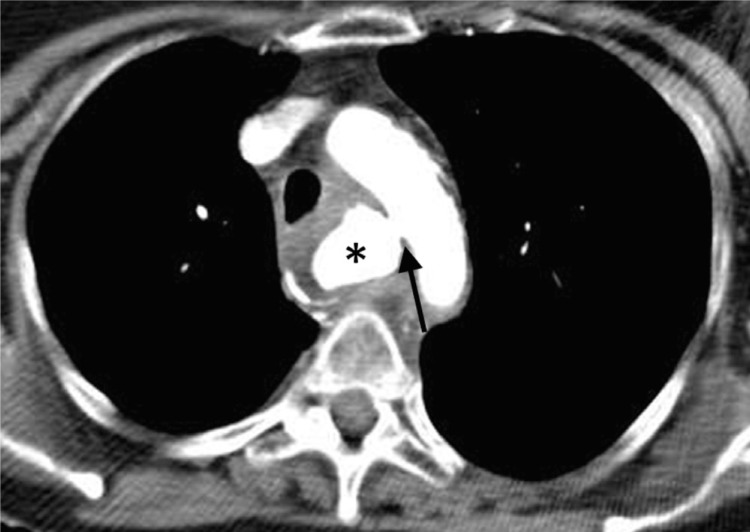
Aorto‑esophageal fistulas (AEF) are rare, often fatal connections between the thoracic aorta and esophagus, arising from aortic disease, esophageal conditions, or iatrogenic causes. A 76‑year‑old woman, treated for esophageal nutcracker syndrome with endoscopic injection of botox, developed chest pain and esophageal hemorrhage. Computed tomography (CT) confirmed an AEF from an aortic pseudoaneurysm. She succumbed to circulatory collapse before treatment. Endoscopic botox injections are a rare cause of AEF. The diagnosis relies on imaging and endoscopy, with surgery often required. Aorto‑esophageal fistulas are rare, life‑threatening complications, particularly after iatrogenic procedures. Early diagnosis is crucial, but prognosis remains poor.
主动脉-食管瘘(AEF)是一种罕见的、常致命的胸主动脉与食管之间的连接,由主动脉疾病、食管疾病或医源性原因引起。一名76岁女性因内镜下注射肉毒杆菌毒素治疗食管胡桃夹综合征,出现胸痛和食管出血。计算机断层扫描(CT)证实为主动脉假性动脉瘤导致的主动脉-食管瘘。她在治疗前死于循环衰竭。内镜下注射肉毒杆菌毒素是主动脉-食管瘘的罕见病因。诊断依靠影像学和内镜检查,通常需要手术治疗。主动脉-食管瘘是罕见的、危及生命的并发症,尤其是在医源性操作之后。早期诊断至关重要,但预后仍然很差。