Jones Laura, Uvarova Valeria, O'Brien Daniel, McIntyre Holly, Cohen Natalie R, Dowen Robert H, van Oosten-Hawle Patricija
School of Molecular and Cell Biology & Astbury Centre for Structural Molecular Biology, Faculty of Biological Sciences, University of Leeds, United Kingdom.
Department of Biological Sciences, University of North Carolina at Charlotte, Charlotte, NC, USA.
bioRxiv. 2025 Mar 14:2025.03.11.642454. doi: 10.1101/2025.03.11.642454.
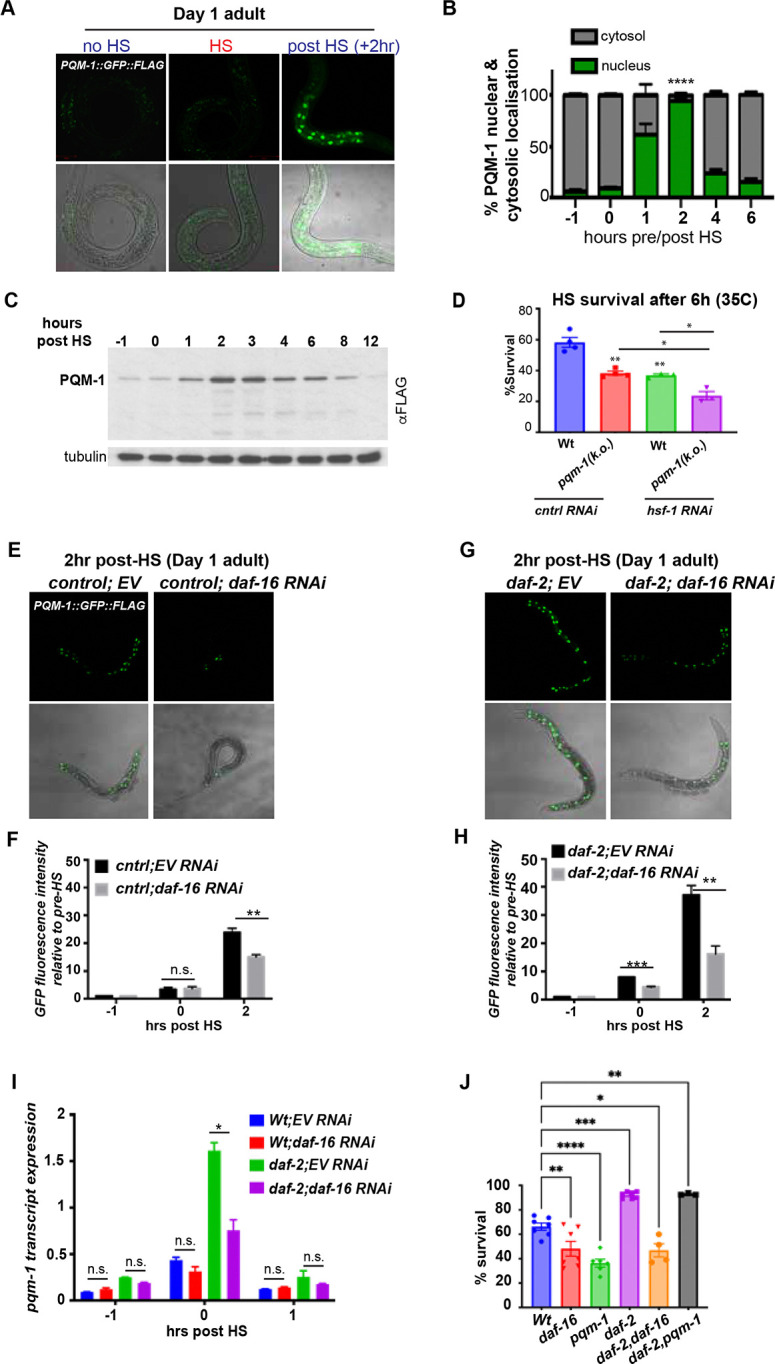
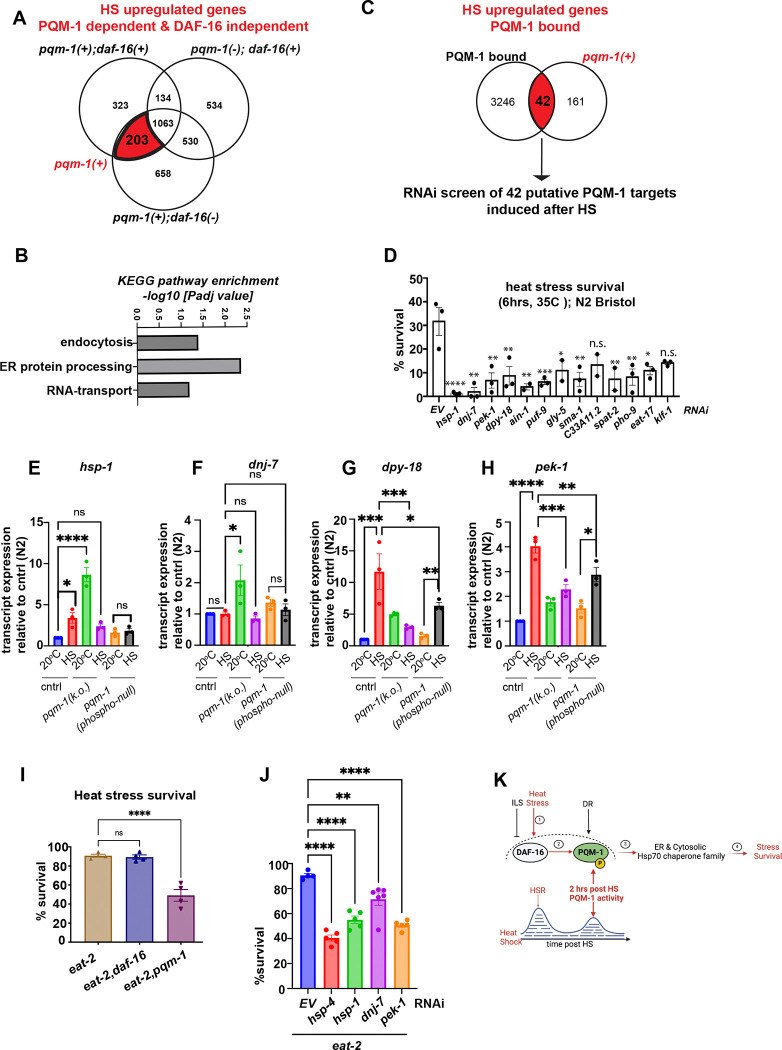
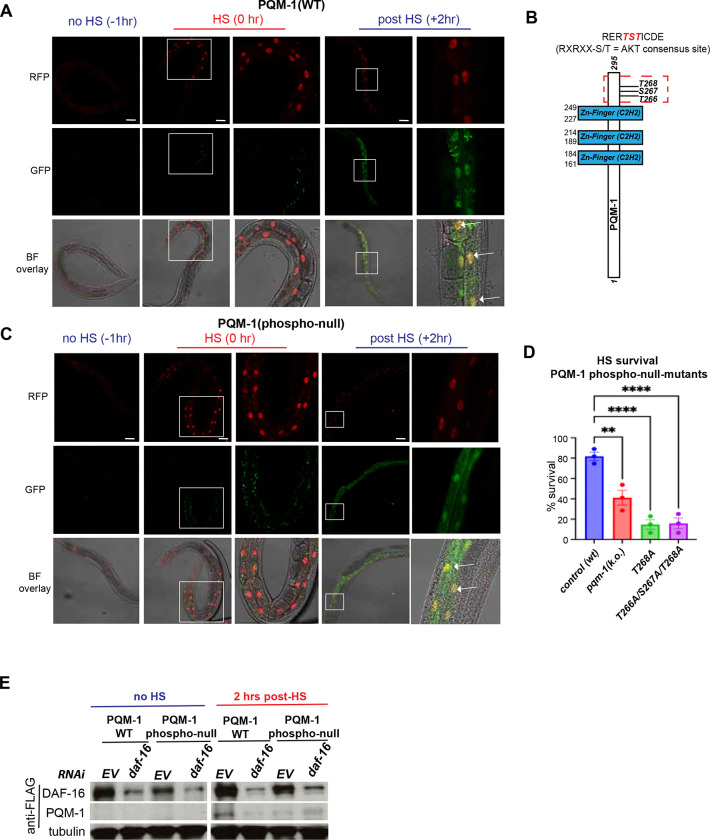
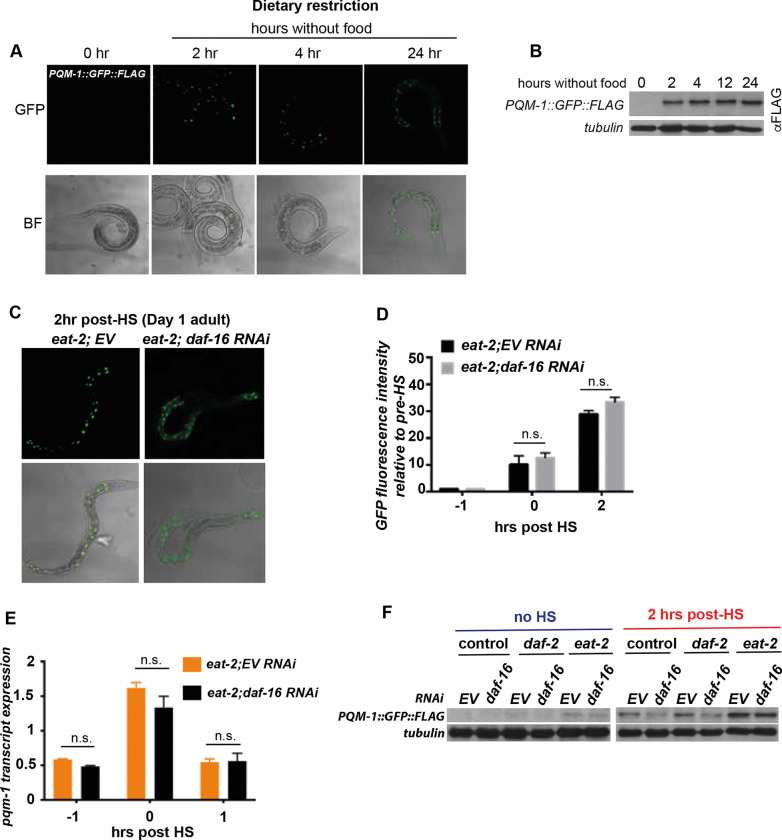
Stress responses are controlled by specialized stress-responsive proteostasis transcription factors that rapidly upregulate protein quality components to re-establish protein homeostasis and safeguard survival. Here we show that the zinc finger transcription factor PQM-1 is crucial for stress survival in response to thermal and oxidative challenges. We provide mechanistic insight into the regulation of PQM-1 during stress that depends on ILS-DAF-16 signaling, as well as phosphorylation on threonine residue 268 that is located within a conserved AKT motif. Our data show that in reproductively mature adults and during well-fed conditions, PQM-1 induction requires DAF-16 and occurs during the recovery period post heat shock. Moreover, PQM-1 co-localizes with DAF-16 in the nucleus during the stress recovery phase. This regulatory dependency on DAF-16 is bypassed under dietary restriction, allowing PQM-1 to promote stress resilience independent of the ILS pathway. During both conditions, PQM-1 is crucial for the upregulation of cytosolic and endoplasmic reticulum stress response genes required for organismal recovery and stress resilience. Our transcriptional and bioinformatic analysis reveals that PQM-1 regulates a distinct set of target genes during the stress recovery phase, suggesting that PQM-1 may be involved in vital secondary wave stress response. Thus, our findings uncover a previously unrecognized mechanism of stress-dependent PQM-1 activation that integrates multiple environmental cues to ensure proteostasis and organismal survival.
应激反应由专门的应激反应蛋白质稳态转录因子控制,这些转录因子会迅速上调蛋白质质量成分,以重新建立蛋白质稳态并保障生存。在此,我们表明锌指转录因子PQM-1对于应对热应激和氧化应激时的生存至关重要。我们提供了在应激期间PQM-1调控机制的见解,这取决于ILS-DAF-16信号传导,以及位于保守AKT基序内的苏氨酸残基268上的磷酸化。我们的数据表明,在生殖成熟的成年个体中以及在营养充足的条件下,PQM-1的诱导需要DAF-16,并且发生在热休克后的恢复期。此外,在应激恢复阶段,PQM-1与DAF-16在细胞核中共定位。在饮食限制条件下,这种对DAF-16的调控依赖性被绕过,使得PQM-1能够独立于ILS途径促进应激恢复力。在这两种情况下,PQM-1对于上调机体恢复和应激恢复力所需的细胞质和内质网应激反应基因至关重要。我们的转录和生物信息学分析表明,PQM-1在应激恢复阶段调控一组不同的靶基因,这表明PQM-1可能参与重要的二次应激反应。因此,我们的研究结果揭示了一种先前未被认识的应激依赖性PQM-1激活机制,该机制整合了多种环境线索以确保蛋白质稳态和机体生存。