Lewis-Sigler Institute for Integrative Genomics, Princeton University, Princeton, NJ, 08544, USA.
Department of Molecular Biology, Princeton University, Princeton, NJ, 08544, USA.
Nat Commun. 2020 Oct 2;11(1):4627. doi: 10.1038/s41467-020-18369-w.
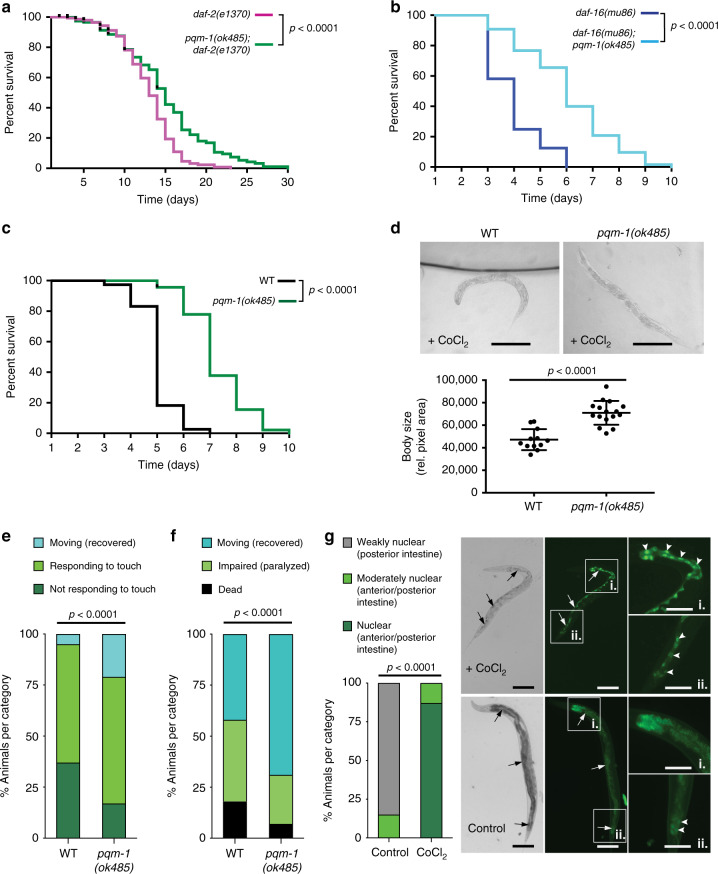
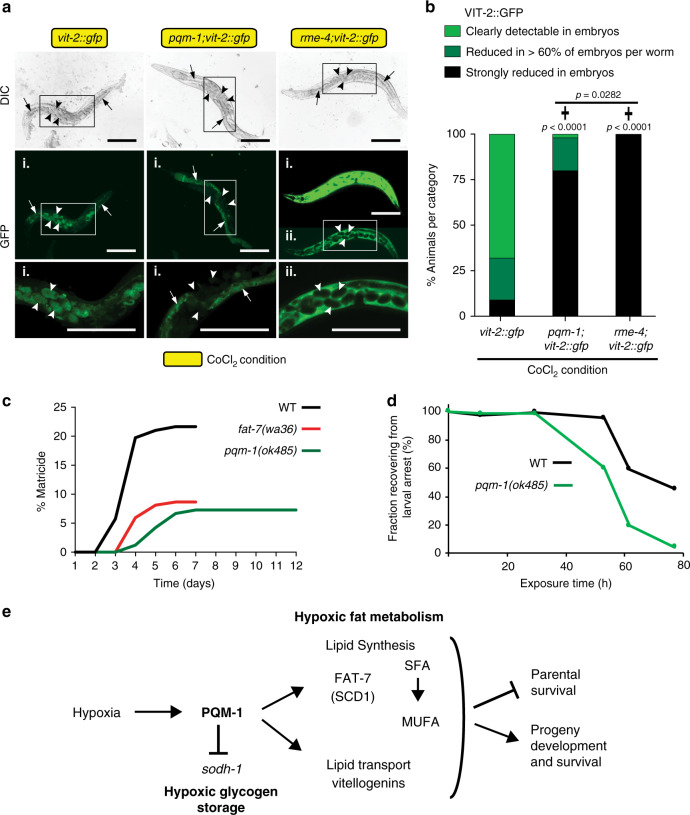
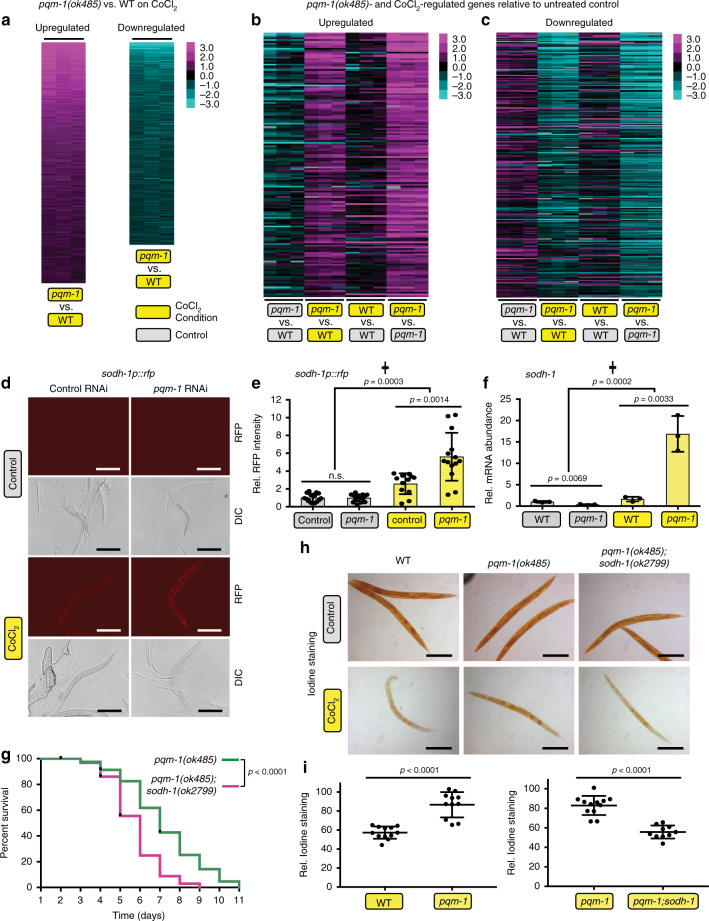
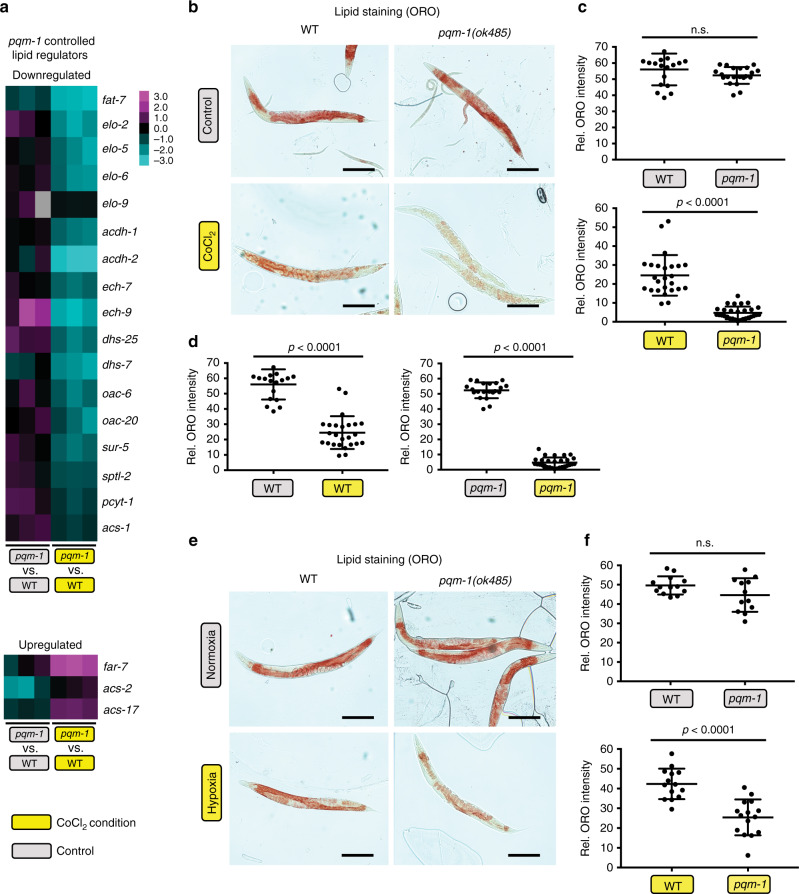
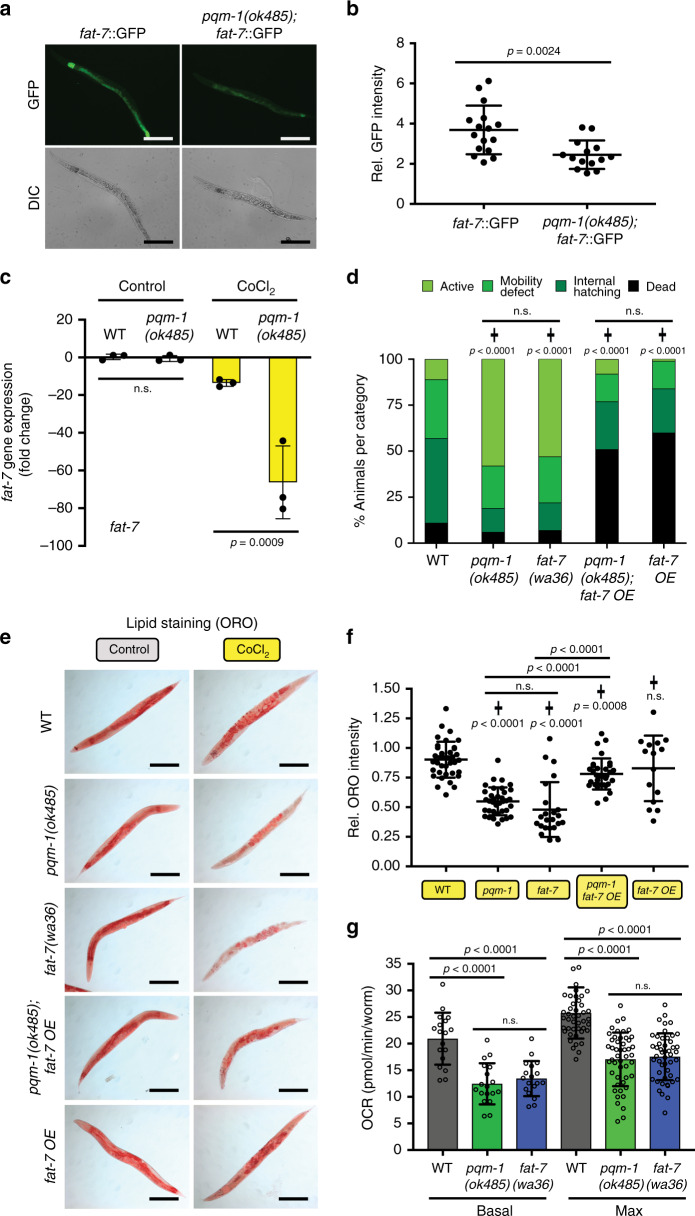
Animals have evolved responses to low oxygen conditions to ensure their survival. Here, we have identified the C. elegans zinc finger transcription factor PQM-1 as a regulator of the hypoxic stress response. PQM-1 is required for the longevity of insulin signaling mutants, but surprisingly, loss of PQM-1 increases survival under hypoxic conditions. PQM-1 functions as a metabolic regulator by controlling oxygen consumption rates, suppressing hypoxic glycogen levels, and inhibiting the expression of the sorbitol dehydrogenase-1 SODH-1, a crucial sugar metabolism enzyme. PQM-1 promotes hypoxic fat metabolism by maintaining the expression of the stearoyl-CoA desaturase FAT-7, an oxygen consuming, rate-limiting enzyme in fatty acid biosynthesis. PQM-1 activity positively regulates fat transport to developing oocytes through vitellogenins under hypoxic conditions, thereby increasing survival rates of arrested progeny during hypoxia. Thus, while pqm-1 mutants increase survival of mothers, ultimately this loss is detrimental to progeny survival. Our data support a model in which PQM-1 controls a trade-off between lipid metabolic activity in the mother and her progeny to promote the survival of the species under hypoxic conditions.
动物已经进化出对低氧环境的反应,以确保它们的生存。在这里,我们已经确定了秀丽隐杆线虫的锌指转录因子 PQM-1 是缺氧应激反应的调节剂。PQM-1 是胰岛素信号突变体长寿所必需的,但令人惊讶的是,PQM-1 的缺失增加了在缺氧条件下的存活率。PQM-1 通过控制耗氧量、抑制缺氧糖原水平以及抑制关键糖代谢酶山梨醇脱氢酶-1 (SODH-1) 的表达,作为代谢调节剂发挥作用。PQM-1 通过维持硬脂酰辅酶 A 去饱和酶 FAT-7 的表达来促进缺氧脂肪代谢,FAT-7 是脂肪酸生物合成中耗氧的限速酶。在缺氧条件下,PQM-1 通过卵黄蛋白原维持脂肪向发育中的卵母细胞的运输,从而增加缺氧时停滞后代的存活率。因此,虽然 pqm-1 突变体增加了母亲的存活率,但最终这对后代的存活率是有害的。我们的数据支持这样一种模型,即 PQM-1 控制了母亲及其后代中脂代谢活性之间的权衡,以促进物种在缺氧条件下的生存。