Peterman Eric, Murphy Andrew, Swinburne Ian A, Megason Sean G, Rasmussen Jeffrey P
Department of Biology, University of Washington, Seattle, Washington, USA.
Department of Systems Biology, Harvard Medical School, Boston, Massachusetts, USA.
bioRxiv. 2025 Mar 14:2025.03.13.642867. doi: 10.1101/2025.03.13.642867.
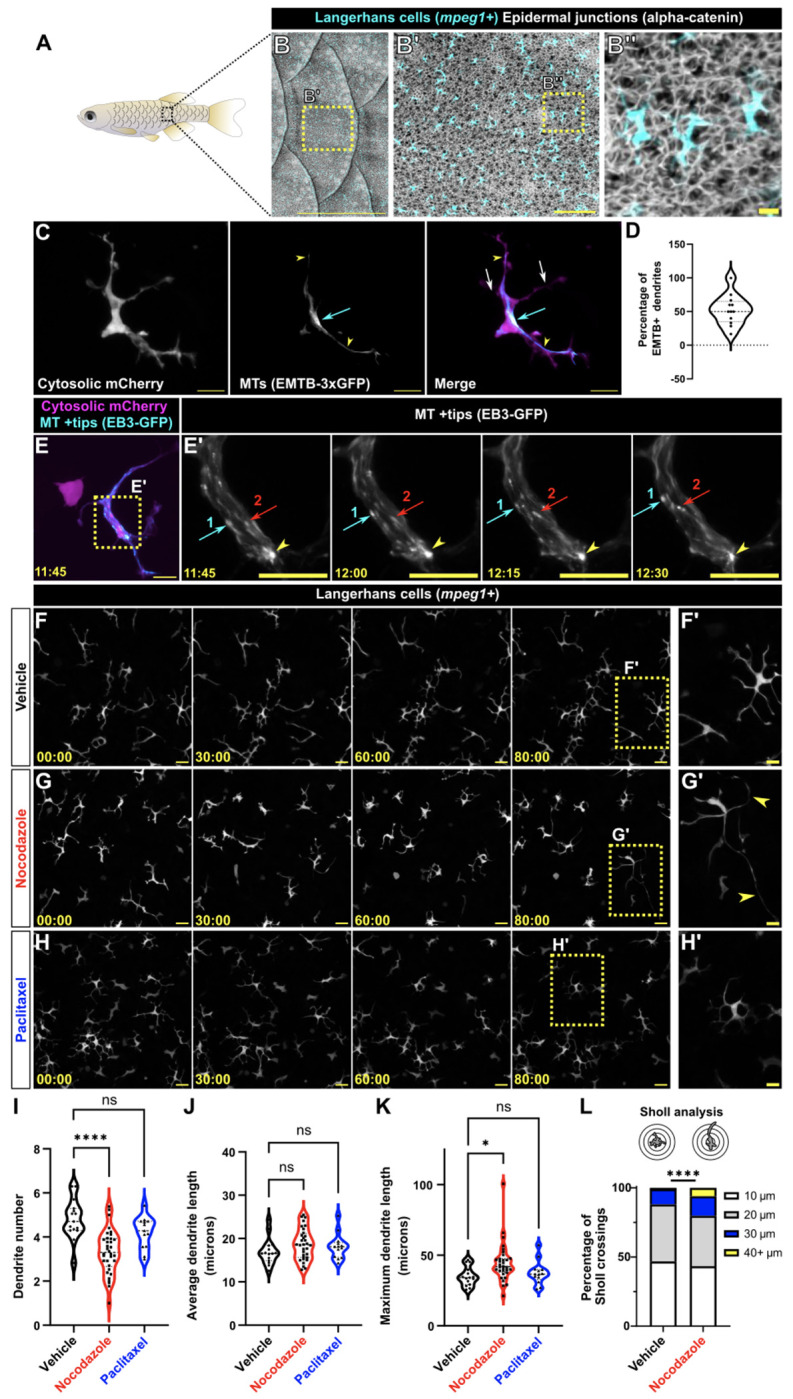
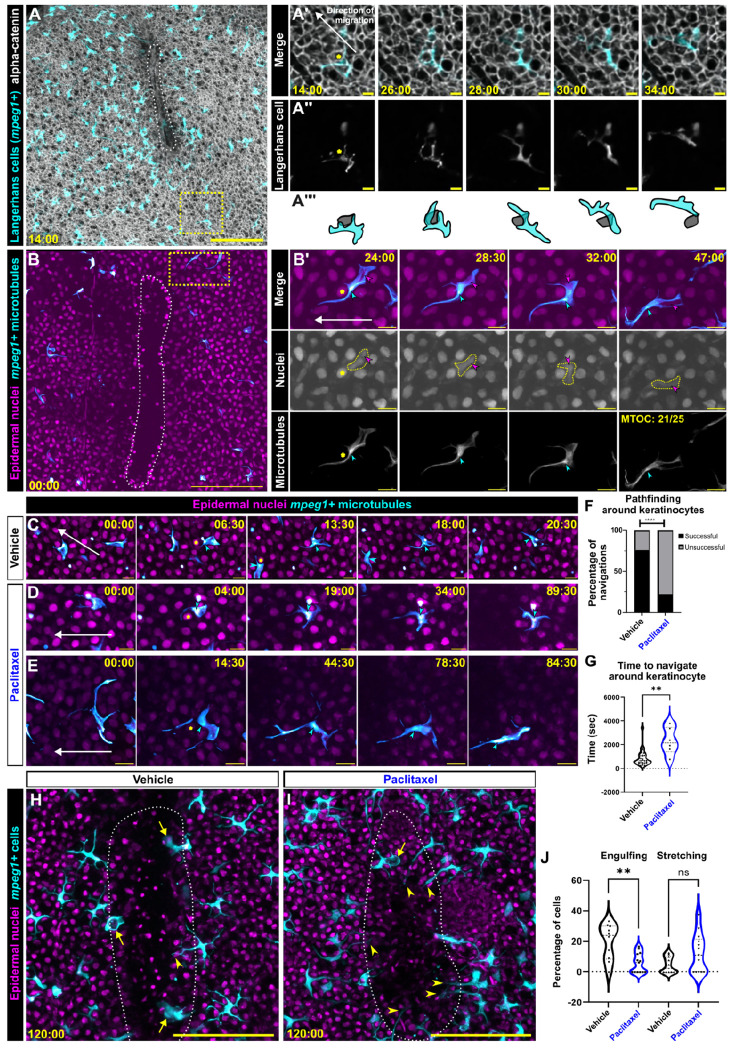
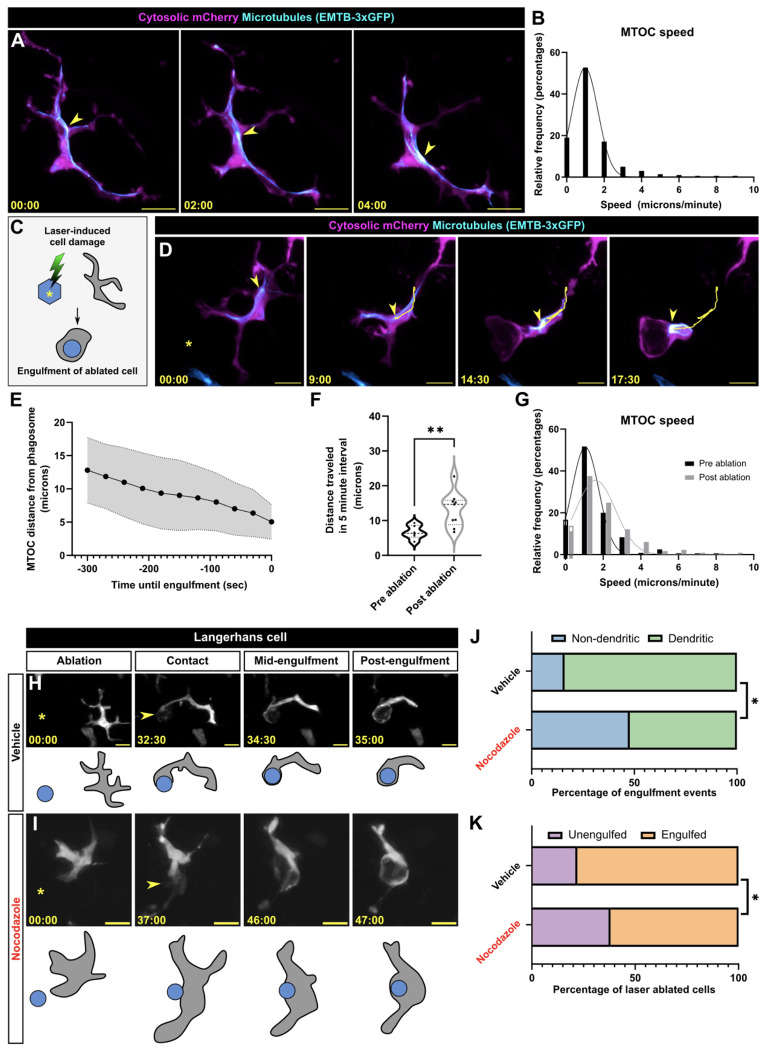
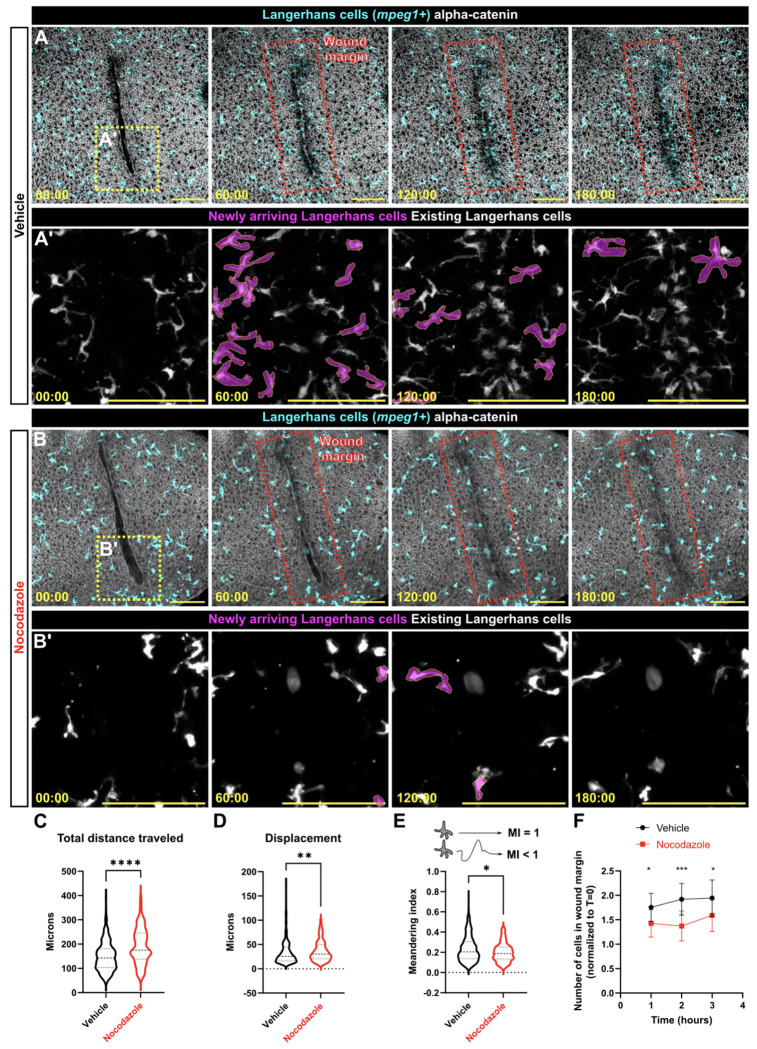
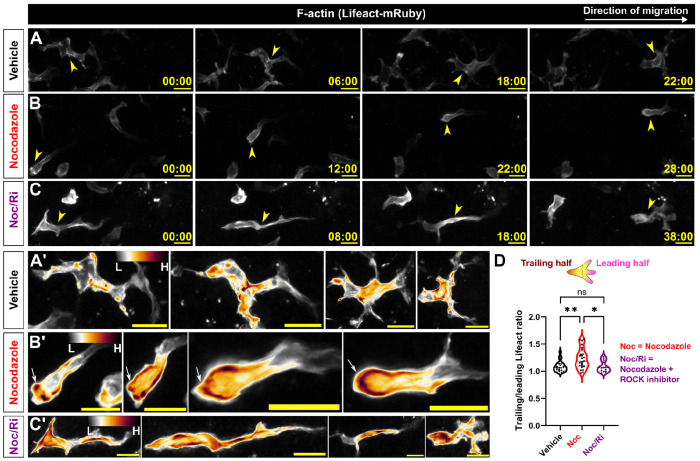
Immune cells rapidly respond to tissue damage through dynamic properties of the cytoskeleton. How microtubules control immune cell functions during injury responses remains poorly understood. Within skin, tissue-resident macrophages known as Langerhans cells use dynamic dendrites to surveil the epidermis for damage and migrate through a densely packed epithelium to wounds. Here, we use Langerhans cells within the adult zebrafish epidermis as a model to investigate roles for microtubules in immune cell tissue surveillance, phagocytosis, and directed migration. We describe microtubule organization within Langerhans cells, and show that depolymerizing the microtubule cytoskeleton alters dendrite morphology, debris engulfment, and migration efficiency. We find that the microtubule organizing center positions adjacent to engulfed debris and that its position correlates with navigational pathfinding during directed cell migration. Stabilizing microtubules prevents Langerhans cell motility during directed cell migration by impairing navigation around cellular obstacles. Collectively, our work demonstrates requirements for microtubules in the dynamic actions of tissue-resident macrophages during epithelial surveillance and wound repair.
免疫细胞通过细胞骨架的动态特性对组织损伤做出快速反应。在损伤反应过程中,微管如何控制免疫细胞功能仍知之甚少。在皮肤中,被称为朗格汉斯细胞的组织驻留巨噬细胞利用动态树突监测表皮是否受损,并通过密集排列的上皮组织迁移到伤口处。在这里,我们以成年斑马鱼表皮内的朗格汉斯细胞为模型,研究微管在免疫细胞组织监测、吞噬作用和定向迁移中的作用。我们描述了朗格汉斯细胞内的微管组织,并表明解聚微管细胞骨架会改变树突形态、碎片吞噬和迁移效率。我们发现微管组织中心位于吞噬的碎片附近,其位置与定向细胞迁移过程中的导航路径寻找相关。在定向细胞迁移过程中,稳定微管会通过损害围绕细胞障碍物的导航来阻止朗格汉斯细胞的运动。总的来说,我们的工作证明了微管在上皮监测和伤口修复过程中组织驻留巨噬细胞的动态作用中的必要性。