Chu Qihui, Wu Bin, Zhang Zhaofu
Department of Clinical Laboratory, the First People's Hospital of Yuhang District, Hangzhou, China.
Department of Infectious Diseases, The Seventh Affiliated Hospital, Sun Yat-sen University, Shenzhen, China.
Front Endocrinol (Lausanne). 2025 Mar 14;16:1537403. doi: 10.3389/fendo.2025.1537403. eCollection 2025.
The objective of this study is to investigate the relationship between the neutrophil-to-lymphocyte ratio (NLR) and all-cause as well as cause-specific mortality among patients with kidney stones, and to evaluate the capability of NLR as a predictor of mortality.
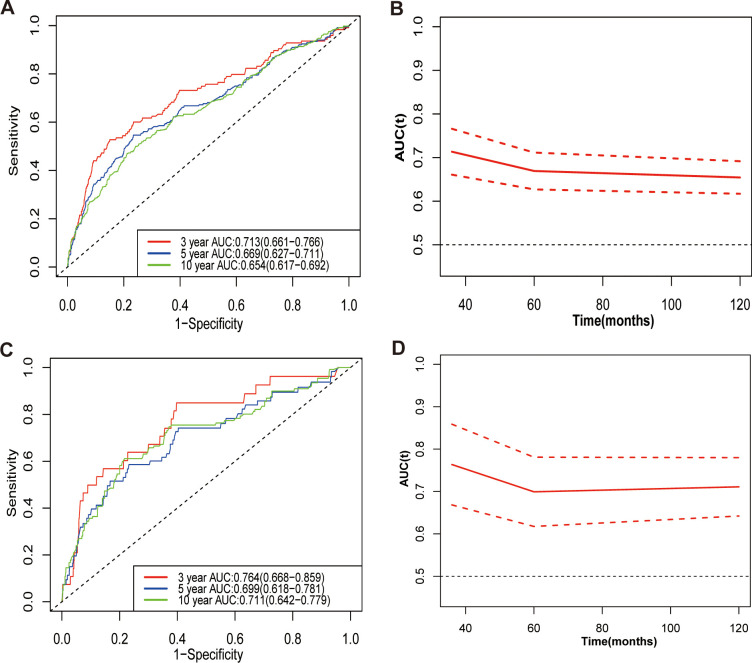
This study included 2,995 patients with kidney stones from the NHANES database during the period from 2007 to 2018, and subsequently linked this data with the National Death Index. The relationship between NLR and mortality was analyzed using the Cox proportional hazards model and Kaplan-Meier survival curves. Additionally, restricted cubic spline (RCS) curves were employed to explore the dose-response relationship between NLR and mortality, while time-dependent ROC curves were utilized to assess the predictive capability of NLR for mortality. Finally, the mediating effect of estimated glomerular filtration rate (eGFR) on the relationship between NLR and mortality was also analyzed.
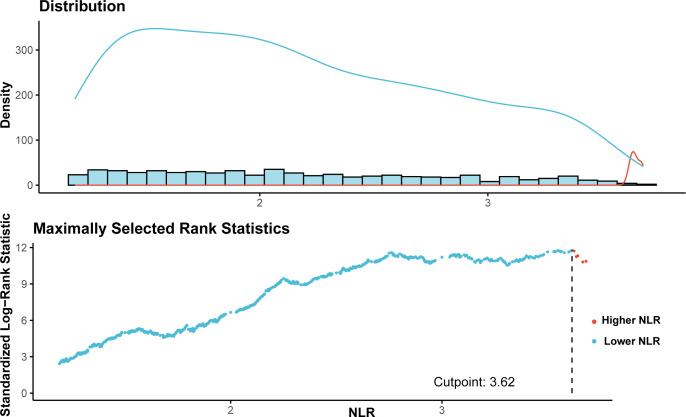
This study ultimately included 2,995 patients with kidney stones, with a median follow-up period of 74 months. A total of 395 deaths were recorded, of which 87 were attributed to cardiovascular diseases. An NLR cut-off of 3.62 was identified as significantly associated with survival outcomes using the 'maxstat' package and the principle of maximum rank statistics. The restricted cubic spline plot indicates a non-linear relationship between NLR and both all-cause mortality and cardiovascular mortality. After adjusting for relevant covariates, the Cox regression analysis demonstrated that, in comparison to the lower NLR group, the higher NLR group exhibited a 1.05-fold (HR 2.05, 95% CI 1.51-2.78, < 0.001) increased risk of all-cause mortality and a 1.99-fold (HR 2.99, 95% CI 1.89-4.72, < 0.001) increased risk of cardiovascular mortality. Furthermore, eGFR exhibited a significant mediating effect on the relationship between NLR and mortality.
This study found that patients with kidney stones exhibiting a high NLR have a significantly increased risk of mortality in the U.S. population. Therefore, monitoring NLR may be important for the prognosis of patients with kidney stones.
本研究的目的是调查肾结石患者中性粒细胞与淋巴细胞比值(NLR)与全因死亡率以及特定病因死亡率之间的关系,并评估NLR作为死亡率预测指标的能力。
本研究纳入了2007年至2018年期间来自美国国家健康与营养检查调查(NHANES)数据库的2995例肾结石患者,并随后将这些数据与国家死亡指数相链接。使用Cox比例风险模型和Kaplan-Meier生存曲线分析NLR与死亡率之间的关系。此外,采用受限立方样条(RCS)曲线来探索NLR与死亡率之间的剂量反应关系,同时利用时间依赖性ROC曲线来评估NLR对死亡率的预测能力。最后,还分析了估计肾小球滤过率(eGFR)在NLR与死亡率关系中的中介作用。
本研究最终纳入了2995例肾结石患者,中位随访期为74个月。共记录了395例死亡病例,其中87例归因于心血管疾病。使用“maxstat”软件包和最大秩统计原则确定NLR临界值为3.62时与生存结果显著相关。受限立方样条图表明NLR与全因死亡率和心血管死亡率之间均呈非线性关系。在调整相关协变量后,Cox回归分析表明,与低NLR组相比,高NLR组全因死亡率风险增加1.05倍(HR 2.05,95%CI 1.51-2.78,P<0.001),心血管死亡率风险增加1.99倍(HR 2.99,95%CI 1.89-4.72,P<0.001)。此外,eGFR在NLR与死亡率的关系中表现出显著的中介作用。
本研究发现,在美国人群中,NLR高的肾结石患者死亡率风险显著增加。因此,监测NLR可能对肾结石患者的预后很重要。