Kain Dylan, Awad Wael, McElfresh G W, Cansler Meghan, Swarbrick Gwendolyn M, Poa Kean Chan Yew, McNeice Conor, Boggy Gregory, Rott Katherine, Null Megan D, Lewinsohn David M, Rossjohn Jamie, Bimber Benjamin N, Lewinsohn Deborah A
Division of Infectious Diseases, Department of Pediatrics, Oregon Health & Science University, Portland, OR, USA.
Division of Pulmonary, Allergy and Critical Care Medicine, Department of Medicine, Oregon Health & Science University, Portland, OR, USA.
bioRxiv. 2025 Mar 18:2025.03.17.643805. doi: 10.1101/2025.03.17.643805.
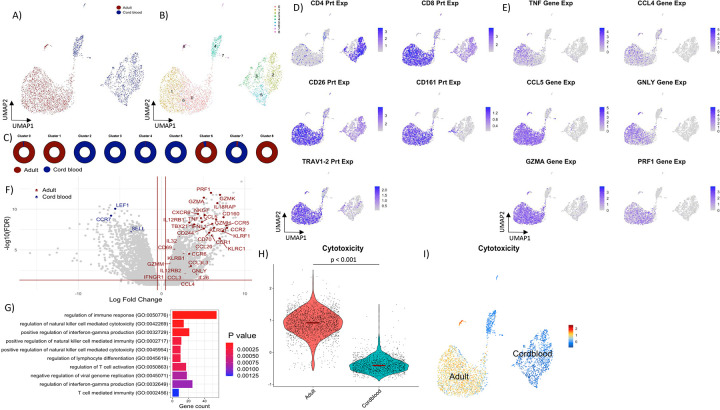
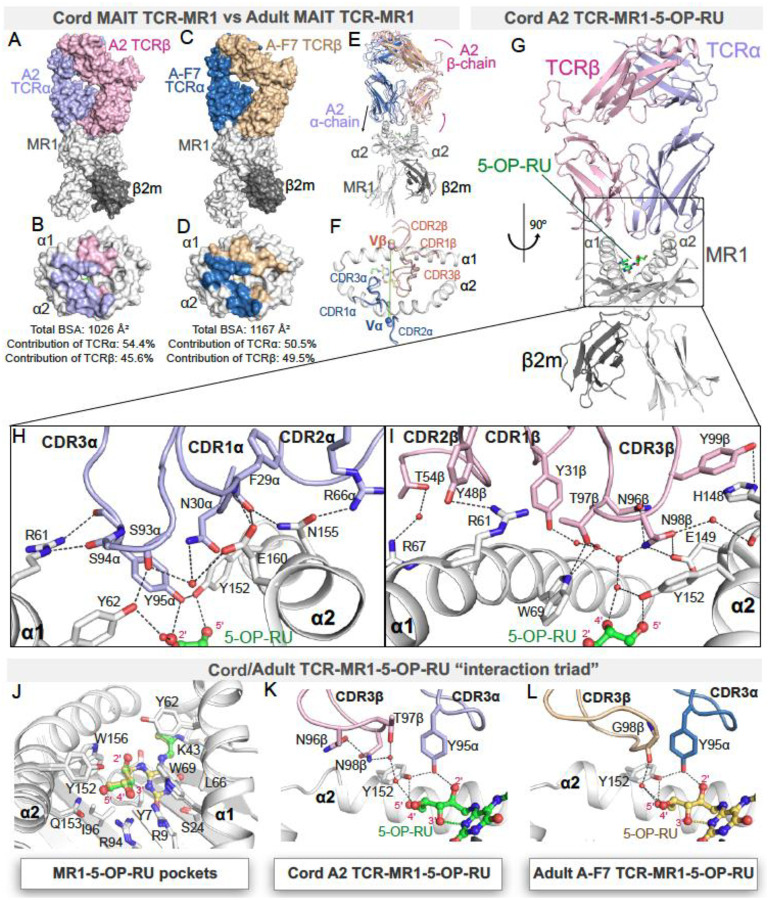
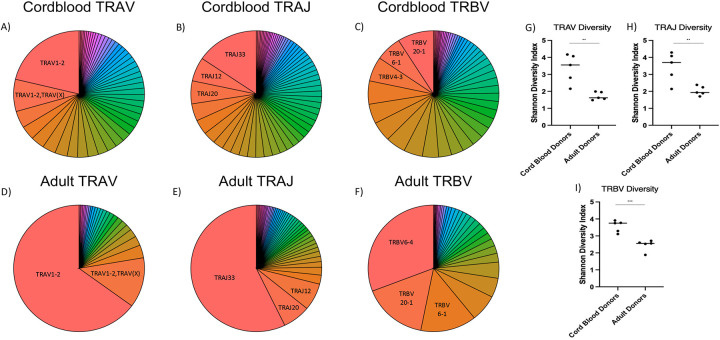
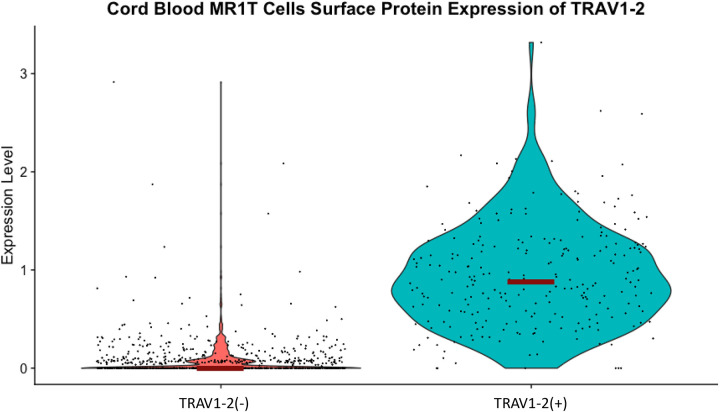
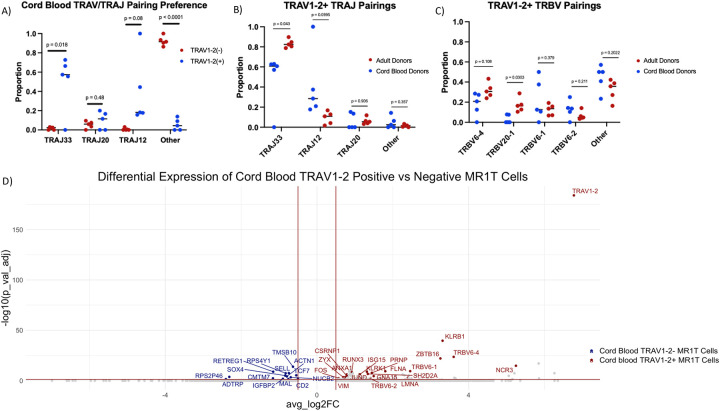
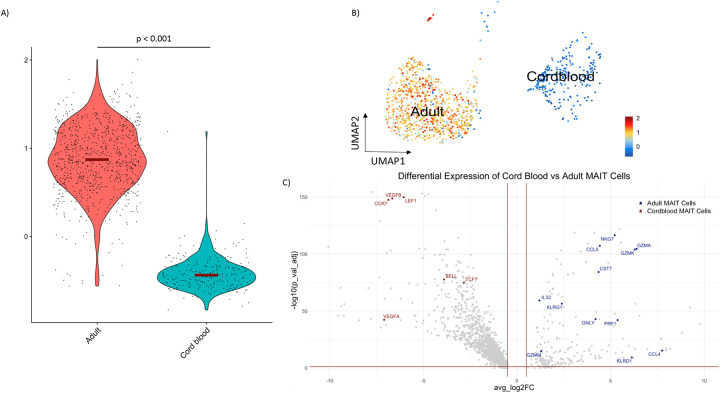
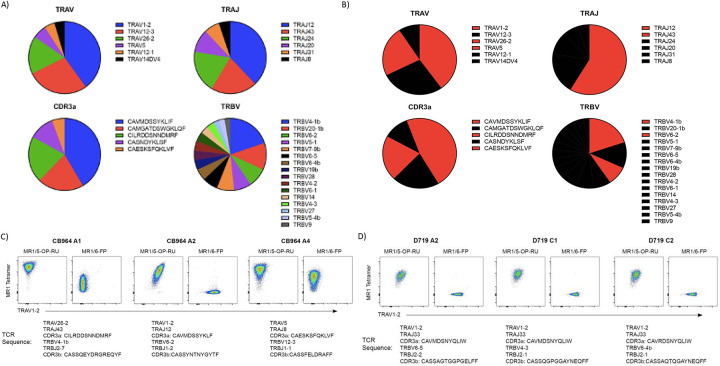
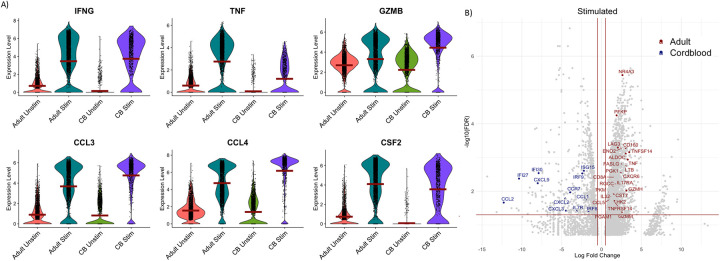
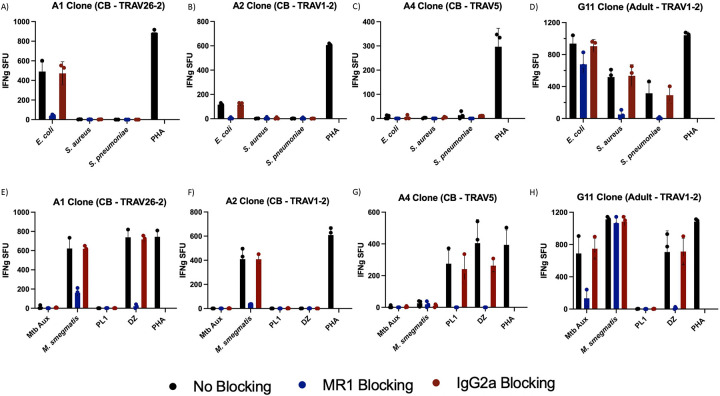
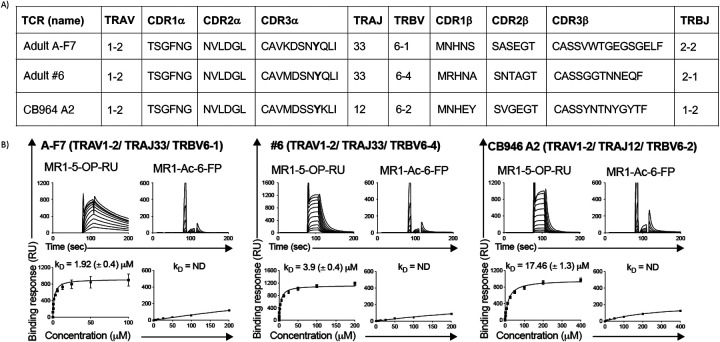
Neonatal sepsis is a leading cause of childhood mortality. Understanding immune cell development can inform strategies to combat this. MR1-restricted T (MR1T) cells can be defined by their recognition of small molecules derived from microbes, self, and drug and drug-like molecules, presented by the MHC class 1-related molecule (MR1). In healthy adults, the majority of MR1T cells express an invariant α-chain; TRAV1-2/TRAJ33/12/20 and are referred to as mucosal-associated invariant T (MAIT) cells. Neonatal MR1T cells isolated from cord blood (CB) demonstrate more diversity in MR1T TCR usage, with the majority of MR1-5-OP-RU-tetramer(+) cells being TRAV1-2(-). To better understand this diversity, we performed single-cell-RNA-seq/TCR-seq (scRNA-seq/scTCR-seq) on MR1-5-OP-RU-tetramer(+) cells from CB (n=5) and adult participants (n=5). CB-derived MR1T cells demonstrate a less cytotoxic/pro-inflammatory phenotype, and a more diverse TCR repertoire. A panel of CB and adult MAIT and TRAV1-2(-) MR1T cell clones were generated, and CB-derived clones were unable to recognize several common riboflavin-producing childhood pathogens (). Biochemical and structural investigation of one CB MAIT TCR (CB964 A2; TRAV1-2/TRBV6-2) showed a reduction in binding affinity toward the canonical MR1-antigen, 5-OP-RU, compared to adult MAIT TCRs that correlated with differences in β-chain contribution in the TCR-MR1 interface. Overall, this data shows that CB MAIT and TRAV1-2(-) MR1T cells, express a diverse TCR repertoire, a more restricted childhood pathogen recognition profile and diminished cytotoxic and pro-inflammatory capacity. Understanding this diversity, along with the functional ability of TRAV1-2(-) MR1T cells, could provide insight into increased neonatal susceptibility to infections.
新生儿败血症是儿童死亡的主要原因。了解免疫细胞发育可为对抗这一疾病的策略提供信息。MR1限制性T(MR1T)细胞可通过其对由微生物、自身以及药物和类药物分子衍生的小分子的识别来定义,这些小分子由MHC I类相关分子(MR1)呈递。在健康成年人中,大多数MR1T细胞表达恒定的α链;TRAV1-2/TRAJ33/12/20,被称为黏膜相关恒定T(MAIT)细胞。从脐带血(CB)中分离出的新生儿MR1T细胞在MR1T TCR使用上表现出更多样性,大多数MR1-5-OP-RU-四聚体(+)细胞为TRAV1-2(-)。为了更好地理解这种多样性,我们对来自CB(n=5)和成年参与者(n=5)的MR1-5-OP-RU-四聚体(+)细胞进行了单细胞RNA测序/TCR测序(scRNA-seq/scTCR-seq)。源自CB的MR1T细胞表现出细胞毒性/促炎表型较弱,以及TCR库更多样化。生成了一组CB和成年MAIT以及TRAV1-2(-)MR1T细胞克隆,源自CB的克隆无法识别几种常见的产生核黄素的儿童病原体。对一个CB MAIT TCR(CB964 A2;TRAV1-2/TRBV6-2)的生化和结构研究表明,与成年MAIT TCR相比,其对典型MR1抗原5-OP-RU的结合亲和力降低,这与TCR-MR1界面中β链贡献的差异相关。总体而言,这些数据表明CB MAIT和TRAV1-2(-)MR1T细胞表达多样的TCR库、更受限的儿童病原体识别谱以及减弱的细胞毒性和促炎能力。了解这种多样性以及TRAV1-2(-)MR1T细胞的功能能力,可为深入了解新生儿对感染易感性增加提供线索。