Choi Gee Euhn, Park Ji Yong, Park Mo Ran, Chae Chang Woo, Jung Young Hyun, Lim Jae Ryong, Yoon Jee Hyeon, Cho Ji Hyeon, Han Ho Jae
Laboratory of Veterinary Biochemistry, College of Veterinary Medicine and Veterinary Medical Research Institute, Jeju National University, Jeju, 63243, South Korea.
Interdisciplinary Graduate Program in Advanced Convergence Technology & Science, Jeju National University, Jeju, 63243, South Korea.
Cell Commun Signal. 2025 Apr 2;23(1):166. doi: 10.1186/s12964-025-02172-5.
Prenatal stress exposure irreversibly impairs mitochondrial dynamics, including mitochondrial trafficking and morphology in offspring, leading to neurodevelopmental and neuropsychiatric disorders in adulthood. Thus, understanding the molecular mechanism controlling mitochondrial dynamics in differentiating neurons is crucial to prevent the prenatal stress-induced impairments in behavior. We investigated the interplay between mitochondrial transport and fusion/fission in differentiating neurons exposed to prenatal stress, leading to ensuing behavior impairments, and then tried to identify the primary regulator that modulates both phenomena.
We used primary hippocampal neurons of mice exposed to prenatal stress and human induced-pluripotent stem cell (hiPSC)-derived neurons, for investigating the impact of glucocorticoid on mitochondrial dynamics during differentiation. For constructing mouse models, we used AAV vectors into mouse pups exposed to prenatal stress to regulate protein expressions in hippocampal regions.
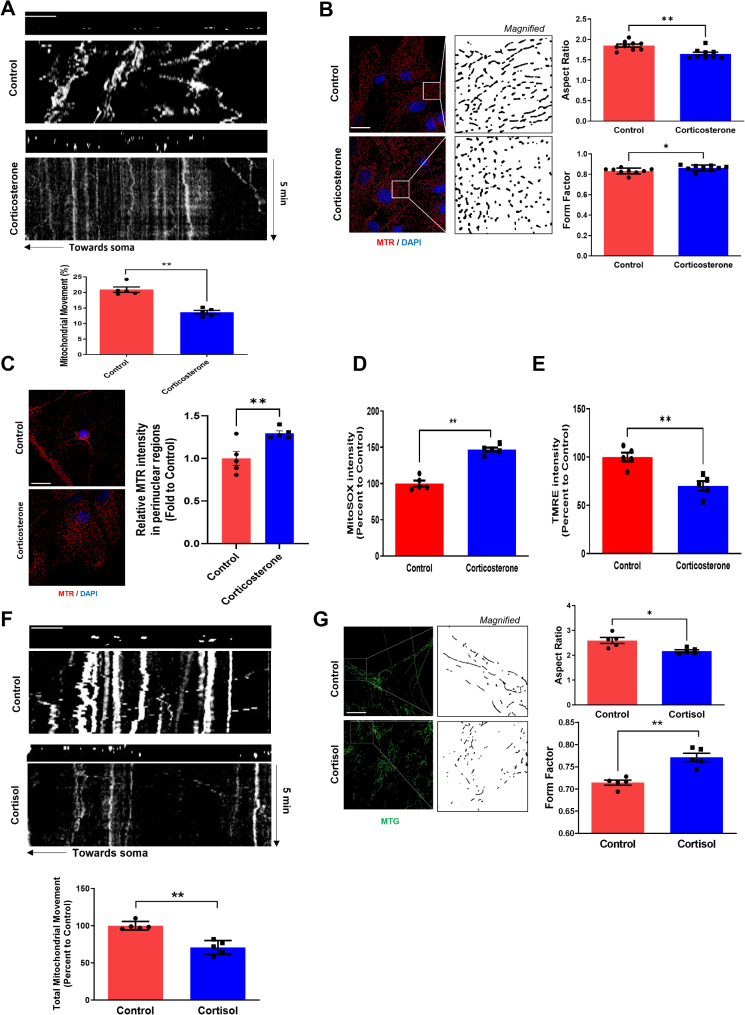
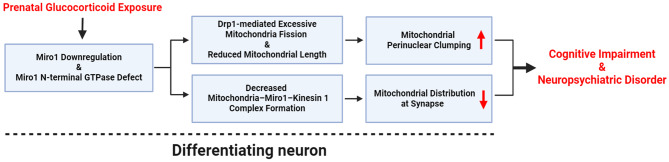
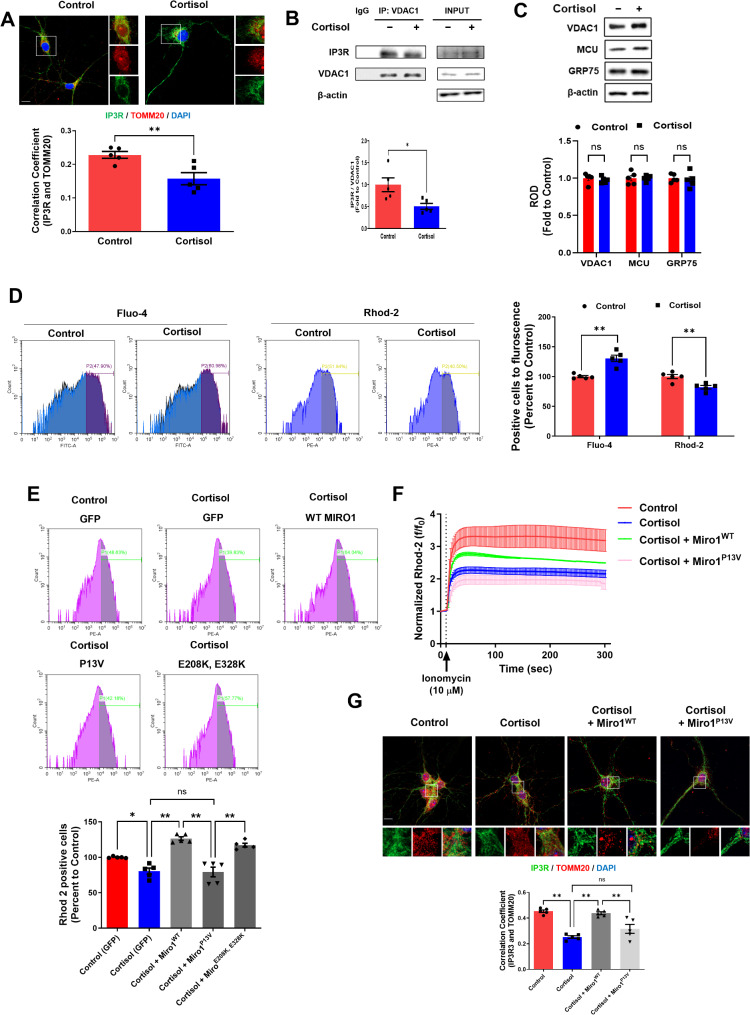
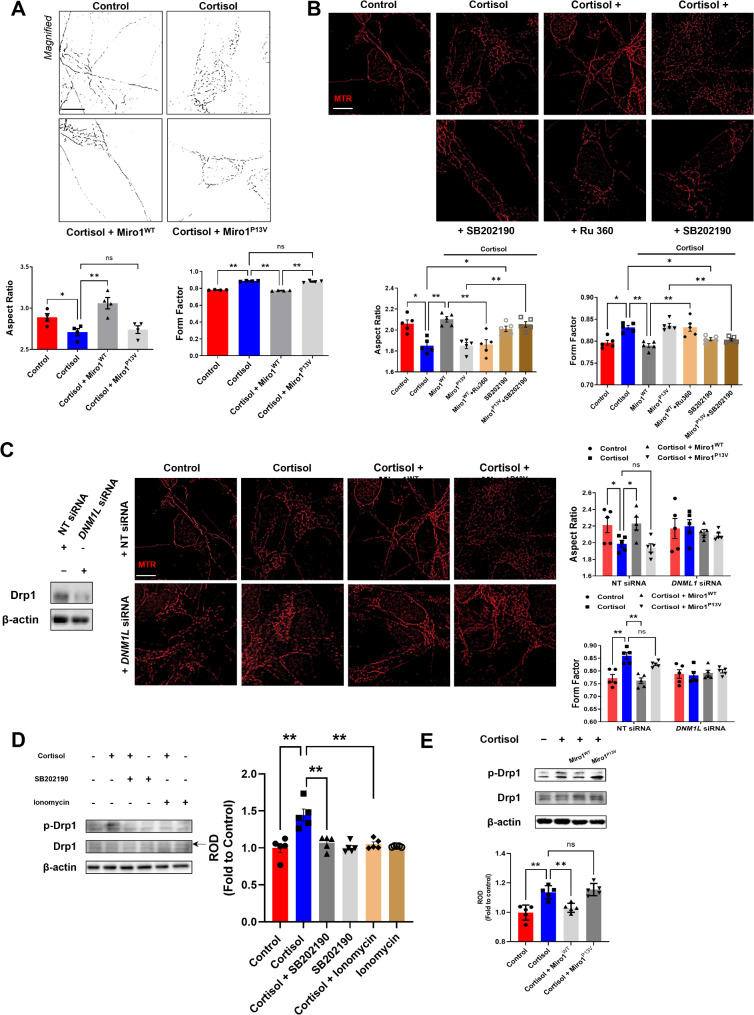
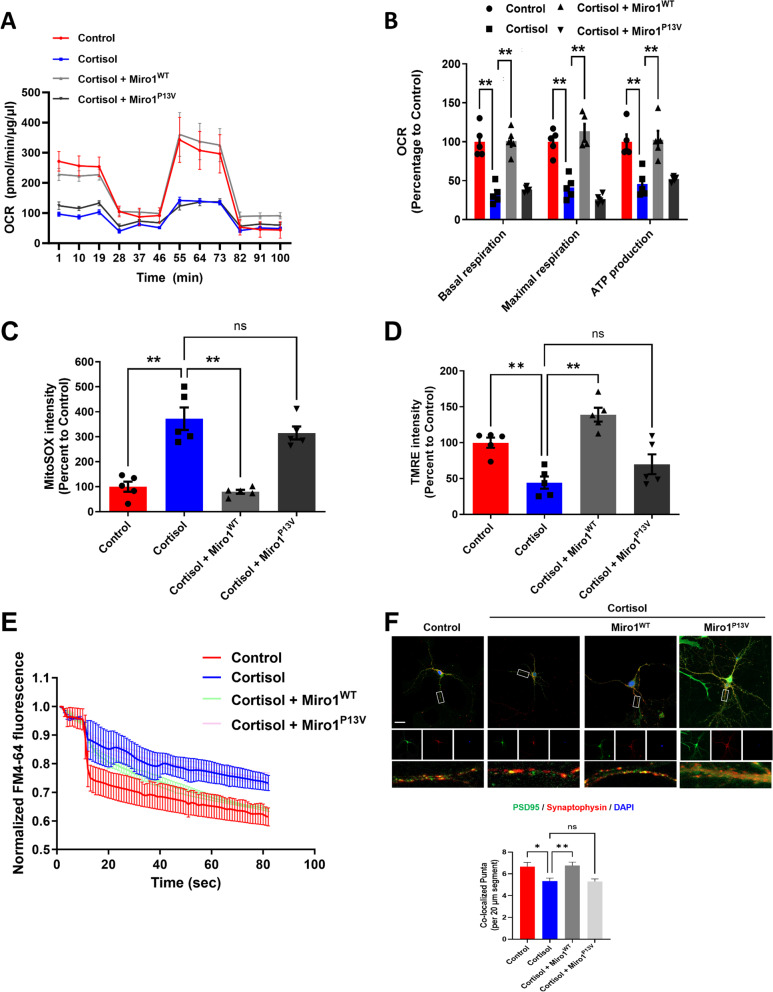
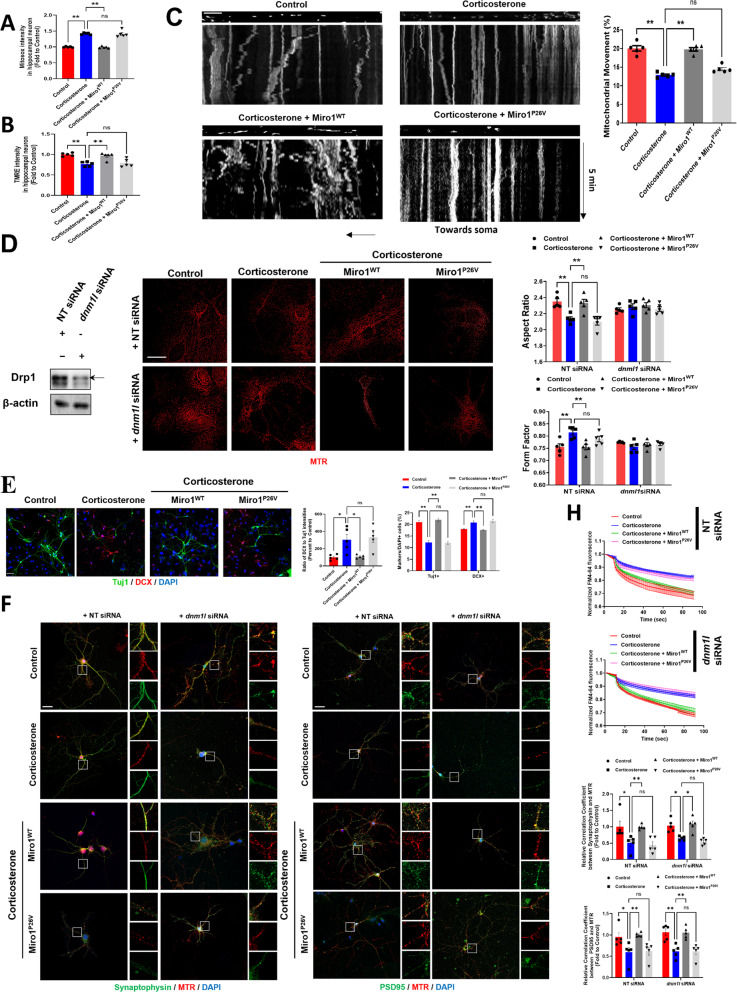
We first observed that prenatal exposure to glucocorticoids induced motility arrest and fragmentation of mitochondria in differentiating neurons derived from mouse fetuses (E18) and human induced pluripotent stem cells (hiPSCs). Further, glucocorticoid exposure during neurogenesis selectively downregulated Miro1 and increased Drp1 phosphorylation (Ser616). MIRO1 overexpression restored mitochondrial motility and increased intramitochondrial calcium influx through ER-mitochondria contact (ERMC) formation. Furthermore, we determined that the N-terminal GTPase domain of Miro1 plays a critical role in ERMC formation, which then decreased Drp1 phosphorylation (Ser616). Similarly, prenatal corticosterone exposure led to impaired neuropsychiatric and cognitive function in the offspring by affecting mitochondrial distribution and synaptogenesis, rescued by Miro1, but not N-terminal GTPase active form Miro1, expression.
Prenatal glucocorticoid-mediated Miro1 downregulation contributes to dysfunction in mitochondrial dynamics through Drp1 phosphorylation (Ser616) in differentiating neurons.
产前应激暴露会不可逆地损害线粒体动力学,包括后代的线粒体运输和形态,导致成年期出现神经发育和神经精神障碍。因此,了解分化神经元中线粒体动力学的分子调控机制对于预防产前应激诱导的行为损伤至关重要。我们研究了产前应激暴露的分化神经元中线粒体运输与融合/裂变之间的相互作用,这会导致随后的行为损伤,然后试图确定调节这两种现象的主要调节因子。
我们使用暴露于产前应激的小鼠原代海马神经元和人诱导多能干细胞(hiPSC)衍生的神经元,来研究糖皮质激素在分化过程中对线粒体动力学的影响。为构建小鼠模型,我们将腺相关病毒(AAV)载体用于暴露于产前应激的幼鼠,以调节海马区域的蛋白质表达。
我们首先观察到,产前暴露于糖皮质激素会导致来自小鼠胎儿(E18)和人诱导多能干细胞(hiPSC)的分化神经元中线粒体运动停滞和碎片化。此外,神经发生过程中糖皮质激素暴露会选择性下调Miro1并增加Drp1磷酸化(Ser616)。MIRO1过表达恢复了线粒体运动,并通过内质网-线粒体接触(ERMC)形成增加了线粒体内钙内流。此外,我们确定Miro1的N端GTPase结构域在ERMC形成中起关键作用,进而降低了Drp1磷酸化(Ser616)。同样,产前皮质酮暴露通过影响线粒体分布和突触形成导致后代神经精神和认知功能受损,Miro1表达可挽救这种损伤,但N端GTPase活性形式的Miro1表达则不能。
产前糖皮质激素介导的Miro1下调通过分化神经元中Drp1磷酸化(Ser616)导致线粒体动力学功能障碍。