
基于扩增子的分析揭示了青少年痤疮与负面情绪状态引起的面部皮肤微生物群改变之间的联系。
Amplicon-based analysis reveals link between adolescent acne and altered facial skin microbiome induced by negative emotional states.
作者信息
Chen Yu, Peng Lixia, Li Yueying, Peng Yusheng, Dai Siqi, Han Kai, Xin Jinge
机构信息
Department of Dermatology, The People's Hospital of Baiyun District, Guangzhou, China.
Department of Dermatology, Nanfang Hospital Taihe Branch, Guangzhou, China.
出版信息
Front Cell Infect Microbiol. 2025 Mar 19;15:1543616. doi: 10.3389/fcimb.2025.1543616. eCollection 2025.
INTRODUCTION
The skin microbiome is integral to maintaining skin homeostasis and is involved in the pathogenesis of acne. Emerging evidence supporting the 'brain-skin axis' suggests that psychological stress may exacerbate acne. Both negative emotional states and acne are highly prevalent among adolescents. Although research has begun to explore this relationship, the role of the skin microbiome in adolescents experiencing emotional disturbances and acne remains poorly understood.
METHODS
166 adolescents aged 15-18 were divided into four distinct groups based on their emotional health and acne severity: no acne or negative emotions (NC), acne without negative emotions (NS), negative emotions without acne (YC), and acne with negative emotions (YS). Skin samples were collected from each participant's forehead and analyzed using high-throughput sequencing techniques, followed by comprehensive bioinformatics analyses to evaluate the microbial composition and diversity across the different groups.
RESULTS
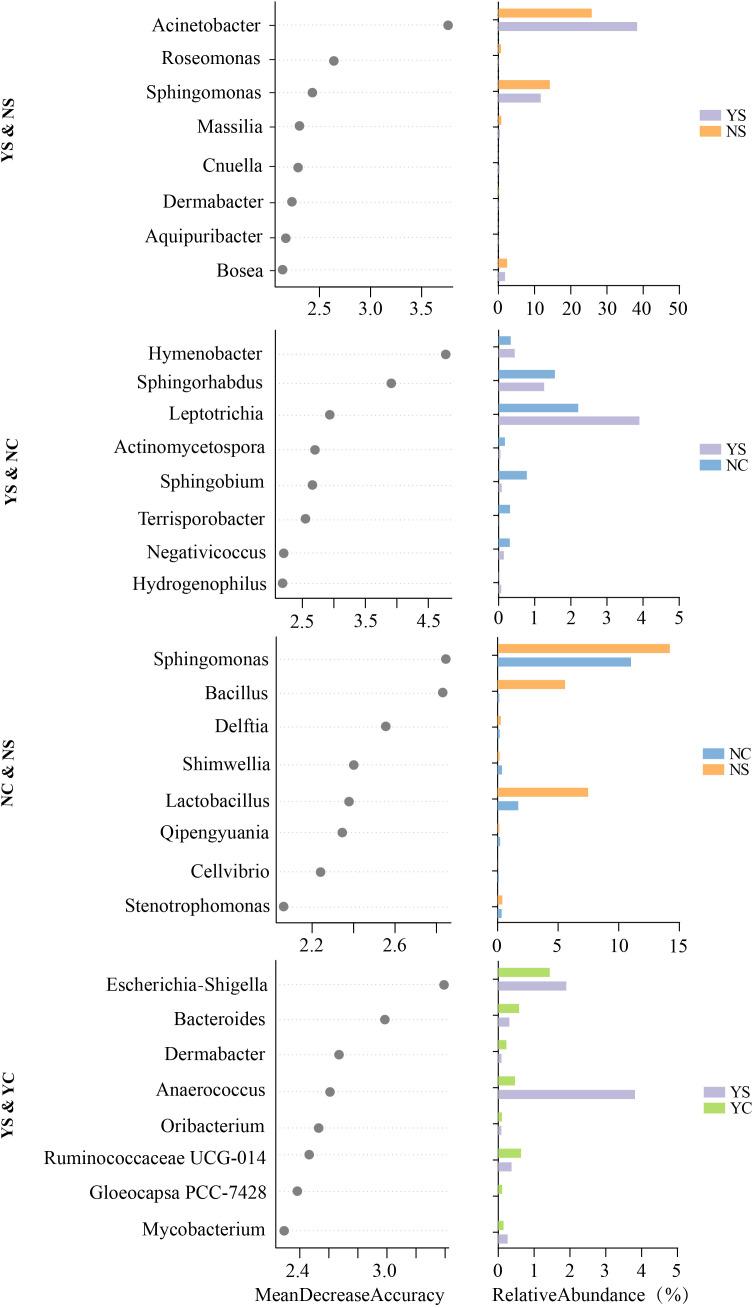
Adolescents with both acne and negative emotions exhibited significantly higher acne severity (IGA 2.675 ± 0.090) compared to the group with acne but without negative emotions (IGA 1.952 ± 0.136). Distinct microbial community patterns emerged among the groups, with acne-affected individuals displaying increased α-diversity. Additionally, negative emotions were associated with heightened β-diversity differences between acne-affected individuals. The predominant bacterial phyla identified were Firmicutes, Bacteroidetes, Proteobacteria, and Fusobacteria, with being more abundant, and and being less prevalent in adolescents experiencing negative emotions.
CONCLUSION
This study revealed that the bacterial biomarkers of the disease change when acne is accompanied by negative emotions. , , and may be key contributors to acne exacerbation. These findings underscore the importance of considering both emotional and microbiological factors in the management of adolescent acne, particularly within the context of the brain-skin connection.
引言
皮肤微生物群对于维持皮肤稳态至关重要,并参与痤疮的发病机制。支持“脑-皮轴”的新证据表明,心理压力可能会加重痤疮。负面情绪状态和痤疮在青少年中都非常普遍。尽管研究已经开始探索这种关系,但皮肤微生物群在情绪困扰和痤疮青少年中的作用仍知之甚少。
方法
166名15-18岁的青少年根据其情绪健康状况和痤疮严重程度分为四个不同的组:无痤疮或负面情绪(NC)、有痤疮但无负面情绪(NS)、有负面情绪但无痤疮(YC)以及有痤疮且有负面情绪(YS)。从每个参与者的前额采集皮肤样本,并使用高通量测序技术进行分析,随后进行全面的生物信息学分析,以评估不同组之间的微生物组成和多样性。
结果
与有痤疮但无负面情绪的组(IGA 1.952±0.136)相比,有痤疮且有负面情绪的青少年表现出明显更高的痤疮严重程度(IGA 2.675±0.090)。各组之间出现了不同的微生物群落模式,受痤疮影响的个体显示出α多样性增加。此外,负面情绪与受痤疮影响个体之间β多样性差异的增加有关。鉴定出的主要细菌门为厚壁菌门、拟杆菌门、变形菌门和梭杆菌门,其中在经历负面情绪的青少年中更为丰富,而 和 则不太普遍。
结论
本研究表明,当痤疮伴有负面情绪时,疾病的细菌生物标志物会发生变化。 、 和 可能是痤疮加重的关键因素。这些发现强调了在青少年痤疮管理中考虑情绪和微生物因素的重要性,特别是在脑-皮联系的背景下。


 Zotero 插件