Department of Dermatology, Penn State Milton S. Hershey Medical Center, Hershey, Pennsylvania, USA.
Department of Public Health Sciences, Penn State College of Medicine, Hershey, Pennsylvania, USA.
J Eur Acad Dermatol Venereol. 2023 Jan;37(1):166-175. doi: 10.1111/jdv.18616. Epub 2022 Oct 5.
The composition of the skin microbiome varies from infancy to adulthood and becomes most stable in adulthood. Adult acne patients harbour an 'acne microbiome' dominated by specific strains of Cutibacterium acnes. However, the precise timing of skin microbiome evolution, the development of the acne microbiome, and the shift to virulent C. acnes strain composition during puberty is unknown.
We performed a cross-sectional pilot study in a paediatric population to understand how and when the skin microbiome composition transitions during puberty and whether a distinct 'acne microbiome' emerges in paediatric subjects.
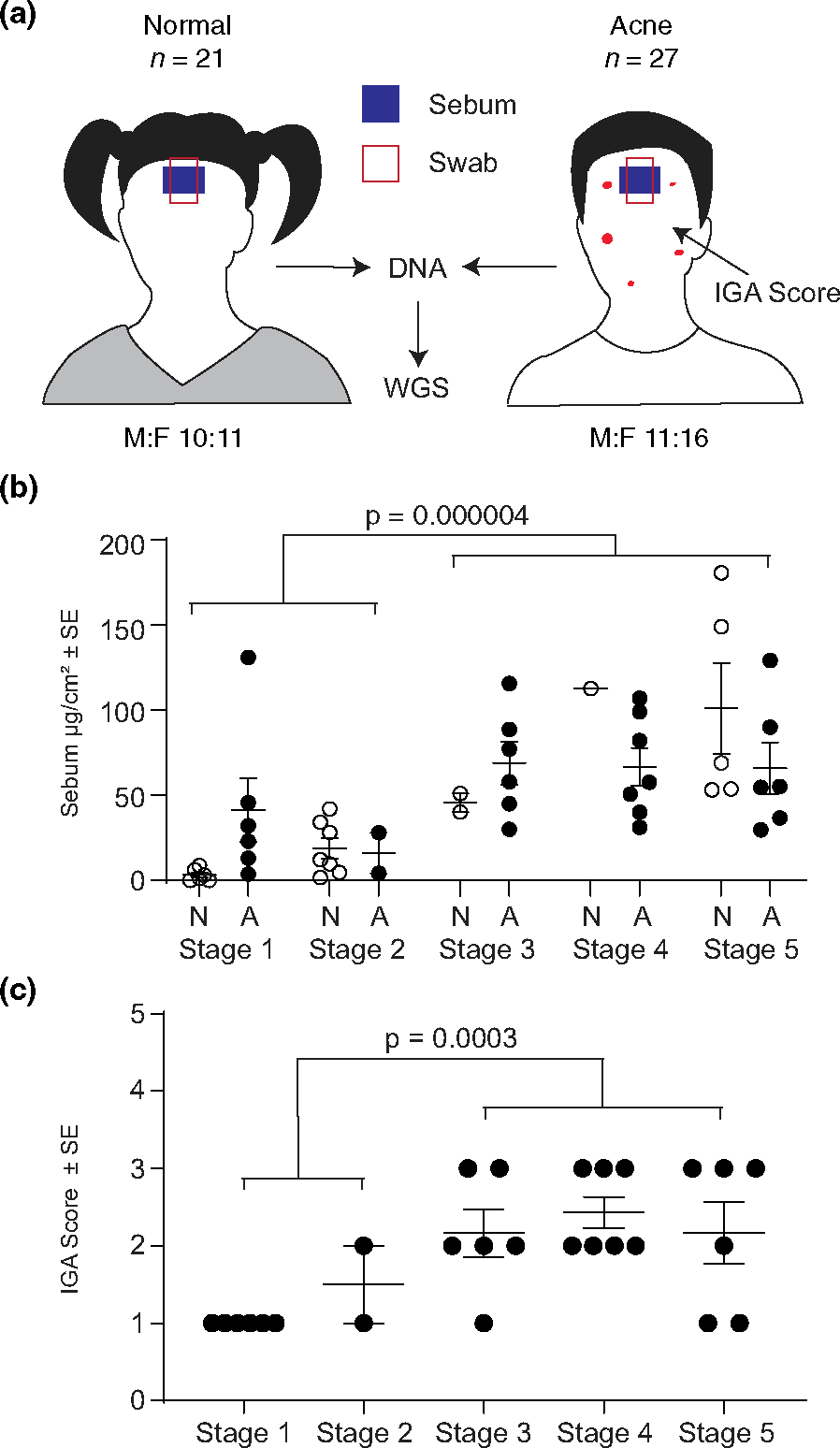
Forty-eight volunteers including males and females, ages 7-17 years, with and without acne were enrolled and evaluated for pubertal development using the Tanner staging criteria. Sebum levels were measured, and skin microbiota were collected by sterile swab on the subject's forehead. DNA was sequenced by whole genome shotgun sequencing.
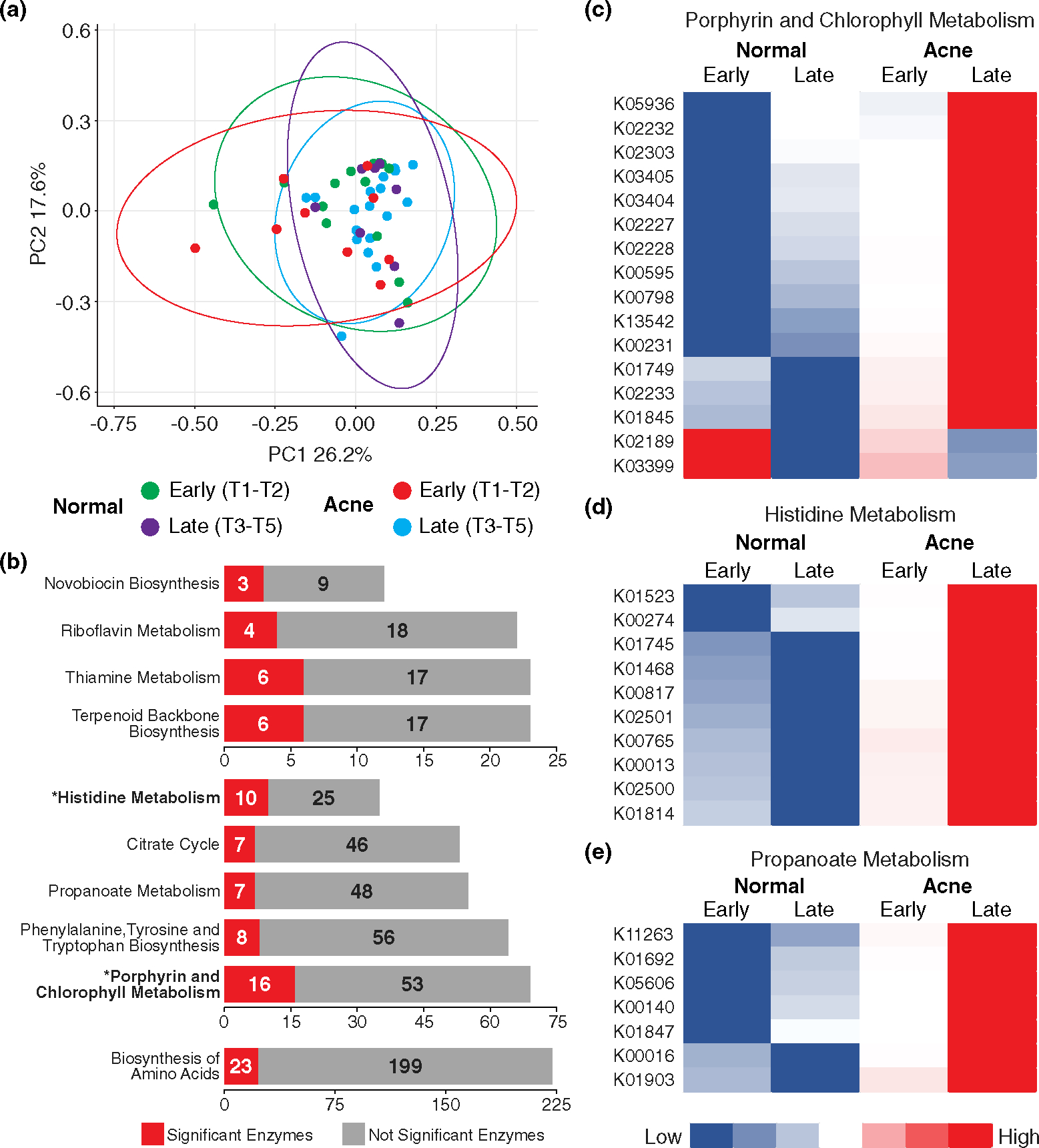
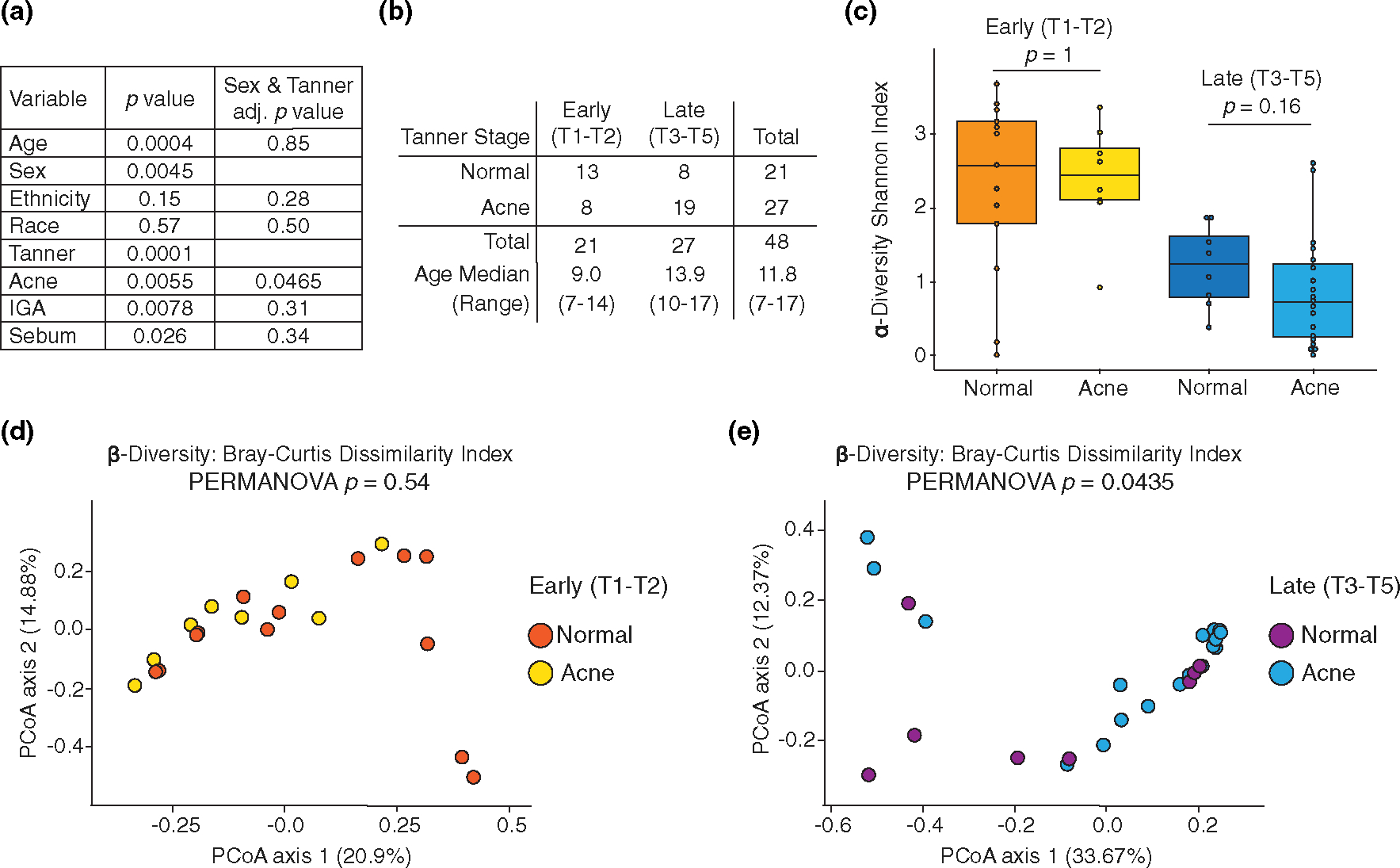
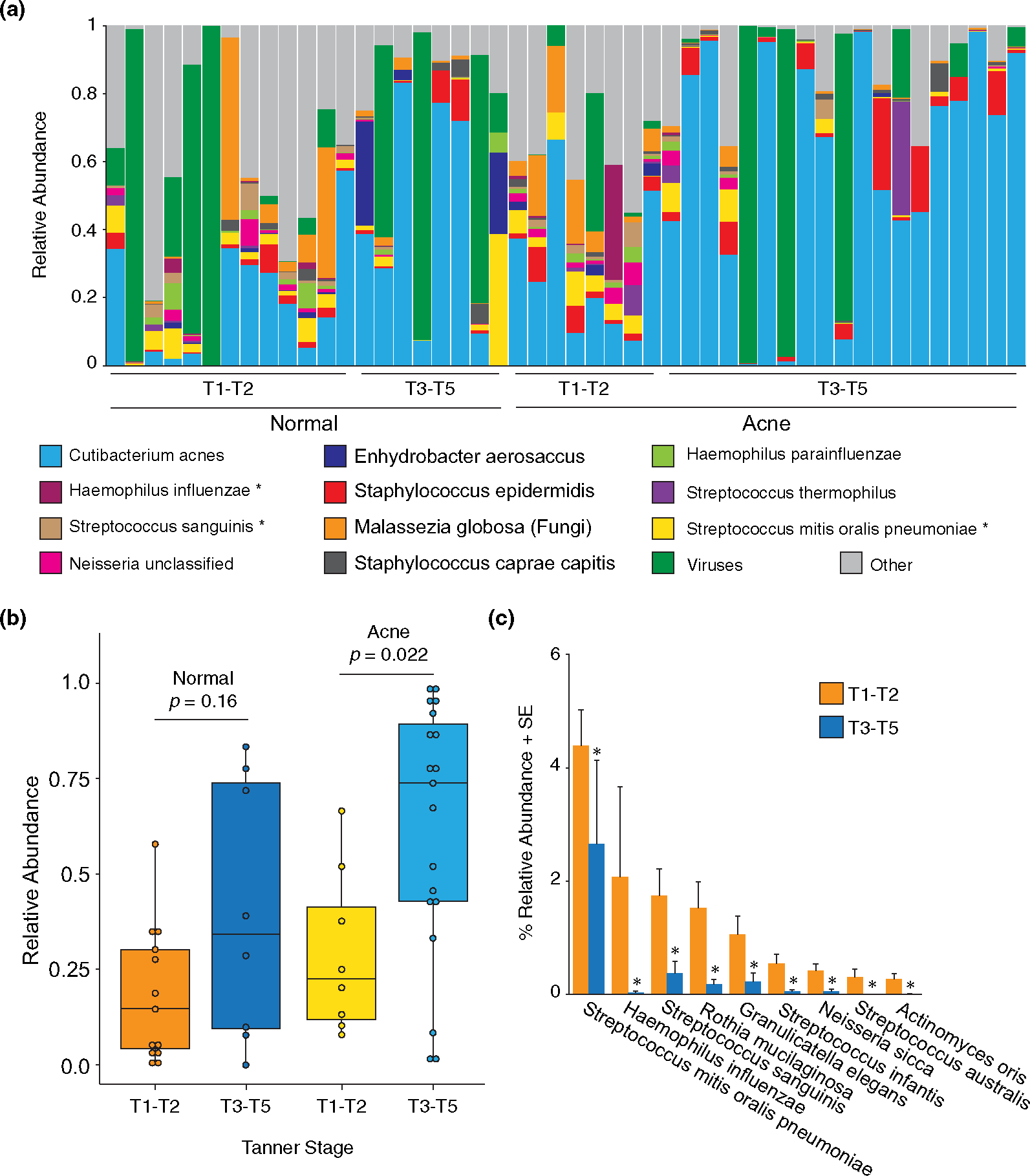
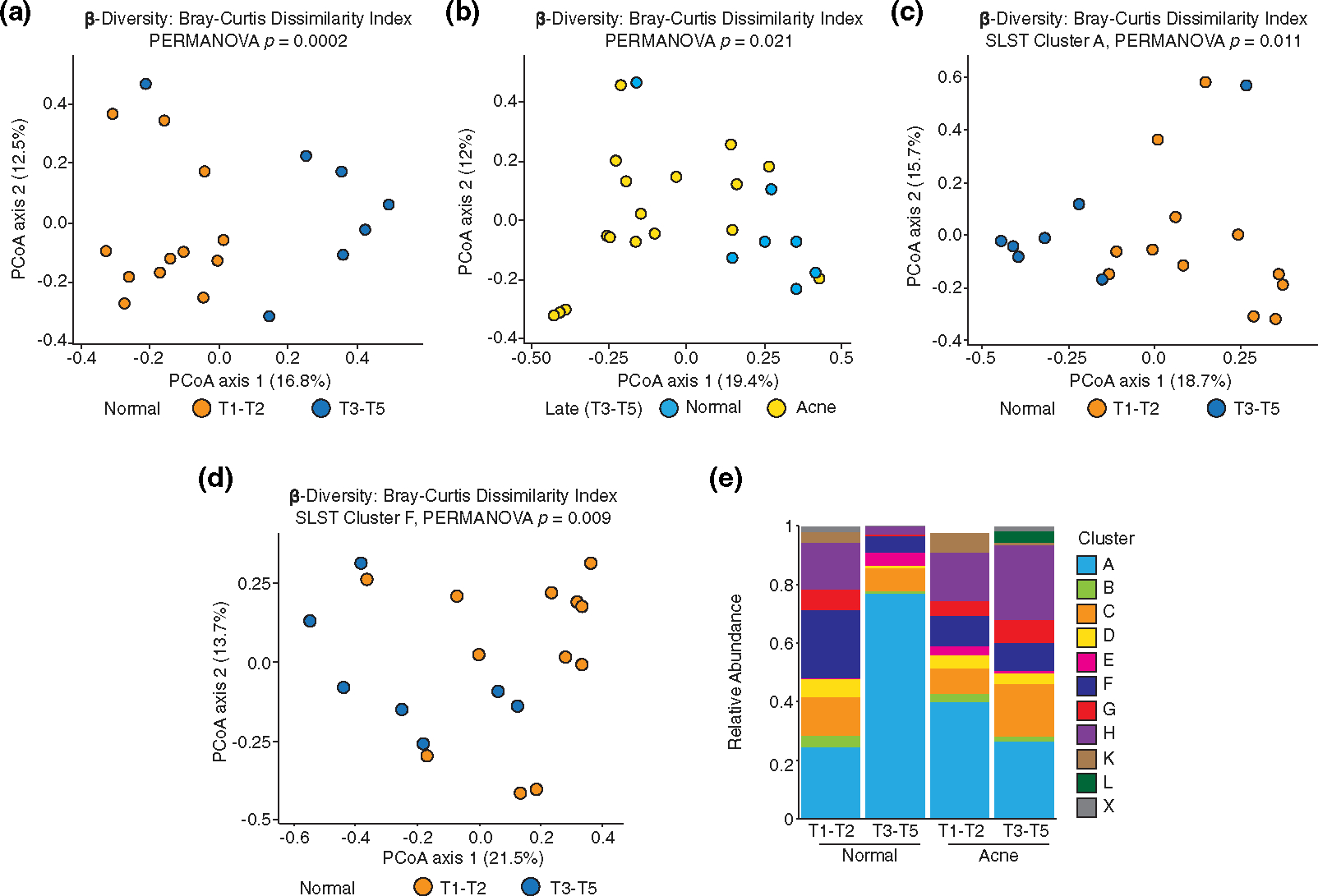
A significant shift in microbial diversity emerged between early (T1-T2) and late (T3-T5) stages of puberty, coinciding with increased sebum production on the face. The overall relative abundance of C. acnes in both normal and acne skin increased during puberty and individual C. acnes strains were uniquely affected by pubertal stage and the presence of acne. Further, an acne microbiome signature associated with unique C. acnes strain composition and metabolic activity emerges in late puberty in those with acne. This unique C. acnes strain composition is predicted to have increased porphyrin production, which may contribute to skin inflammation.
Our data suggest that the stage of pubertal development influences skin microbiome composition. As children mature, a distinct acne microbiome composition emerges in those with acne. Understanding how both puberty and acne influence the microbiome may support novel therapeutic strategies to combat acne in the paediatric population.
皮肤微生物组的组成从婴儿期到成年期发生变化,并在成年期变得最稳定。成年痤疮患者存在一种以特定痤疮丙酸杆菌(Cutibacterium acnes)菌株为主导的“痤疮微生物组”。然而,皮肤微生物组演变的确切时间、痤疮微生物组的发展以及青春期向毒力更强的 C. acnes 菌株组成的转变尚不清楚。
我们在儿科人群中进行了一项横断面试点研究,以了解皮肤微生物组组成在青春期是如何以及何时发生转变的,以及在儿科患者中是否会出现独特的“痤疮微生物组”。
招募了 48 名志愿者,包括男性和女性,年龄在 7-17 岁之间,有或没有痤疮,并根据 Tanner 分期标准评估青春期发育情况。测量皮脂水平,并使用无菌拭子采集前额的皮肤微生物群。通过全基因组 shotgun 测序进行 DNA 测序。
青春期早期(T1-T2)和晚期(T3-T5)之间微生物多样性发生显著变化,同时面部皮脂分泌增加。正常和痤疮皮肤中 C. acnes 的总体相对丰度在青春期期间增加,并且个体 C. acnes 菌株受青春期阶段和痤疮的存在的影响。此外,在青春期晚期,那些患有痤疮的患者出现了与独特的 C. acnes 菌株组成和代谢活性相关的痤疮微生物组特征。这种独特的 C. acnes 菌株组成预计会增加卟啉的产生,这可能导致皮肤炎症。
我们的数据表明,青春期发育阶段会影响皮肤微生物组的组成。随着儿童的成熟,患有痤疮的儿童会出现独特的痤疮微生物组组成。了解青春期和痤疮如何影响微生物组可能有助于支持针对儿科人群中痤疮的新型治疗策略。