Toner Yohana C, Munitz Jazz, Prevot Geoffrey, Morla-Folch Judit, Wang William, van Elsas Yuri, Priem Bram, Deckers Jeroen, Anbergen Tom, Beldman Thijs J, Brechbühl Eliane E S, Aksu Muhammed D, Ziogas Athanasios, Sarlea Sebastian A, Ozturk Mumin, Zhang Zhenhua, Li Wenchao, Li Yang, Maier Alexander, Fernandes Jessica C, Cremers Glenn A O, van Genabeek Bas, Kreijtz Joost H C M, Lutgens Esther, Riksen Niels P, Janssen Henk M, Söntjens Serge H M, Hoeben Freek J M, Kluza Ewelina, Singh Gagandeep, Giamarellos-Bourboulis Evangelos J, Schotsaert Michael, Duivenvoorden Raphaël, van der Meel Roy, Joosten Leo A B, Cai Lei, Temel Ryan E, Fayad Zahi A, Mhlanga Musa M, van Leent Mandy M T, Teunissen Abraham J P, Netea Mihai G, Mulder Willem J M
BioMedical Engineering and Imaging Institute, Icahn School of Medicine at Mount Sinai, New York, NY 10029, USA.
Diagnostic, Molecular and Interventional Radiology, Icahn School of Medicine at Mount Sinai, New York, NY 10029, USA.
iScience. 2025 Mar 4;28(4):112163. doi: 10.1016/j.isci.2025.112163. eCollection 2025 Apr 18.
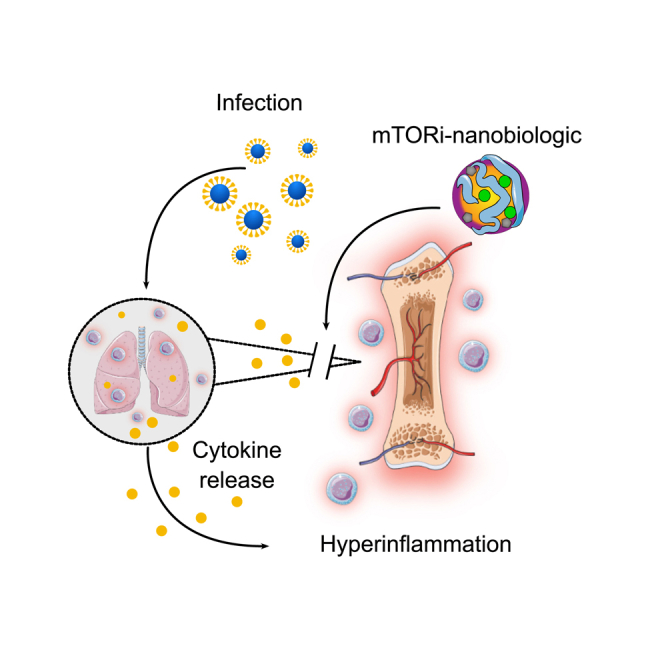
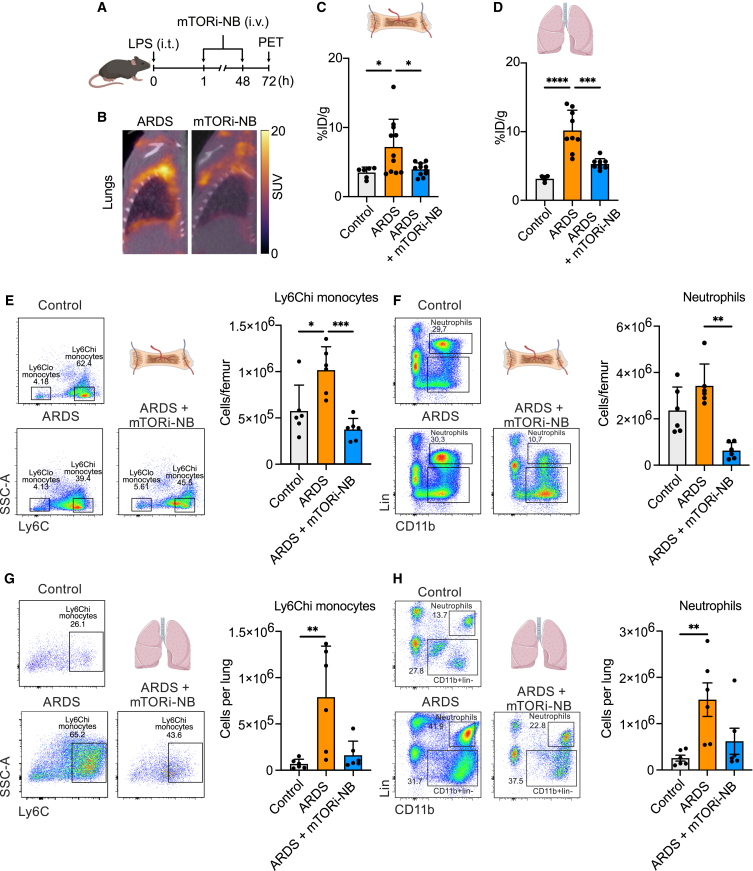
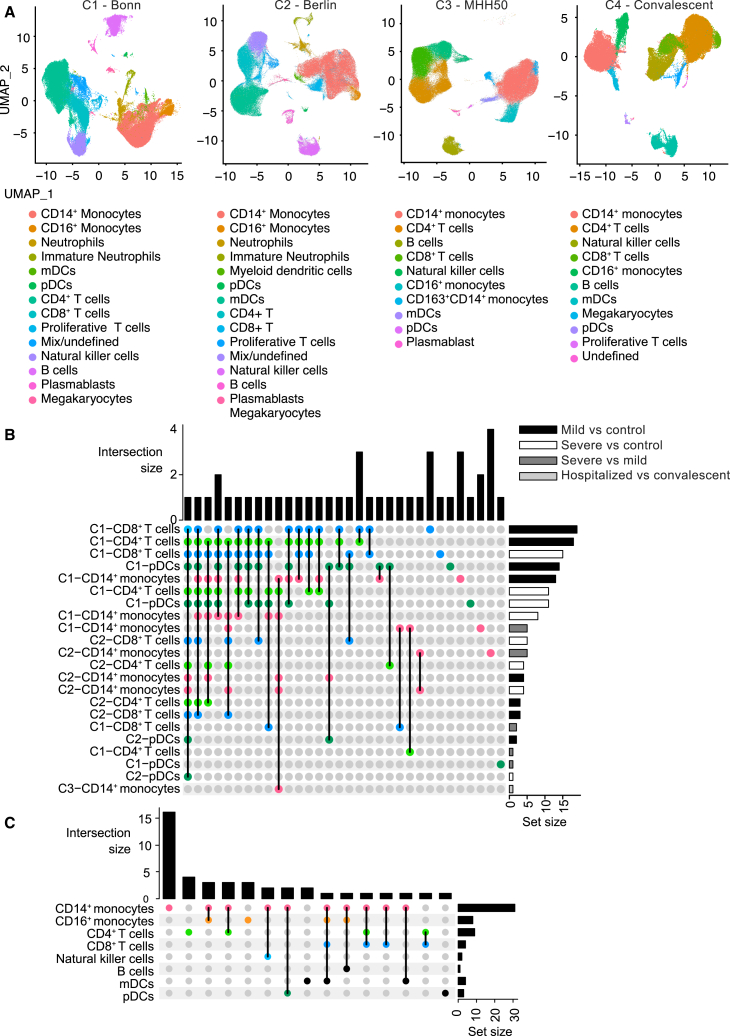
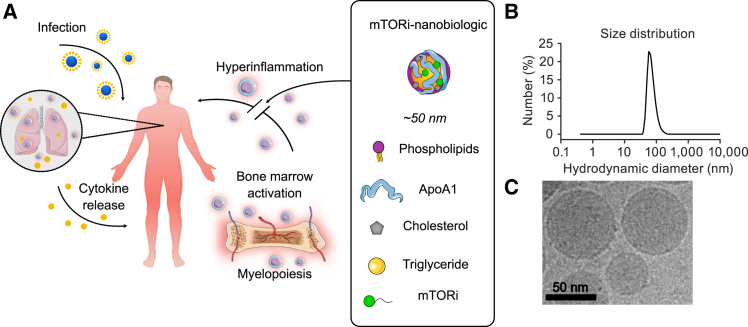
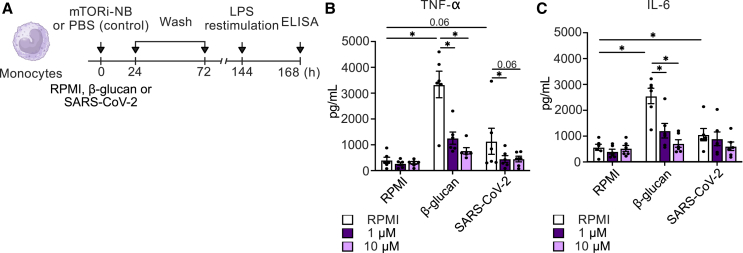
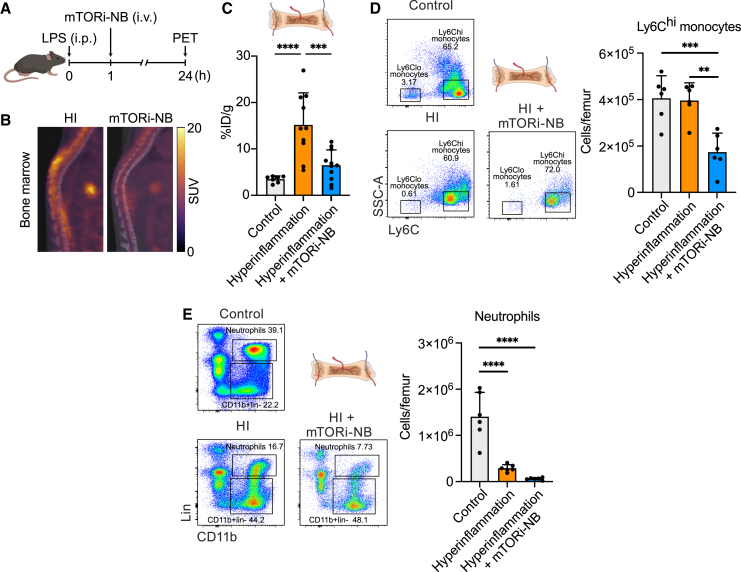
Infections, cancer, and trauma can cause life-threatening hyperinflammation. In the present study, using single-cell RNA sequencing of circulating immune cells, we found that the mammalian target of rapamycin (mTOR) pathway plays a critical role in myeloid cell regulation in COVID-19 patients. Previously, we developed an mTOR-inhibiting nanobiologic (mTORi-nanobiologic) that efficiently targets myeloid cells and their progenitors in the bone marrow. , we demonstrated that mTORi-nanobiologics potently inhibit infection-associated inflammation in human primary immune cells. Next, we investigated the effect of mTORi-nanobiologics in mouse models of hyperinflammation and acute respiratory distress syndrome. Using F-FDG uptake and flow cytometry readouts, we found mTORi-nanobiologic therapy to efficiently reduce hematopoietic organ metabolic activity and inflammation to levels comparable to those of healthy control animals. Together, we show that regulating myelopoiesis with mTORi-nanobiologics is a compelling therapeutic strategy to prevent deleterious organ inflammation in infection-related complications.
感染、癌症和创伤可导致危及生命的过度炎症反应。在本研究中,我们通过对循环免疫细胞进行单细胞RNA测序发现,雷帕霉素靶蛋白(mTOR)信号通路在新冠患者的髓系细胞调控中起关键作用。此前,我们研发了一种抑制mTOR的纳米生物制剂(mTORi-纳米生物制剂),它能有效靶向骨髓中的髓系细胞及其祖细胞。我们证明,mTORi-纳米生物制剂能有效抑制人原代免疫细胞中与感染相关的炎症。接下来,我们研究了mTORi-纳米生物制剂在过度炎症和急性呼吸窘迫综合征小鼠模型中的作用。通过F-FDG摄取和流式细胞术检测,我们发现mTORi-纳米生物制剂治疗能有效降低造血器官的代谢活性和炎症水平,使其与健康对照动物相当。我们共同表明,用mTORi-纳米生物制剂调节髓系造血是预防感染相关并发症中有害器官炎症的一种有吸引力的治疗策略。