Begum Shahnaz, Hossain Md Jamil, Kim Insun, Min Hyun Su, Lim Yu Na, Cho Hyun-Jeong, Ryu Jin-Hyeob
Biorchestra Co. Ltd., (34000) 1, International Science 2-ro, Yuseong-gu, Daejeon (Sindong 658-3), South Korea.
Department of Biomedical Laboratory Science, College of Medical Science, Konyang University, 158, Gwanjeodong-ro, Seo-gu, Daejeon, 35365, South Korea.
BMC Immunol. 2025 Apr 3;26(1):26. doi: 10.1186/s12865-025-00685-9.
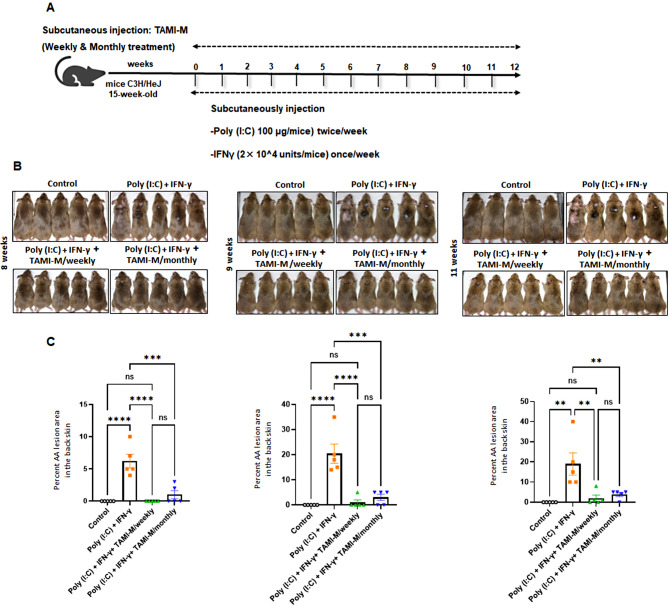
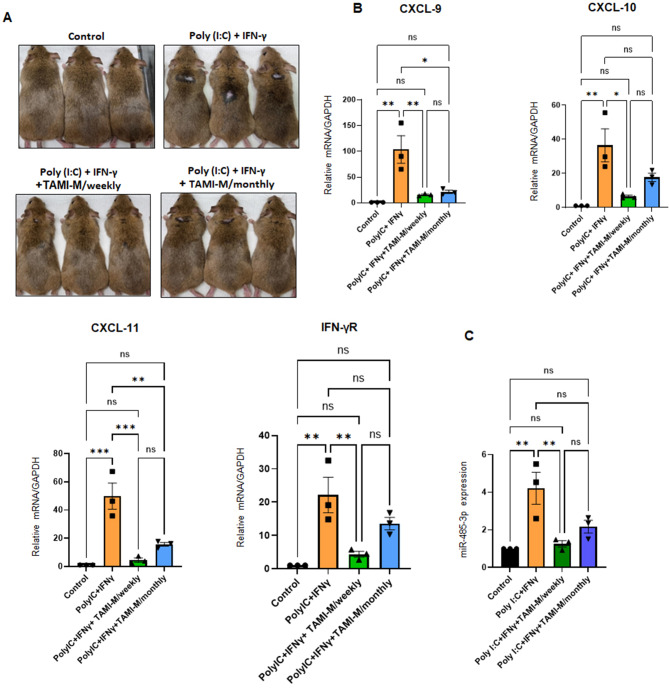
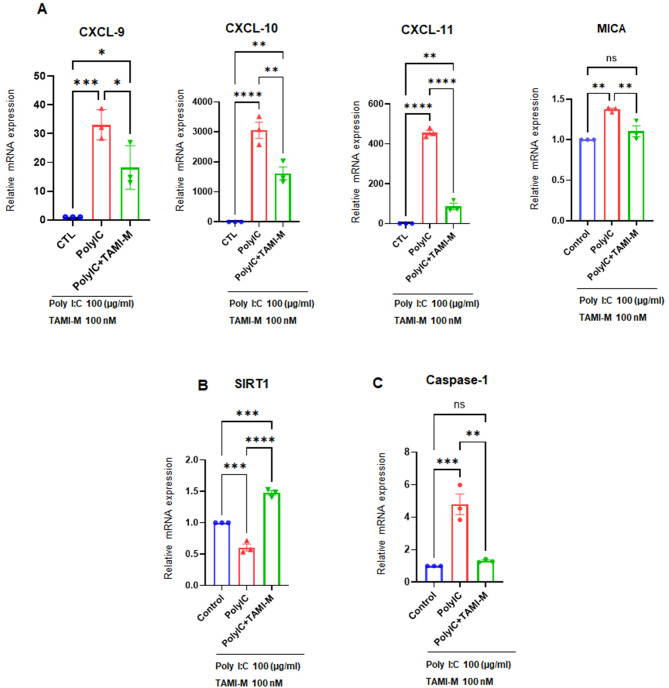
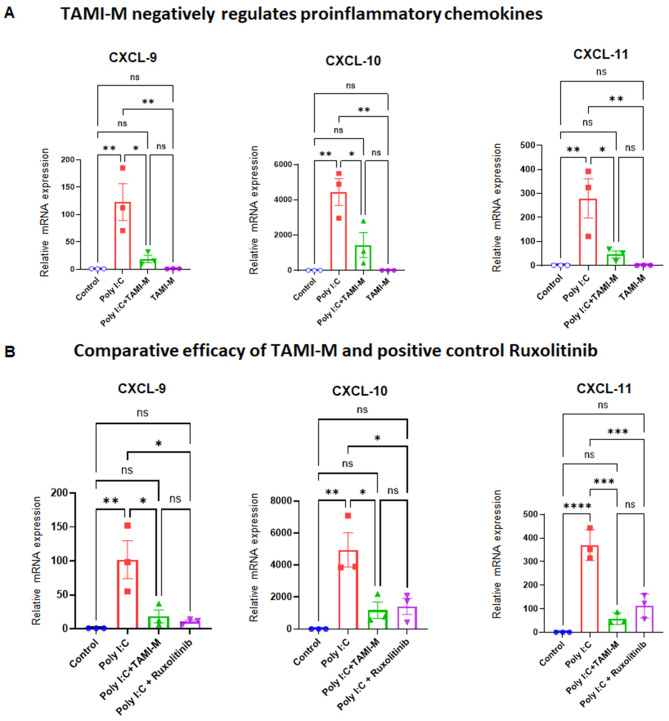
Alopecia areata (AA) are hair loss disorders with distinct pathogenetic mechanisms involving immune dysregulation and microRNA modulation. AA, a T cell-mediated autoimmune disease, is characterized by sudden hair loss, with interferon-gamma (IFN-γ) playing a pivotal role in pathogenesis. The upregulation of IFN response genes, including IFN-inducible chemokines CXCL9, CXCL10, and CXCL11, in lesional skin reflects the activation of the IFN response pathway and contributes to immune cell recruitment and inflammation.
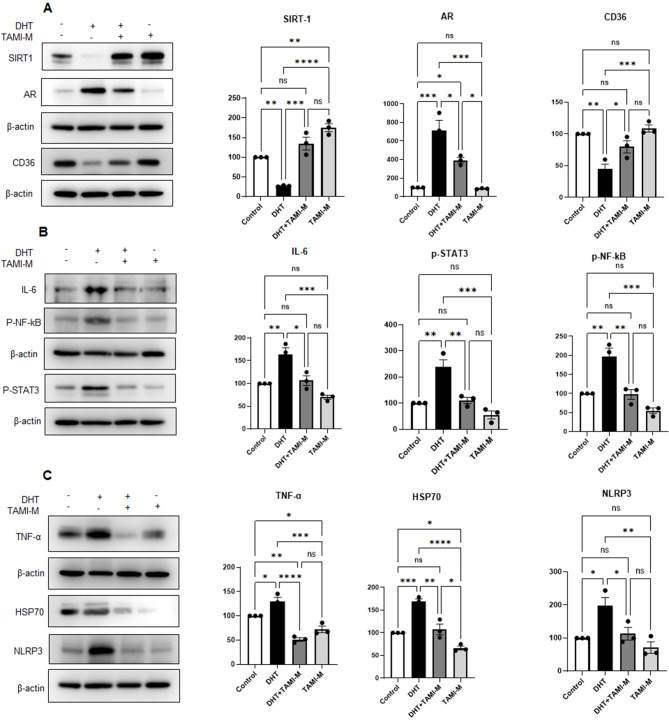
Recent research highlights the role of SIRT1, a class III histone deacetylase, in modulating immune responses in AA. SIRT1 inhibition promotes the production of Th1 cytokines and chemokines, impairing inflammation, while SIRT1 activation suppresses autoreactive responses through NF-κB deacetylation and STAT3 phosphorylation. Additionally, antisense oligonucleotides (ASOs) targeting miR-485-3p show therapeutic potential in promoting hair regrowth and mitigating inflammation in murine models of androgenic alopecia (AGA) and AA.
Understanding chemokine dysregulation provides key insights into AA pathogenesis and highlights TAMI-M as a potential therapy for reducing inflammation and promoting hair regeneration. These findings advance the exploration of immune, microRNA, and SIRT1 pathways as targets for novel hair loss treatments.
斑秃(AA)是一种脱发疾病,其发病机制独特,涉及免疫失调和微小RNA调节。AA是一种T细胞介导的自身免疫性疾病,其特征是突然脱发,干扰素-γ(IFN-γ)在发病机制中起关键作用。病变皮肤中包括IFN诱导趋化因子CXCL9、CXCL10和CXCL11在内的IFN反应基因上调,反映了IFN反应途径的激活,并有助于免疫细胞募集和炎症反应。
最近的研究突出了Ⅲ类组蛋白去乙酰化酶SIRT1在调节AA免疫反应中的作用。抑制SIRT1可促进Th1细胞因子和趋化因子的产生,损害炎症反应,而激活SIRT1则通过NF-κB去乙酰化和STAT3磷酸化抑制自身反应性反应。此外,靶向miR-485-3p的反义寡核苷酸(ASO)在雄激素性脱发(AGA)和AA小鼠模型中显示出促进毛发生长和减轻炎症的治疗潜力。
了解趋化因子失调为AA发病机制提供了关键见解,并突出了TAMI-M作为减少炎症和促进毛发再生的潜在疗法。这些发现推动了对免疫、微小RNA和SIRT1途径作为新型脱发治疗靶点的探索。