Reiling Linda, Persson Kristina E M, McCallum Fiona J, Gicheru Nimmo, Kinyanjui Samson M, Chitnis Chetan E, Fowkes Freya J I, Marsh Kevin, Beeson James G
Department of Life Sciences, Burnet Institute of Medical Research and Public Health, Melbourne, VIC, Australia.
Department of Medicine, University of Melbourne, VIC, Australia.
Front Immunol. 2025 Mar 25;16:1532451. doi: 10.3389/fimmu.2025.1532451. eCollection 2025.
Antibodies targeting the blood-stage of play a critical role in naturally acquired immunity to malaria by limiting blood-stage parasitemia. One mode of action of antibodies is the direct inhibition of merozoite invasion of erythrocytes through targeting invasion ligands. However, evasion of inhibitory antibodies may be mediated in by switching between various ligand-mediated merozoite invasion pathways. Here, we investigated the potential roles of invasion ligands PfRH1, PfRH2a and PfRH2b in immune evasion through phenotypic variation, and their importance as targets of human invasion-inhibitory antibodies.
Serum samples from malaria-exposed children and adults in Kenya were examined for their ability to inhibit invasion, using parasites with disrupted pfrh1, pfrh2a or pfrh2b genes.
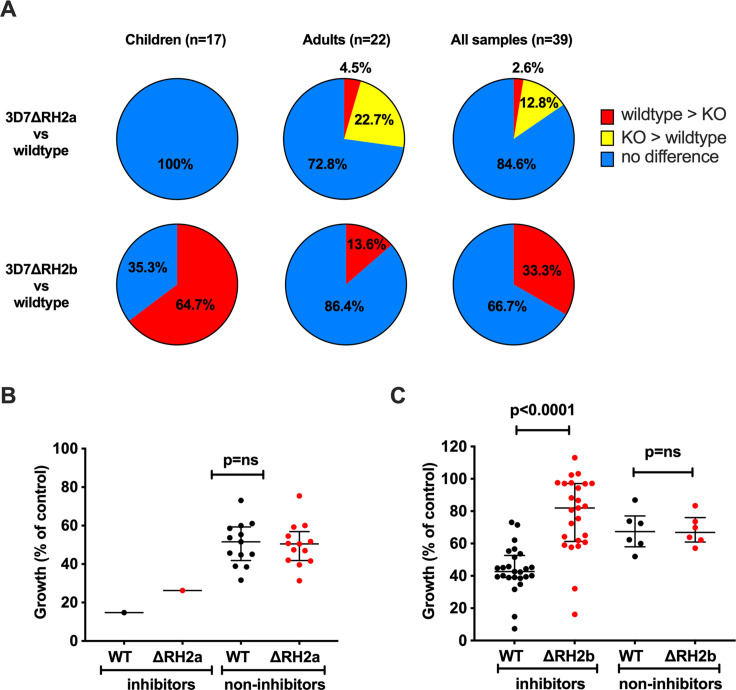
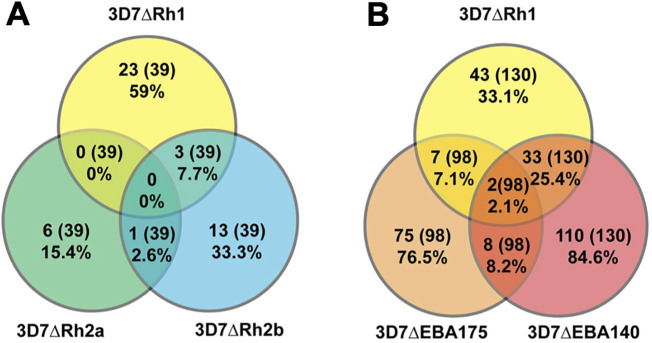
The loss of PfRH1 and PfRH2b substantially impacted on susceptibility to inhibitory antibodies, suggesting that variation in the use of these ligands contributes to immune evasion. The effect was less prominent with loss of PfRH2a. Differential inhibition of the knockout and parental lines points to PfRH1 and PfRH2b as targets of acquired growth inhibitory antibodies whereas PfRH2a appeared to be a minor target. There was limited relatedness of the inhibitory responses between different isolates or compared to parasites with deletions of erythrocyte-binding antigens. This further suggests that there is a substantial amount of antigenic diversity in invasion pathways to facilitate immune evasion. These findings provide evidence that PfRH1 and PfRH2b are significant targets of inhibitory antibodies and variation in their expression may facilitate immune evasion. Targeting of multiple invasion ligands in vaccine design is likely to be required to achieve potent inhibitory antibodies and protective efficacy against malaria.
靶向疟原虫血液阶段的抗体通过限制血液阶段的寄生虫血症,在疟疾的自然获得性免疫中发挥关键作用。抗体的一种作用模式是通过靶向入侵配体直接抑制裂殖子对红细胞的入侵。然而,疟原虫可能通过在各种配体介导的裂殖子入侵途径之间切换来逃避抑制性抗体。在此,我们研究了入侵配体PfRH1、PfRH2a和PfRH2b在通过表型变异进行免疫逃避中的潜在作用,以及它们作为人类入侵抑制性抗体靶点的重要性。
使用pfrh1、pfrh2a或pfrh2b基因被破坏的疟原虫,检测肯尼亚接触过疟疾的儿童和成人的血清样本抑制疟原虫入侵的能力。
PfRH1和PfRH2b的缺失对抑制性抗体的敏感性有重大影响,表明这些配体使用的变化有助于免疫逃避。PfRH2a缺失时这种影响不太明显。敲除株和亲本株的差异抑制表明PfRH1和PfRH2b是获得性生长抑制抗体的靶点,而PfRH2a似乎是次要靶点。不同分离株之间或与红细胞结合抗原缺失的寄生虫相比,抑制反应的相关性有限。这进一步表明入侵途径中存在大量抗原多样性以促进免疫逃避。这些发现提供了证据,证明PfRH1和PfRH2b是抑制性抗体的重要靶点,其表达的变化可能促进免疫逃避。在疫苗设计中可能需要靶向多种入侵配体,以获得有效的抑制性抗体和针对疟疾的保护效力。