Burnet Institute of Medical Research and Public Health, Victoria, Australia.
PLoS One. 2012;7(9):e45253. doi: 10.1371/journal.pone.0045253. Epub 2012 Sep 20.
Acquired antibodies are important in human immunity to malaria, but key targets remain largely unknown. Plasmodium falciparum reticulocyte-binding-homologue-4 (PfRh4) is important for invasion of human erythrocytes and may therefore be a target of protective immunity.
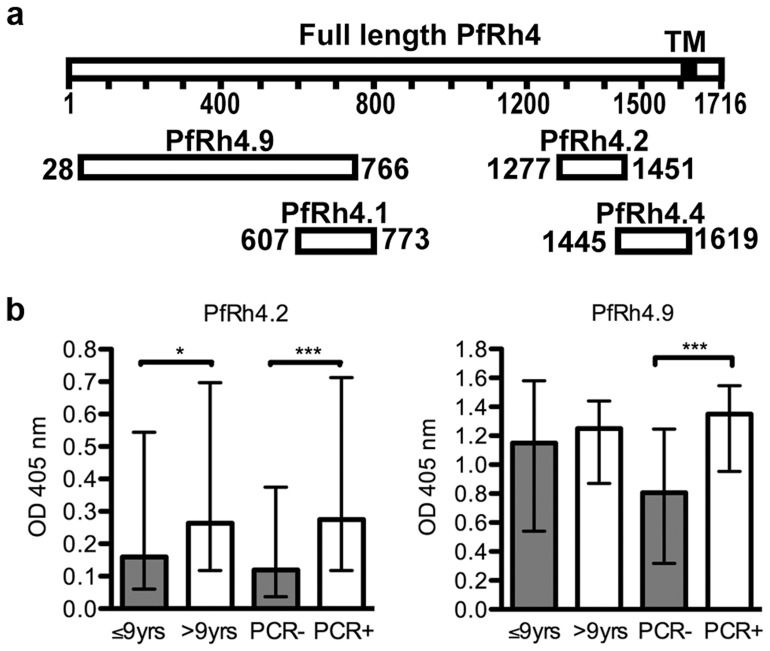
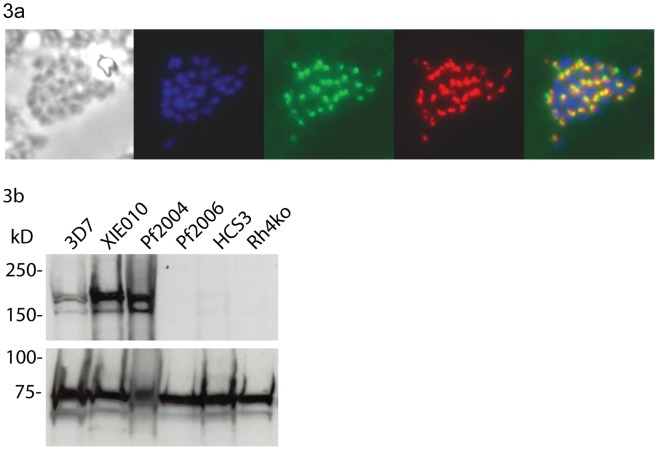
IgG and IgG subclass-specific responses against different regions of PfRh4 were determined in a longitudinal cohort of 206 children in Papua New Guinea (PNG). Human PfRh4 antibodies were tested for functional invasion-inhibitory activity, and expression of PfRh4 by P. falciparum isolates and sequence polymorphisms were determined.
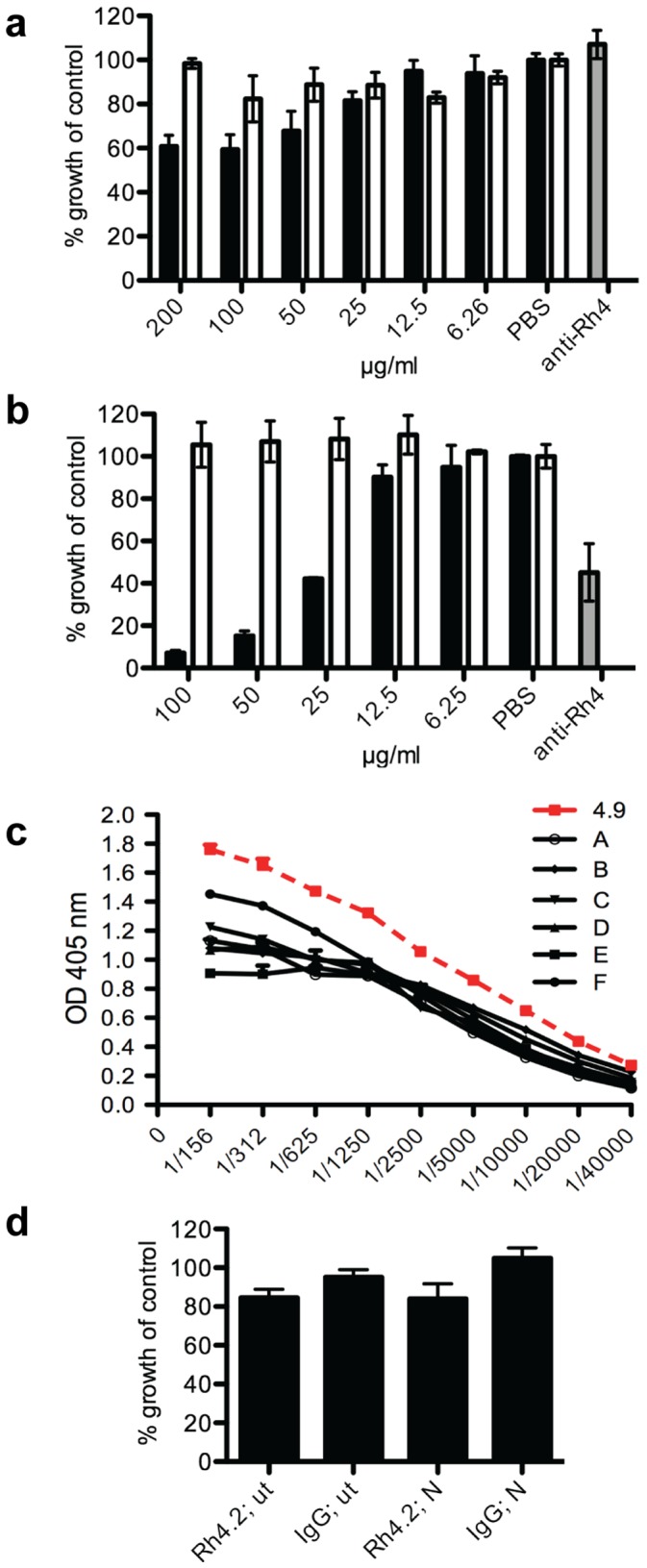
Antibodies to PfRh4 were acquired by children exposed to P. falciparum malaria, were predominantly comprised of IgG1 and IgG3 subclasses, and were associated with increasing age and active parasitemia. High levels of antibodies, particularly IgG3, were strongly predictive of protection against clinical malaria and high-density parasitemia. Human affinity-purified antibodies to the binding region of PfRh4 effectively inhibited erythrocyte invasion by P. falciparum merozoites and antibody levels in protected children were at functionally-active concentrations. Although expression of PfRh4 can vary, PfRh4 protein was expressed by most isolates derived from the cohort and showed limited sequence polymorphism.
Evidence suggests that PfRh4 is a target of antibodies that contribute to protective immunity to malaria by inhibiting erythrocyte invasion and preventing high density parasitemia. These findings advance our understanding of the targets and mechanisms of human immunity and evaluating the potential of PfRh4 as a component of candidate malaria vaccines.
获得性抗体在人体对疟疾的免疫中很重要,但关键靶标在很大程度上仍不清楚。恶性疟原虫(Plasmodium falciparum) 红细胞内期环子孢子蛋白同源物 4(PfRh4)对入侵人红细胞很重要,因此可能是保护性免疫的靶标。
在巴布亚新几内亚(PNG)的一个 206 名儿童的纵向队列中,测定了针对 PfRh4 不同区域的 IgG 和 IgG 亚类特异性反应。测试了人类 PfRh4 抗体的功能入侵抑制活性,并确定了 PfRh4 的表达和序列多态性。
暴露于恶性疟原虫疟疾的儿童会产生针对 PfRh4 的抗体,这些抗体主要由 IgG1 和 IgG3 亚类组成,与年龄增长和寄生虫血症活跃相关。高水平的抗体,特别是 IgG3,强烈预测对临床疟疾和高密度寄生虫血症的保护作用。针对 PfRh4 结合区的高亲和力人源纯化抗体可有效抑制恶性疟原虫裂殖子对红细胞的入侵,并且保护性儿童的抗体水平处于功能活性浓度。尽管 PfRh4 的表达可能会有所不同,但大多数来自该队列的分离株都表达 PfRh4 蛋白,并且显示出有限的序列多态性。
有证据表明,PfRh4 是抗体的靶标,这些抗体通过抑制红细胞入侵和防止高密度寄生虫血症,有助于对疟疾的保护性免疫。这些发现增进了我们对人体免疫的靶标和机制的理解,并评估了 PfRh4 作为候选疟疾疫苗成分的潜力。