Ji Li, Deng Anqi, Chen Huiying, Guo Shuangyan, Wang Pingyu, Zhang Ruiyi, Chen Wenyang, Fan Taotao, Jiang Lijuan, Shen Bing
The First Clinical Medical College, Nanjing University of Traditional Chinese Medicine, Nanjing, Jiangsu, China.
Gynecology, Lu'an Hospital of Traditional Chinese Medicine, Lu'an, Anhui, China.
Front Mol Biosci. 2025 Mar 25;12:1573294. doi: 10.3389/fmolb.2025.1573294. eCollection 2025.
BaoTaiyin (BTY) is a traditional Chinese medicine decoction. It has been used to treat recurrent miscarriage (RM). However, there are no comprehensive systematic studies to identify the chemical compositions of BTY and molecular mechanisms on RM. Finding the chemical components of BTY and clarifying the underlying processes in the treatment of RM were the goals of the study.
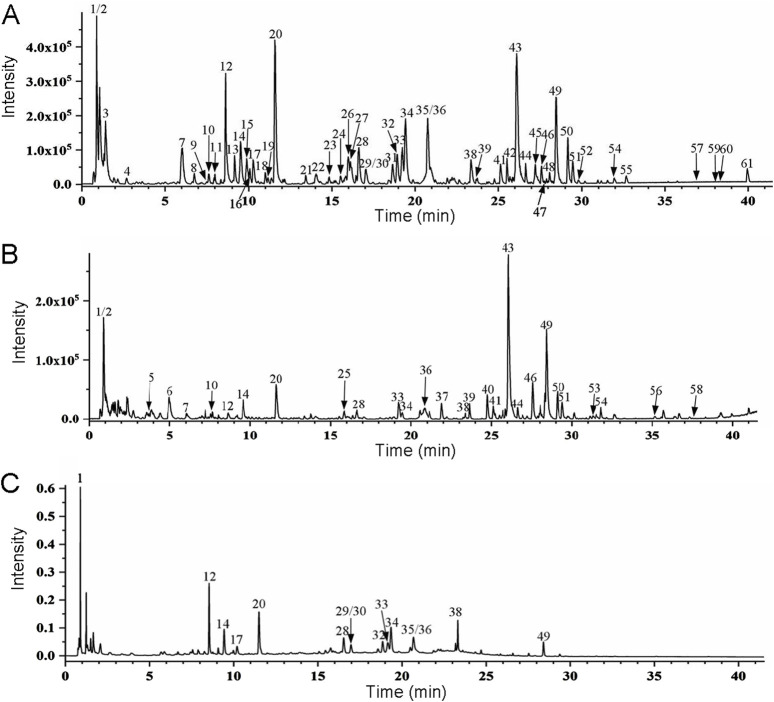
We used ultra-high-performance liquid chromatography coupled with triple quadruple time-of-flight tandem mass spectrometry to analyze the chemical components of BTY, network analysis to predict the pharmacological effects of the identified active ingredients, and cell experiments to identify potential molecular mechanisms.
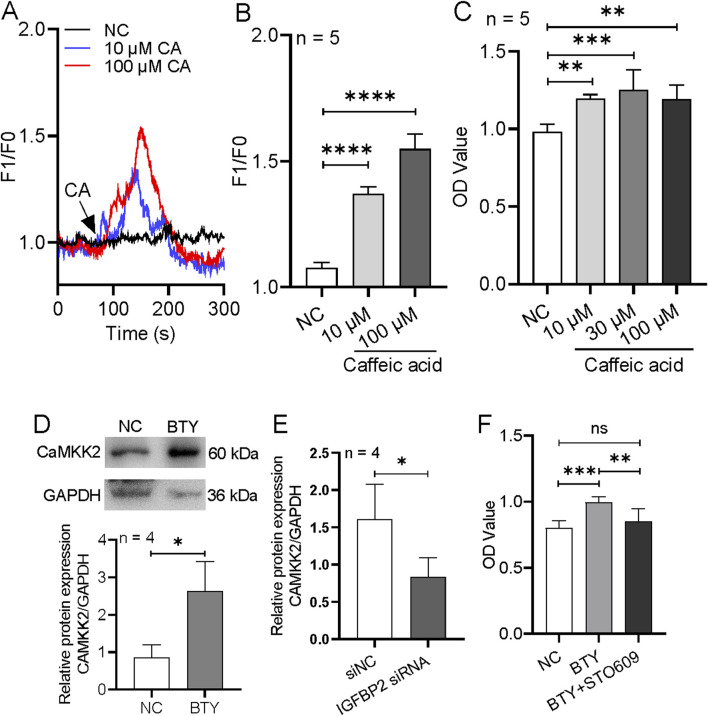
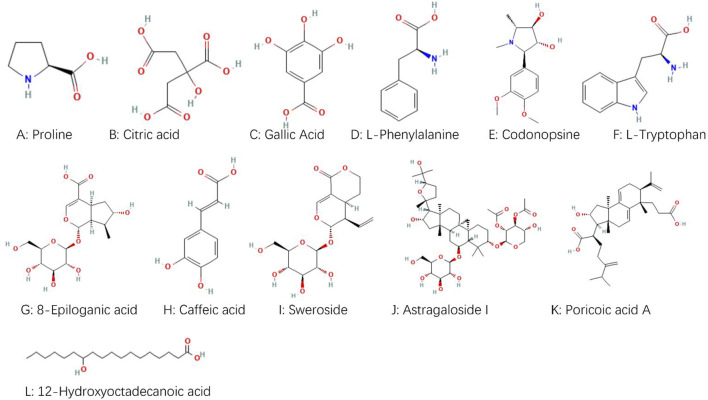
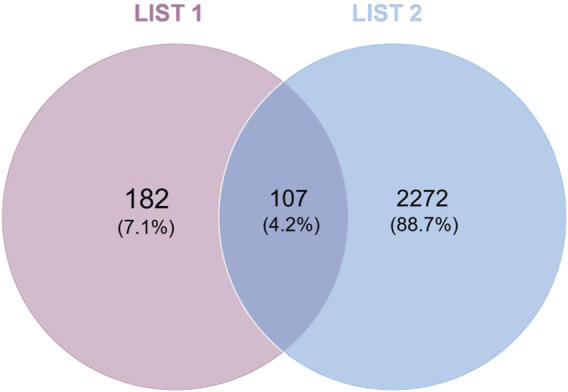
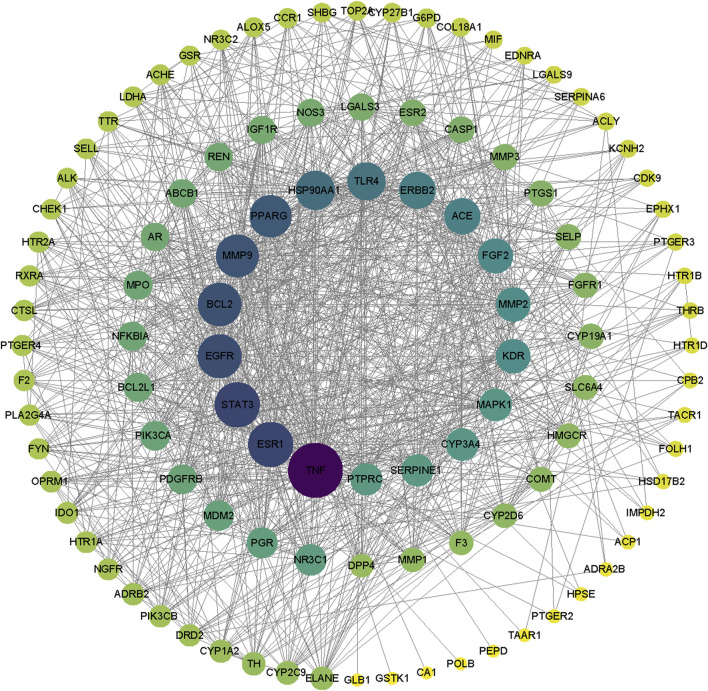
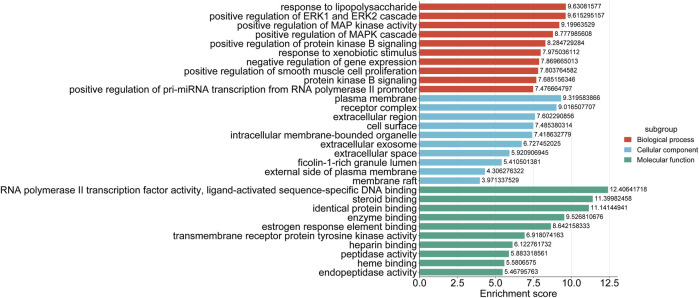
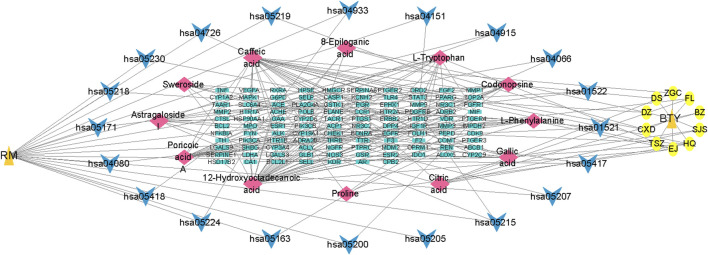
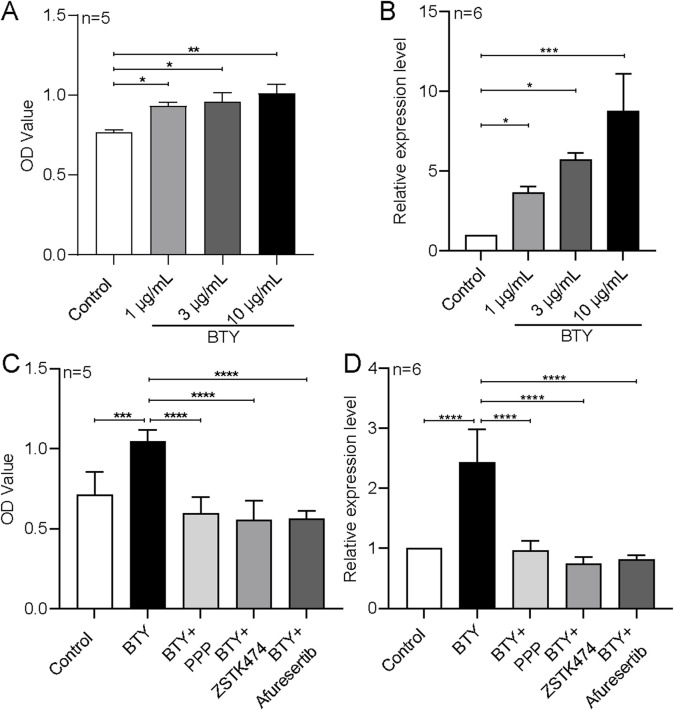
We found 12 active ingredients among 61 components identified in BTY. These identified activities were linked to regulatory effects on 127 key signaling pathways, targeting 107 proteins. Through network analysis, we determined that insulin-like growth factor 1 receptor, matrix metalloproteinases, PI3K, and STAT3 may be the core targets of BTY's therapeutic effects on RM. We further explored this mechanism to find that aqueous extracts of BTY significantly enhanced IGFBP2 and CaMKK2 expression and trophoblast proliferation, whereas inhibitors of IGF1R/PI3K/AKT pathway or CaMKK2 blocked the effect of BTY on trophoblast proliferation. In addition, IGFBP2 siRNA suppressed BTY-induced CaMKK2 expression. Caffeic acid, as one of components of BTY, increased intracellular Ca concentration and proliferation in trophoblast.
Our research showed that BTY may have therapeutic benefits on RM through multiple targets and pathways, such as the IGF1R/PI3K/AKT and Ca/calmodulin signaling pathways.
保胎饮(BaoTaiyin,BTY)是一种中药汤剂,一直用于治疗复发性流产(RM)。然而,目前尚无全面的系统研究来确定保胎饮的化学成分及其治疗复发性流产的分子机制。本研究旨在找出保胎饮的化学成分,并阐明其治疗复发性流产的潜在作用机制。
我们采用超高效液相色谱联用三重四极杆飞行时间串联质谱法分析保胎饮的化学成分,通过网络分析预测已鉴定活性成分的药理作用,并通过细胞实验确定潜在的分子机制。
在鉴定出的61种成分中,我们发现了12种活性成分。这些已鉴定的活性成分与对127条关键信号通路的调节作用相关,作用靶点为107种蛋白质。通过网络分析,我们确定胰岛素样生长因子1受体、基质金属蛋白酶、PI3K和STAT3可能是保胎饮治疗复发性流产的核心靶点。我们进一步探究该机制,发现保胎饮水提取物显著增强IGFBP2和CaMKK2表达以及滋养层细胞增殖,而IGF1R/PI3K/AKT通路抑制剂或CaMKK2可阻断保胎饮对滋养层细胞增殖的作用。此外,IGFBP2 siRNA可抑制保胎饮诱导的CaMKK2表达。咖啡酸作为保胎饮的成分之一,可增加滋养层细胞内钙离子浓度并促进其增殖。
我们的研究表明,保胎饮可能通过多个靶点和途径对复发性流产具有治疗作用,如IGF1R/PI3K/AKT和Ca/钙调蛋白信号通路。