Graber Michael, Gollmann-Tepeköylü Can, Schweiger Victor, Hirsch Jakob, Pölzl Leo, Nägele Felix, Lener Daniela, Hackl Hubert, Sopper Sieghart, Kirchmair Elke, Mair Sophia, Voelkl Jakob, Plattner Christina, Eichin Felix, Trajanoski Zlatko, Krogsdam Anne, Eder Jonas, Fiegl Manuel, Hau Dominik, Tancevski Ivan, Grimm Michael, Cooke John P, Holfeld Johannes
Department of Cardiac Surgery, Medical University of Innsbruck, Anichstrasse 35, Innsbruck 6020, Austria.
Division of Clinical and Functional Anatomy, Medical University of Innsbruck, Anichstrasse 35, 6020 Innsbruck, Austria.
Eur Heart J Open. 2025 Apr 8;5(2):oeaf011. doi: 10.1093/ehjopen/oeaf011. eCollection 2025 Mar.
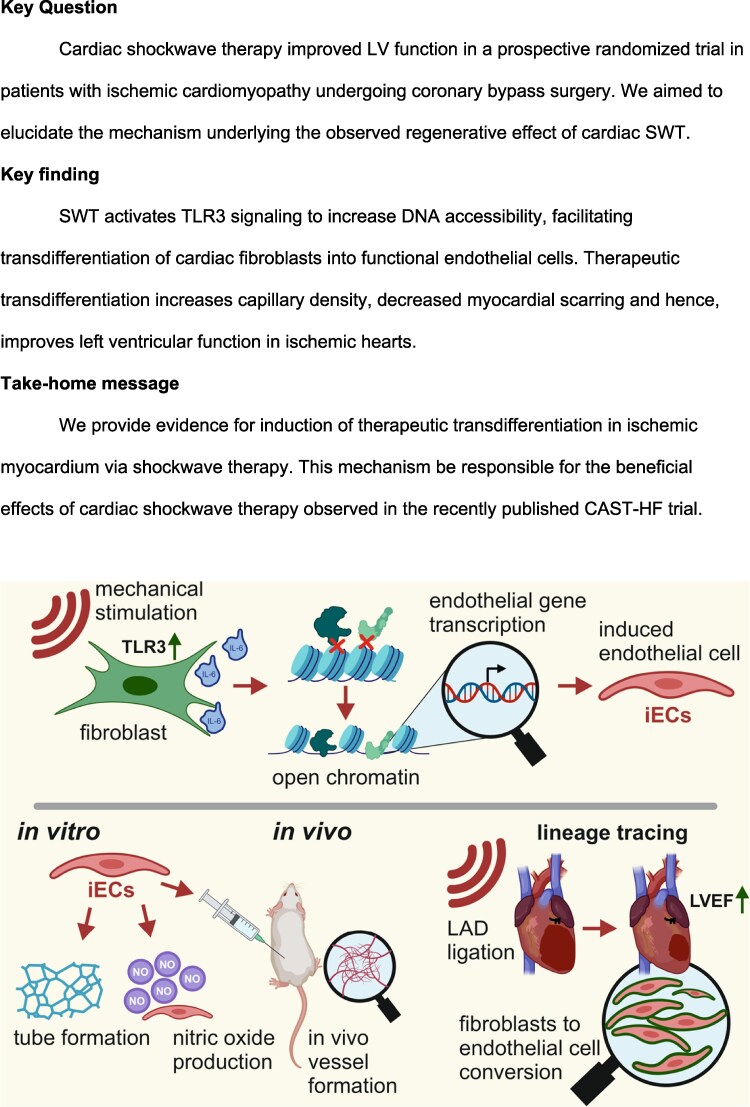
Cardiac shockwave therapy (SWT) improves left ventricular (LV) function in patients with ischaemic cardiomyopathy. Shockwave therapy activates Toll-like receptor 3 (TLR3), a receptor-inducing chromatin remodelling and nuclear reprogramming of cardiac cells. We hypothesized that mechanical activation of TLR3 facilitates reprogramming of fibroblasts towards endothelial cells restoring myocardial perfusion and function.
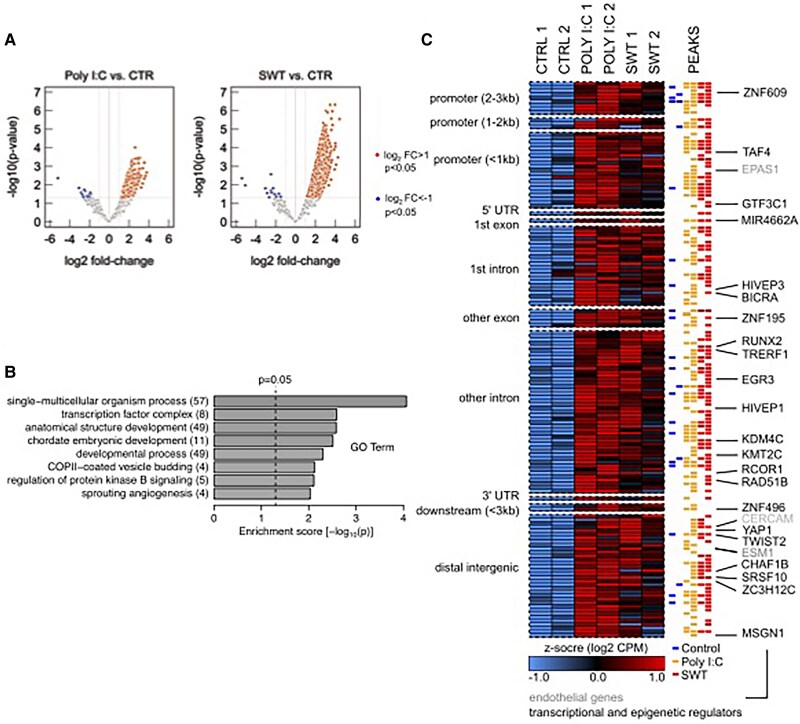
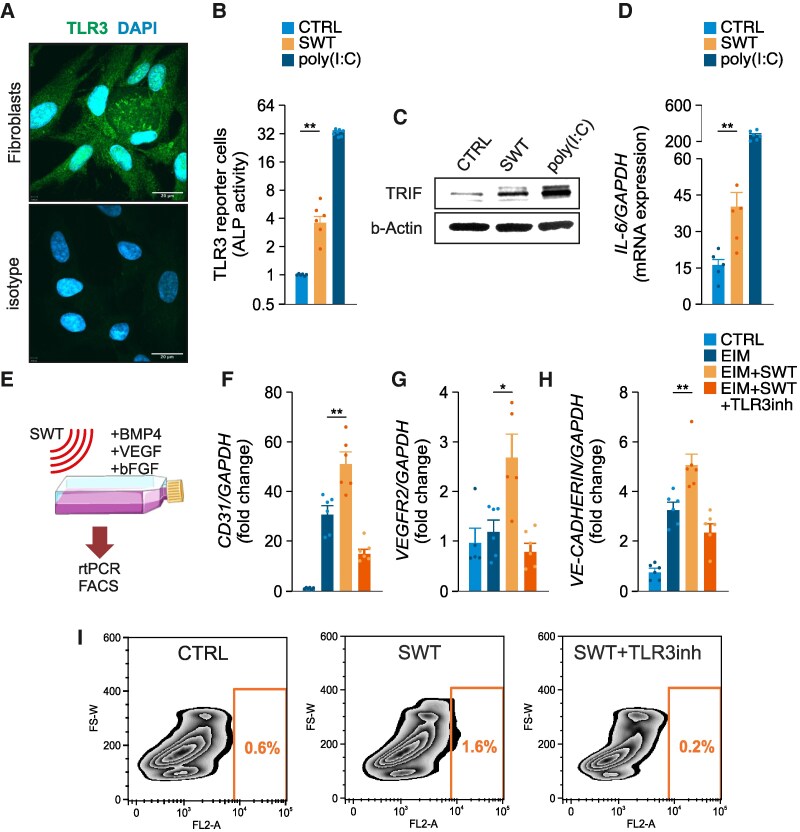
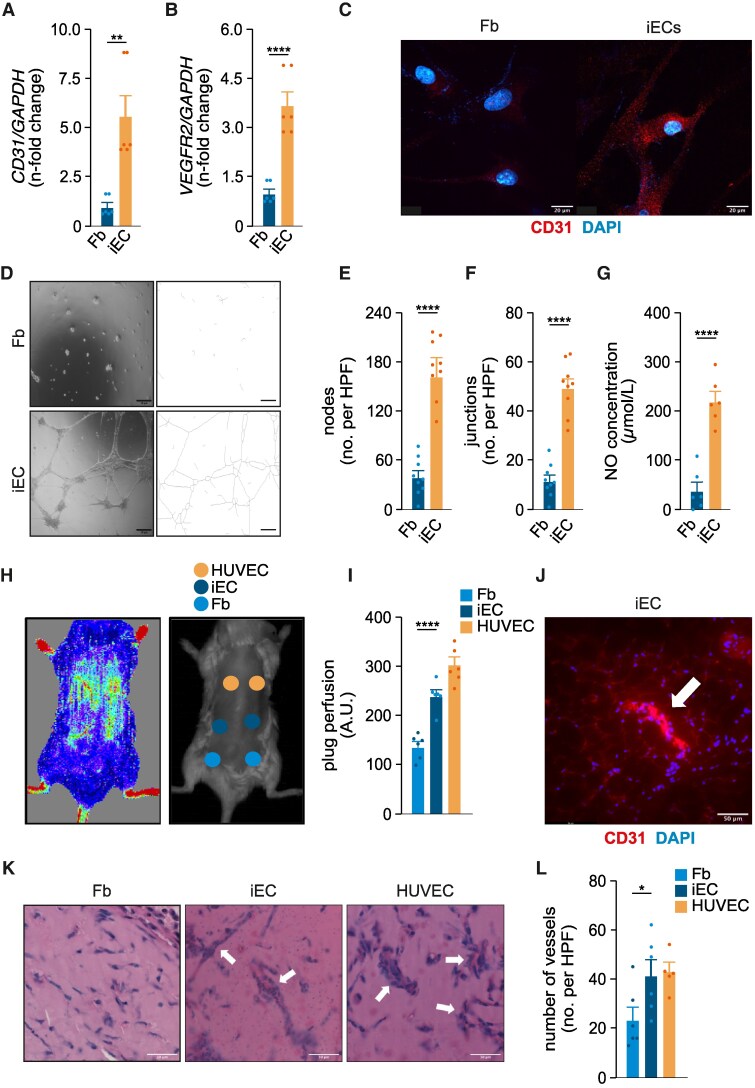
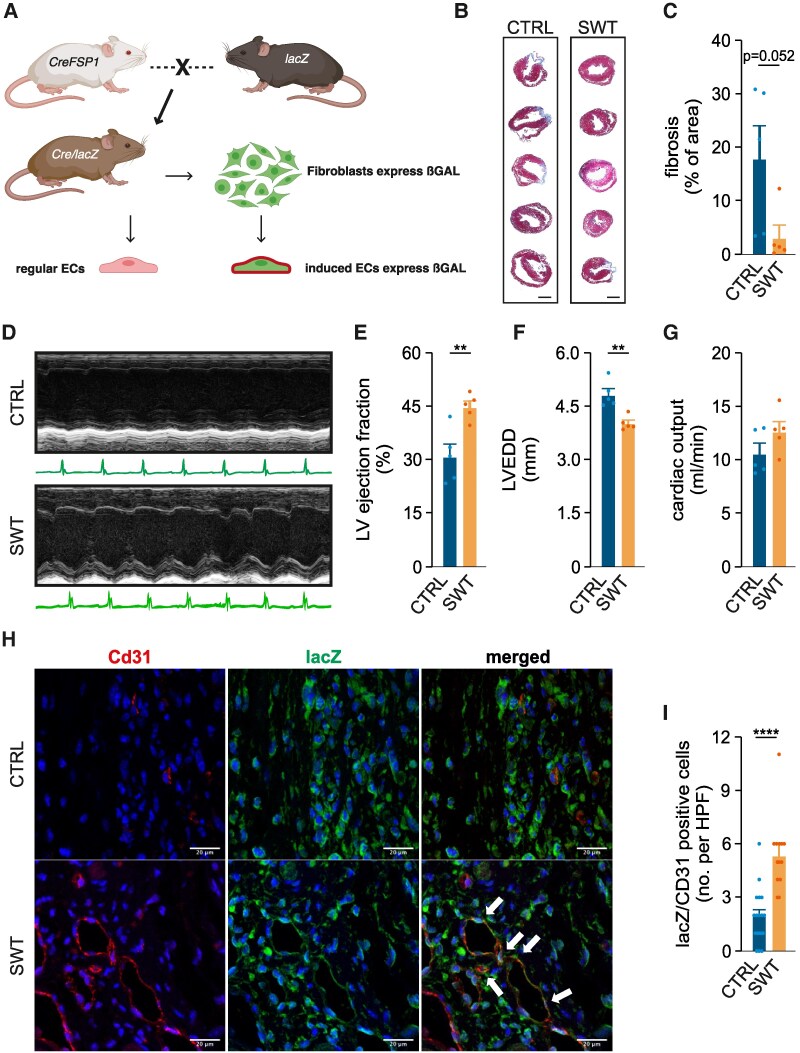
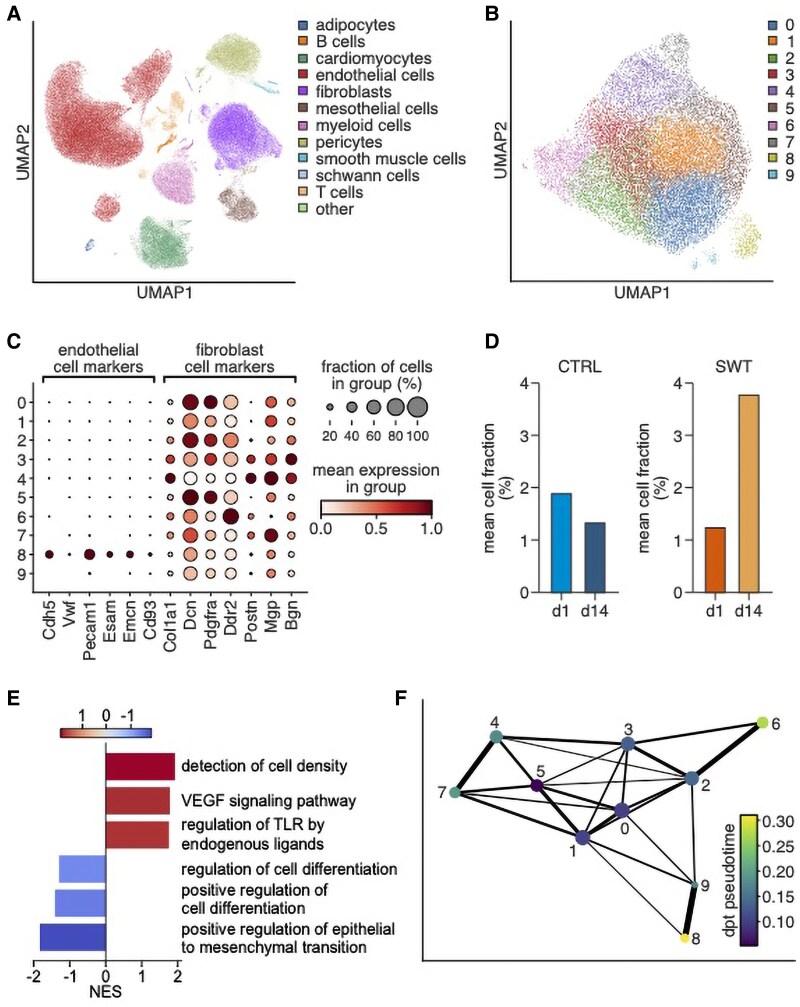
Human cardiac fibroblasts were treated by mechanical stimulation via SWT or TLR3 agonist Poly(I:C) in the presence of endothelial induction medium. A lineage tracing experiment was performed in a transgenic mouse model of Fsp1-Cre/LacZ mice after coronary occlusion. Left ventricular function and scarring were assessed. Single-cell sequencing including RNA trajectory analysis was performed. Chromatin remodelling and epigenetic plasticity were evaluated via western blot and Assay for Transposase-Accessible Chromatin sequencing. Mechanical stimulation of human fibroblasts with SWT activated TLR3 signalling and enhanced the expression of endothelial genes in a TLR3-dependent fashion. The induced endothelial cells (ECs) resembled genuine ECs in that they produced endothelial nitric oxide and formed tube-like structures in Matrigel. In a lineage tracing experiment in Fsp1-Cre/LacZ mice, shockwave treatment increased LacZ/CD31-positive cells (indicating transdifferentiation) after coronary occlusion. Furthermore, SWT reduced myocardial scar size and improved LV function. Single-cell RNA-seq and RNA trajectory analyses revealed that SWT induced an endothelial fibroblast cluster and mechanical stimulation induced significant changes in chromatin organization, with chromatin being more accessible after both treatments in 1705 genomic regions.
Shockwave therapy enhances DNA accessibility via TLR3 activation and facilitates the transdifferentiation of fibroblasts towards endothelial cells in ischaemic myocardium.
心脏冲击波疗法(SWT)可改善缺血性心肌病患者的左心室(LV)功能。冲击波疗法可激活Toll样受体3(TLR3),该受体可诱导心脏细胞的染色质重塑和核重编程。我们推测,TLR3的机械激活有助于成纤维细胞重编程为内皮细胞,从而恢复心肌灌注和功能。
在存在内皮诱导培养基的情况下,通过SWT或TLR3激动剂聚肌苷酸-聚胞苷酸(Poly(I:C))对人心脏成纤维细胞进行机械刺激处理。在冠状动脉闭塞后的Fsp1-Cre/LacZ小鼠转基因模型中进行谱系追踪实验。评估左心室功能和瘢痕形成情况。进行包括RNA轨迹分析在内的单细胞测序。通过蛋白质印迹法和转座酶可及染色质测序分析评估染色质重塑和表观遗传可塑性。用SWT对人成纤维细胞进行机械刺激可激活TLR3信号通路,并以TLR3依赖的方式增强内皮基因的表达。诱导产生的内皮细胞(ECs)类似于真正的内皮细胞,因为它们能产生内皮一氧化氮并在基质胶中形成管状结构。在Fsp1-Cre/LacZ小鼠的谱系追踪实验中,冲击波治疗增加了冠状动脉闭塞后的LacZ/CD31阳性细胞(表明转分化)。此外,SWT减小了心肌瘢痕大小并改善了左心室功能。单细胞RNA测序和RNA轨迹分析显示,SWT诱导了一个内皮成纤维细胞簇,并且机械刺激引起了染色质组织的显著变化,在1705个基因组区域中,两种处理后染色质的可及性均更高。
冲击波疗法通过激活TLR3增强DNA可及性,并促进缺血心肌中成纤维细胞向内皮细胞的转分化。