Hubrecht Institute, Royal Netherlands Academy of Arts and Sciences (KNAW) and University Medical Centre, Utrecht, The Netherlands.
Department of Cardiology, University Medical Centre, Utrecht, The Netherlands.
Commun Biol. 2021 Jan 29;4(1):146. doi: 10.1038/s42003-020-01636-3.
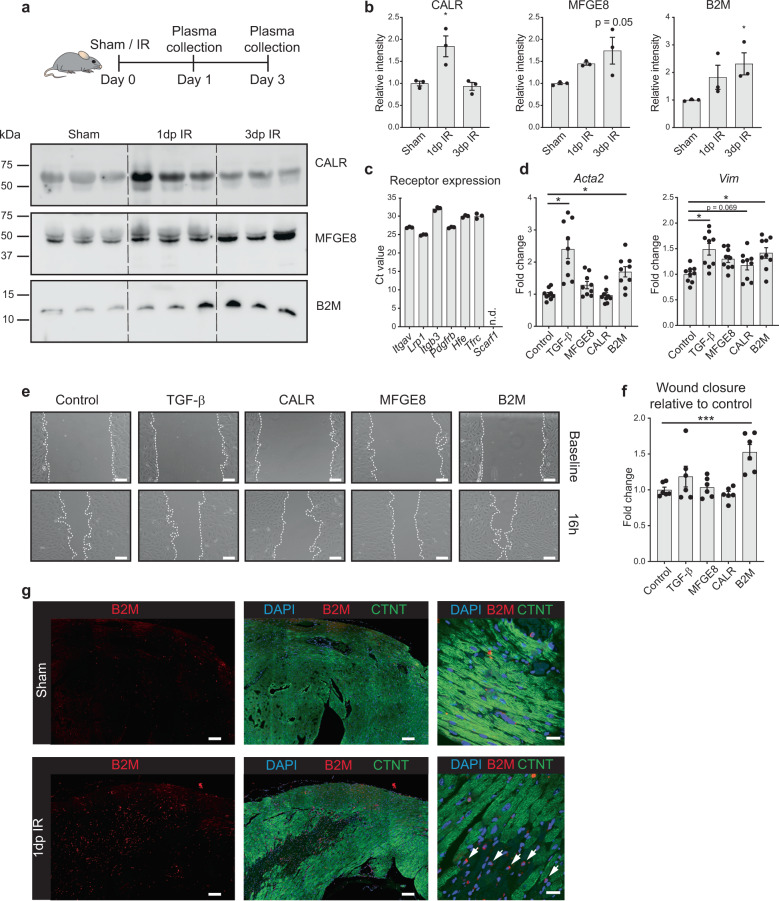
The efficiency of the repair process following ischemic cardiac injury is a crucial determinant for the progression into heart failure and is controlled by both intra- and intercellular signaling within the heart. An enhanced understanding of this complex interplay will enable better exploitation of these mechanisms for therapeutic use. We used single-cell transcriptomics to collect gene expression data of all main cardiac cell types at different time-points after ischemic injury. These data unveiled cellular and transcriptional heterogeneity and changes in cellular function during cardiac remodeling. Furthermore, we established potential intercellular communication networks after ischemic injury. Follow up experiments confirmed that cardiomyocytes express and secrete elevated levels of beta-2 microglobulin in response to ischemic damage, which can activate fibroblasts in a paracrine manner. Collectively, our data indicate phase-specific changes in cellular heterogeneity during different stages of cardiac remodeling and allow for the identification of therapeutic targets relevant for cardiac repair.
缺血性心脏损伤后修复过程的效率是导致心力衰竭进展的关键决定因素,它受到心脏内细胞内和细胞间信号的控制。更好地理解这种复杂的相互作用将使我们能够更好地利用这些机制进行治疗。我们使用单细胞转录组学在缺血性损伤后不同时间点收集所有主要心脏细胞类型的基因表达数据。这些数据揭示了细胞和转录异质性以及心脏重构过程中细胞功能的变化。此外,我们还建立了缺血性损伤后的潜在细胞间通讯网络。后续实验证实,心肌细胞在受到缺血性损伤时会表达和分泌高水平的β-2 微球蛋白,从而以旁分泌的方式激活成纤维细胞。总的来说,我们的数据表明在心脏重构的不同阶段,细胞异质性会发生阶段性变化,并确定与心脏修复相关的治疗靶点。