Bertacchi Michele, Theiß Susanne, Ahmed Ayat, Eibl Michael, Loubat Agnès, Maharaux Gwendoline, Phromkrasae Wanchana, Chakrabandhu Krittalak, Camgöz Aylin, Antonaci Marco, Schaaf Christian Patrick, Studer Michèle, Laugsch Magdalena
Université Côte d'Azur, CNRS, Inserm, Institute of Biology Valrose (iBV), 06108, Nice, France.
Institute of Human Genetics, Heidelberg University, Heidelberg, Germany.
Commun Biol. 2025 Apr 10;8(1):594. doi: 10.1038/s42003-025-07985-1.
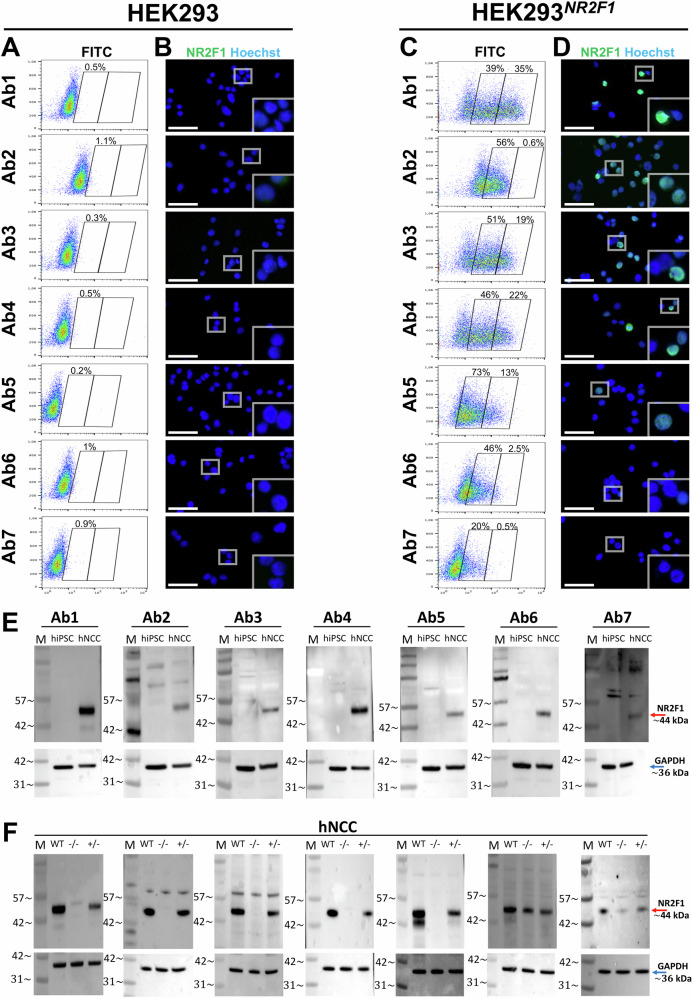
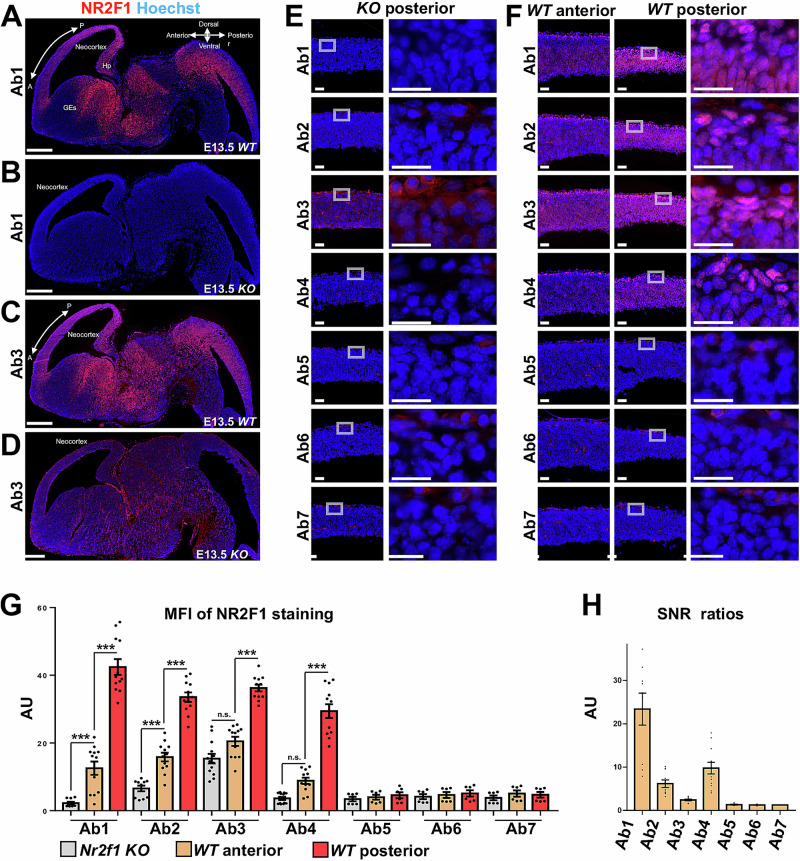
As a transcription factor, NR2F1 regulates spatiotemporal gene expression in the nucleus particularly during development. Aberrant NR2F1 causes the rare neurodevelopmental disorder Bosch-Boonstra-Schaaf Optic Atrophy Syndrome. In addition, altered NR2F1 expression is frequently observed in various cancers and is considered a prognostic marker or potential therapeutic target. NR2F1 has been found in both the nucleus and nucleoli, suggesting a non-canonical and direct role in the latter compartment. Hence, we studied this phenomenon employing various in vitro and in vivo models using different antibody-dependent approaches. Examination of seven commonly used anti-NR2F1 antibodies in different human cancer and stem cells as well as in wild type and null mice revealed that NR2F1 nucleolar localization is artificial and has no functional role. Our subsequent comparative analysis demonstrated which anti-NR2F1 antibody best fits which approach. The data allow for correct data interpretation and underline the need to optimize any antibody-mediated technique.
作为一种转录因子,NR2F1在细胞核中调控时空基因表达,尤其在发育过程中。异常的NR2F1会导致罕见的神经发育障碍——博世 - 布恩斯特拉 - 沙夫视神经萎缩综合征。此外,在各种癌症中经常观察到NR2F1表达改变,它被认为是一种预后标志物或潜在的治疗靶点。已发现NR2F1存在于细胞核和核仁中,这表明它在后者区域具有非经典的直接作用。因此,我们使用不同的抗体依赖性方法,采用各种体外和体内模型研究了这一现象。对七种常用的抗NR2F1抗体在不同人类癌症和干细胞以及野生型和基因敲除小鼠中的检测表明,NR2F1在核仁中的定位是人为的,没有功能作用。我们随后的比较分析表明哪种抗NR2F1抗体最适合哪种方法。这些数据有助于正确的数据解读,并强调了优化任何抗体介导技术的必要性。