Shi Mengting, Qin Tao, Pu Zhenyang, Yang Zhengfu, Lim Kean-Jin, Yang Menghua, Wang Zhengjia
State Key Laboratory of Subtropical Silviculture, Zhejiang A&F University, Hangzhou, Zhejiang, China.
School of Basic Medical Sciences and Forensic Medicine, Hangzhou Medical College, Hangzhou, China.
Front Plant Sci. 2025 Mar 26;16:1473473. doi: 10.3389/fpls.2025.1473473. eCollection 2025.
Salt stress is a major global environmental factor limiting plant growth. Rhizosphere bacteria, recruited from bulk soil, play a pivotal role in enhancing salt stress resistance in herbaceous and crop species. However, whether the rhizosphere bacterial community of a mature tree can respond to salt stress, particularly in saline-alkalitolerant trees, remains unexplored. Pecan (), an important commercially cultivated nut tree, is considered saline-alkali tolerant.
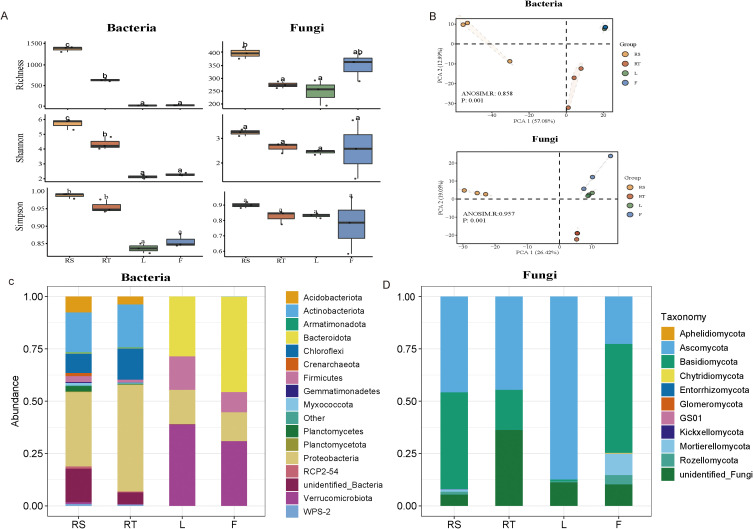
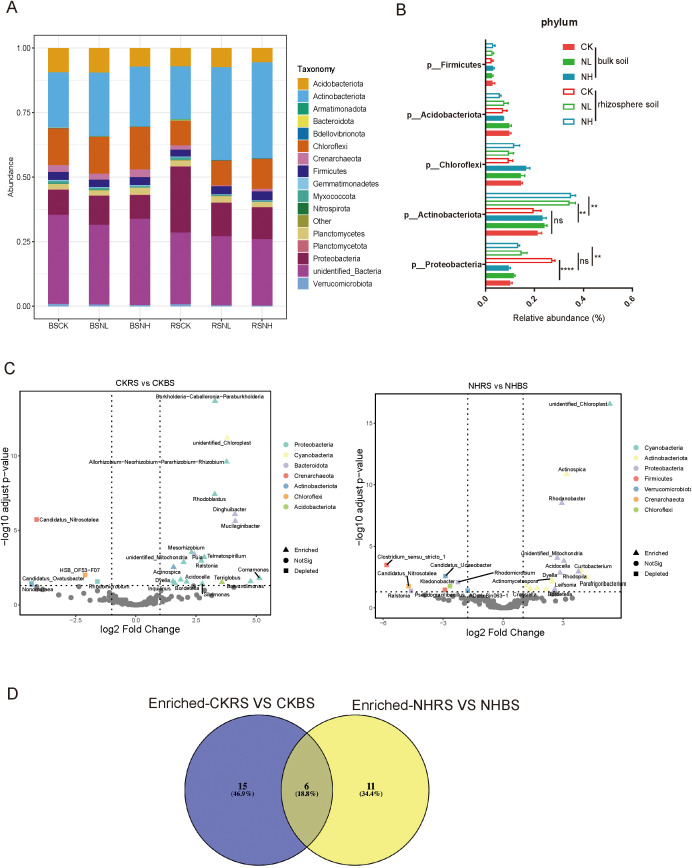
Pecan trees (12 years) were subjected to different NaCl concentrations for 12 weeks. Collected samples included bulk soil, rhizosphere soil, roots, leaves, and fruit. Amplicon sequencing data and shotgun metagenomic sequencing data obtained from the samples were investigated: 1) microbial communities in various ecological niches of mature pecan trees; 2) the characteristic of the rhizosphere bacteria community and the associated functional traits when pecan suffered from salt stress.
We characterized the mature pecan-associated microbiome (i.e., fruit, leaf, root, and rhizosphere soil) for the first time. These findings suggest that niche-based processes, such as habitat selection, drive bacterial and fungal community assembly in pecan tissues. Salt stress reduced bacterial diversity, altered community composition, and shifted pecan's selective pressure on and . Shotgun metagenomic sequencing further revealed functional traits of the rhizosphere microbiome in response to salt stress. This study enhances our understanding of mature tree-associated microbiomes and supports the theory that shaping the rhizosphere microbiome may be a strategy for saline-alkali-tolerant mature trees to resist salt stress. These findings provide insights into salt tolerance in mature trees and suggest potential applications, such as the development of bio-inoculants, for managing saline environments in agricultural and ecological contexts.
盐胁迫是限制植物生长的主要全球环境因素。从根际土壤中招募的根际细菌在增强草本植物和作物品种的耐盐胁迫能力方面发挥着关键作用。然而,成熟树木的根际细菌群落是否能够响应盐胁迫,特别是在耐盐碱树木中,仍有待探索。山核桃()是一种重要的商业栽培坚果类树木,被认为具有耐盐碱能力。
对12年生的山核桃树施加不同浓度的氯化钠,持续12周。采集的样本包括根际土壤、根、叶和果实。对从样本中获得的扩增子测序数据和鸟枪法宏基因组测序数据进行了研究:1)成熟山核桃树不同生态位中的微生物群落;2)山核桃遭受盐胁迫时根际细菌群落的特征及其相关功能特性。
我们首次对与成熟山核桃相关的微生物组(即果实、叶、根和根际土壤)进行了表征。这些发现表明,基于生态位的过程,如栖息地选择,驱动了山核桃组织中细菌和真菌群落的组装。盐胁迫降低了细菌多样性,改变了群落组成,并改变了山核桃对和的选择压力。鸟枪法宏基因组测序进一步揭示了根际微生物组对盐胁迫的功能特性。这项研究增进了我们对与成熟树木相关的微生物组的理解,并支持了这样一种理论,即塑造根际微生物组可能是耐盐碱成熟树木抵抗盐胁迫的一种策略。这些发现为成熟树木的耐盐性提供了见解,并提出了潜在的应用,如开发生物接种剂,用于管理农业和生态环境中的盐碱地。