Zhang Qiang, Wang Qiushi, Zhang Feng, Li Xiuping, Sun Yuhong, Wang Li, Zhang Zhongfa
Department of Orthopedics, Shandong Public Health Clinical Center, Jinan, China.
Infection Business Unit, Tianjin Novogene Med LAB Co., Ltd., Tianjin, China.
Microbiol Spectr. 2025 Apr 10;13(5):e0106424. doi: 10.1128/spectrum.01064-24.
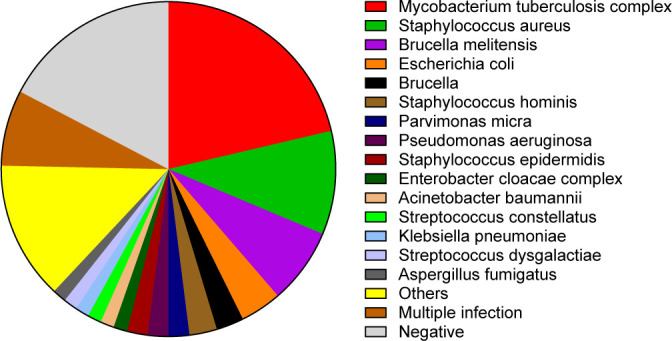
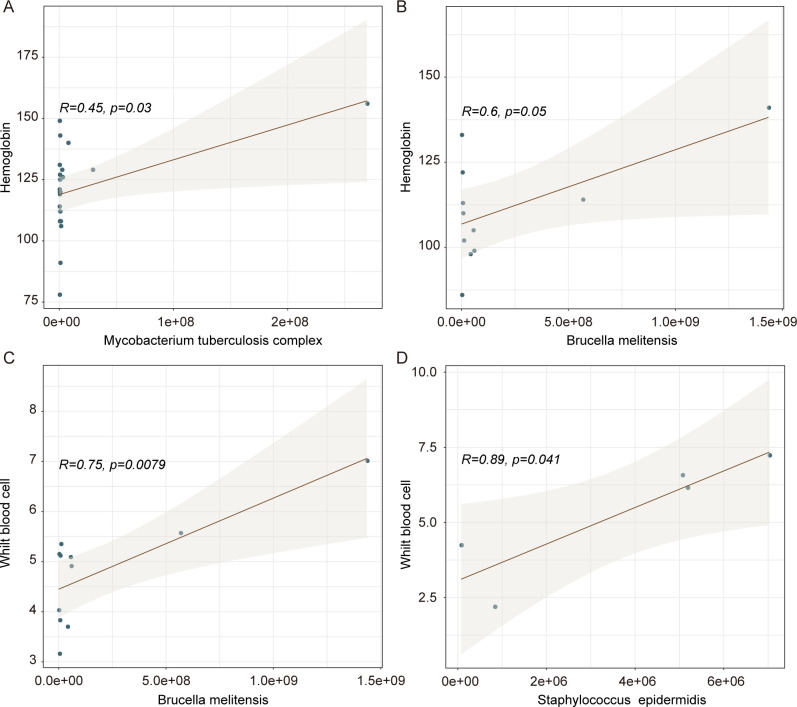
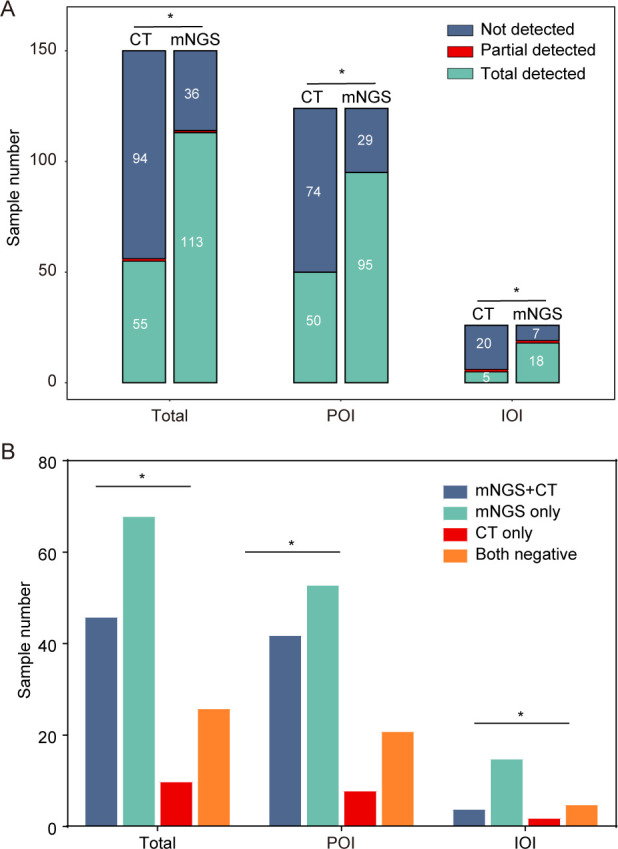
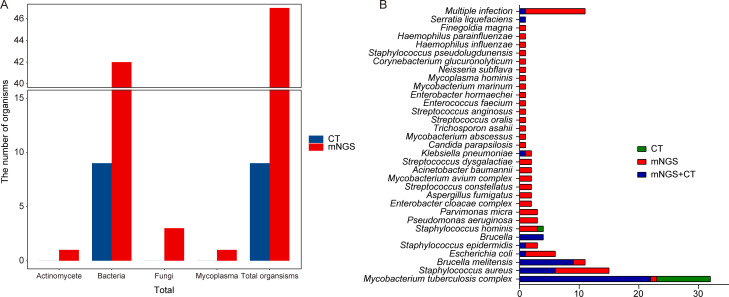
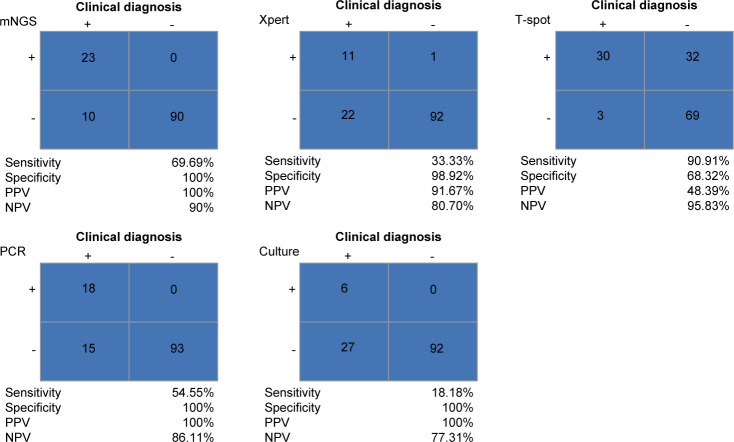
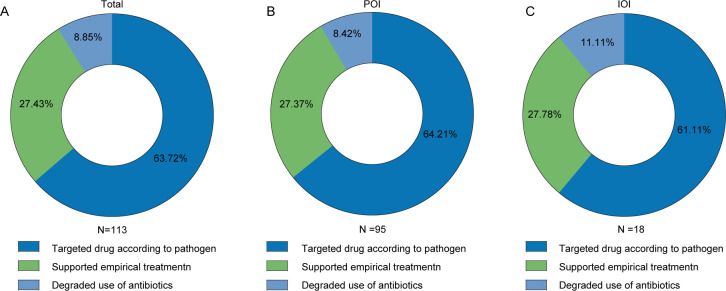
Due to the limits of traditional microbiological methods and the complexity of osteoarthritis pathogens, only a few pathogens can be detected. We evaluated metagenomic next-generation sequencing (mNGS) for detecting pathogens in osteoarthritis infection samples. We prospectively included 150 patients with osteoarthritis infection who visited the Orthopedics Department of Shandong Provincial Public Health Center from 2023 to 2024, including 124 cases of primary osteoarthritis (POI) and 26 cases of invasive osteoarthritis (IOI). The most common pathogenic bacteria were complex, , and . mNGS (75.33%) significantly improved the detection of pathogens in osteoarticular infections compared to conventional tests (CT) methods (36.67%). mNGS could detect a wider spectrum of pathogens compared to CT methods, especially for mixed and rare pathogens. The treatment strategies for patients with osteoarthritis infection could be adjusted based on the results obtained from mNGS testing. Furthermore, the abundance of complex, and was significantly correlated with clinical indicators.IMPORTANCEIdentifying the microorganisms responsible for osteoarthritis infection could help with early diagnosis and treatment. In this study, we compared the pathogen detection rate of metagenomic next-generation sequencing (mNGS) and CT methods in patients with osteoarthritis infection and found that mNGS had a higher microbial detection rate and a broader spectrum of pathogens (especially for mixed pathogens). This study demonstrates that mNGS is an ideal tool for detecting pathogens in patients with osteoarticular infections.
由于传统微生物学方法的局限性以及骨关节炎病原体的复杂性,只能检测到少数病原体。我们评估了宏基因组下一代测序(mNGS)在检测骨关节炎感染样本中的病原体方面的作用。我们前瞻性纳入了2023年至2024年期间到山东省公共卫生临床中心骨科就诊的150例骨关节炎感染患者,其中包括124例原发性骨关节炎(POI)和26例侵袭性骨关节炎(IOI)。最常见的致病细菌种类复杂。与传统检测(CT)方法(36.67%)相比,mNGS(75.33%)显著提高了骨关节感染中病原体的检测率。与CT方法相比,mNGS能够检测到更广泛的病原体谱,尤其是对于混合病原体和罕见病原体。骨关节炎感染患者的治疗策略可根据mNGS检测结果进行调整。此外,某些种类复杂的细菌以及其他细菌的丰度与临床指标显著相关。
重要性
识别导致骨关节炎感染的微生物有助于早期诊断和治疗。在本研究中,我们比较了宏基因组下一代测序(mNGS)和CT方法在骨关节炎感染患者中的病原体检测率,发现mNGS具有更高的微生物检测率和更广泛的病原体谱(尤其是对于混合病原体)。本研究表明,mNGS是检测骨关节感染患者病原体的理想工具。