Zhang Yifan, Wan Yanmin, Guo Cuiyuan, Zhu Zhaoqin, Qiu Chao, Lu Jiasheng, Zhou Yanan, Zheng Jiaojiao, Dai Fahui, Cheng Xiaoyang, Deng Kunlu, Wang Wanhai, Wang Youchun, Zhang Wenhong
Department of Infectious Diseases, Shanghai Key Laboratory of Infectious Diseases and Biosafety Emergency Response, National Medical Center for Infectious Diseases, Huashan Hospital, State Key Laboratory of Genetic Engineering, School of Life Science, Fudan University; Shanghai Sci-Tech Inno Center for Infection & Immunity, Shanghai, China.
Department of laboratory medicine, Shanghai Public Health Clinical Center, Shanghai, China.
Signal Transduct Target Ther. 2025 Apr 11;10(1):114. doi: 10.1038/s41392-025-02207-w.
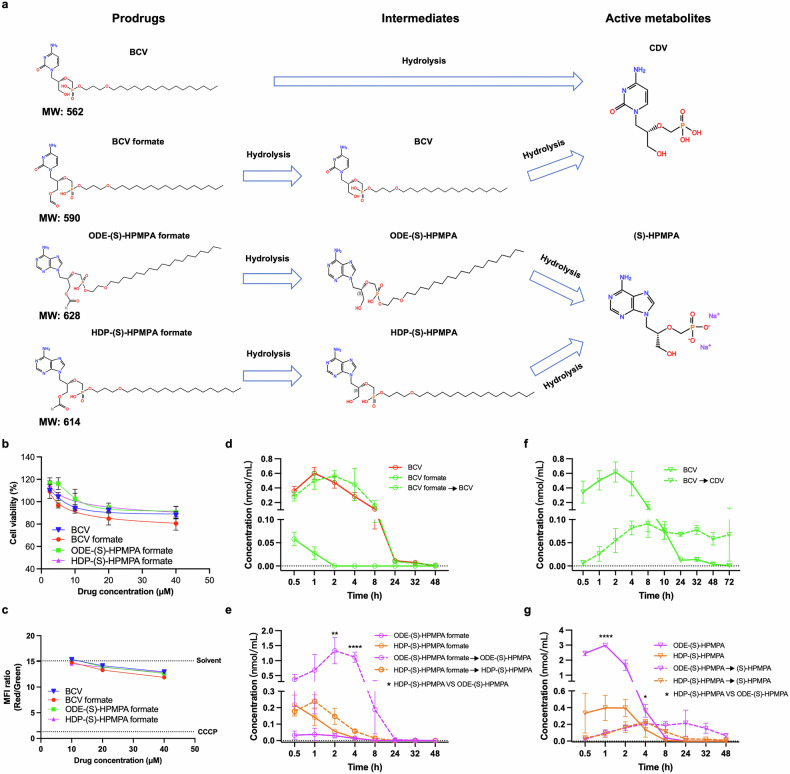
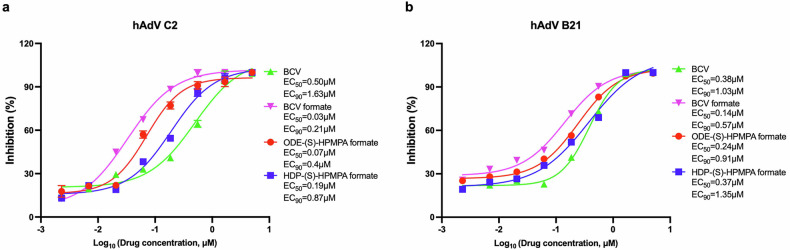
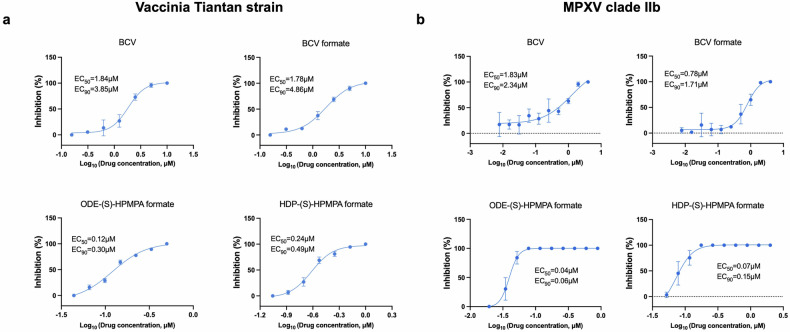
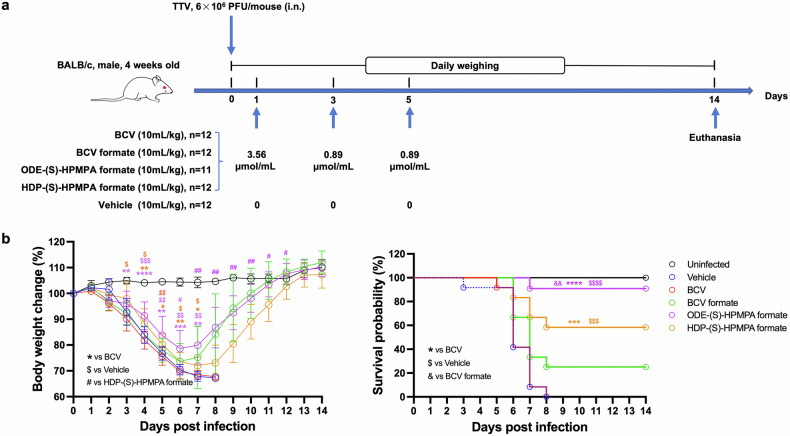
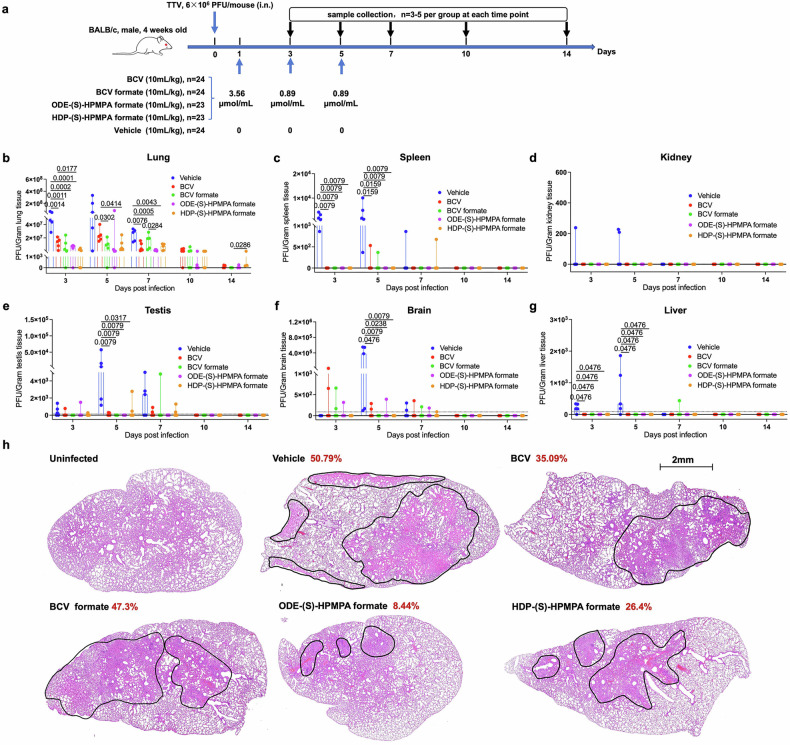
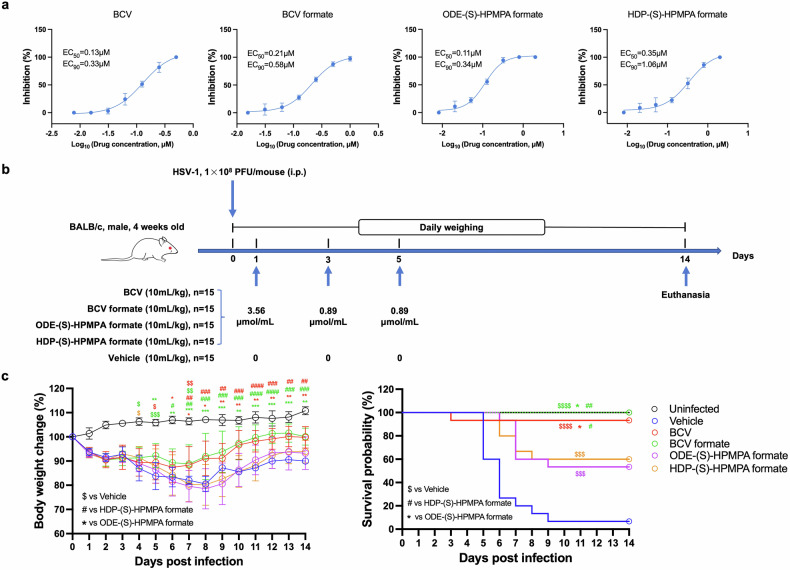
Brincidofovir (BCV) and tecovirimat are the only two chemical drugs that have been approved to treat smallpox and can be requested for monkeypox (Mpox) treatment through a single-patient Emergency Investigational New Drug (EIND) application. Disappointedly, the efficacy of tecovirimat manifested in recent clinical trials is far from being satisfactory, while the clinical efficacy of BCV is still inconclusive. Given that monkeypox virus (MPXV), variola and other emerging orthopoxviruses are posing serious threats to global health, it is urgent to develop better therapeutics. In this study, we tested the antiviral effects of three novel prodrugs, which were designed based on previously reported parent drugs, either (S)-1-(3-hydroxy-2-phosphonylmethoxypropyl)cytosine ((S)-HPMPC, cidofovir) or (S)-9-(3-hydroxy-2-phosphonylmethoxypropyl)adenine ((S)-HPMPA). We found that one of the (S)-HPMPA-based prodrugs, ODE-(S)-HPMPA formate, exhibited significantly better anti-orthopoxvirus activity than BCV both in vitro and in vivo, which also inhibited human adenovirus type 2 and type 21 more efficiently than BCV. Most strikingly, the EC and EC of ODE-(S)-HPMPA formate against MPXV were more than 40-fold lower than those of BCV. In contrast, we observed that the anti-herpes simplex virus type 1 (HSV-1) activities of the (S)-HPMPA-based prodrugs were less effective than those of the cidofovir-based prodrugs (BCV and BCV formate), especially in vivo. Moreover, we showed for the first time that cytidine and adenine analog combined therapies could provide mice with complete protection against lethal challenges of both vaccinia and HSV-1. Collectively, we propose that both the ODE-(S)-HPMPA formate and the BCV/ODE-(S)-HPMPA formate combination are worth further investigations for their potential clinical applications.
溴夫定(BCV)和替考韦瑞马特是仅有的两种已被批准用于治疗天花的化学药物,可通过单患者紧急研究性新药(EIND)申请用于猴痘(Mpox)治疗。令人失望的是,替考韦瑞马特在最近临床试验中表现出的疗效远不尽人意,而BCV的临床疗效仍无定论。鉴于猴痘病毒(MPXV)、天花病毒及其他新出现的正痘病毒对全球健康构成严重威胁,开发更好的治疗方法迫在眉睫。在本研究中,我们测试了三种新型前药的抗病毒效果,这些前药是基于先前报道的母体药物设计的,即(S)-1-(3-羟基-2-膦酰甲氧基丙基)胞嘧啶((S)-HPMPC,西多福韦)或(S)-9-(3-羟基-2-膦酰甲氧基丙基)腺嘌呤((S)-HPMPA)。我们发现,一种基于(S)-HPMPA的前药,ODE-(S)-HPMPA甲酸盐,在体外和体内均表现出比BCV显著更好的抗正痘病毒活性,其对人2型和21型腺病毒的抑制作用也比BCV更有效。最引人注目的是,ODE-(S)-HPMPA甲酸盐对MPXV的半数有效浓度(EC)和90%有效浓度(EC)比BCV低40多倍。相比之下,我们观察到基于(S)-HPMPA的前药对1型单纯疱疹病毒(HSV-1)的活性不如基于西多福韦的前药(BCV和BCV甲酸盐)有效,尤其是在体内。此外,我们首次表明胞嘧啶和腺嘌呤类似物联合疗法可为小鼠提供针对痘苗病毒和HSV-1致死性攻击的完全保护。总体而言,我们认为ODE-(S)-HPMPA甲酸盐以及BCV/ODE-(S)-HPMPA甲酸盐组合因其潜在的临床应用价值值得进一步研究。