Trusculescu Ana Adriana, Ancusa Versavia Maria, Burducescu Alexandra, Pescaru Camelia Corina, Trăilă Daniel, Wellmann Norbert, Fira-Mladinescu Ovidiu, Oancea Cristian Iulian
Center for Research and Innovation in Personalized Medicine of Respiratory Diseases (CRIPMRD), Pulmonology University Clinic, 'Victor Babes' University of Medicine and Pharmacy, Eftimie Murgu Square No. 2, 300041 Timisoara, Romania.
Pulmonology University Clinic, Clinical Hospital of Infectious Diseases and Pneumophysiology, Dr. Victor Babeș Timișoara, Gheorghe Adam Street, No. 13, 300310 Timisoara, Romania.
J Clin Med. 2025 Mar 29;14(7):2350. doi: 10.3390/jcm14072350.
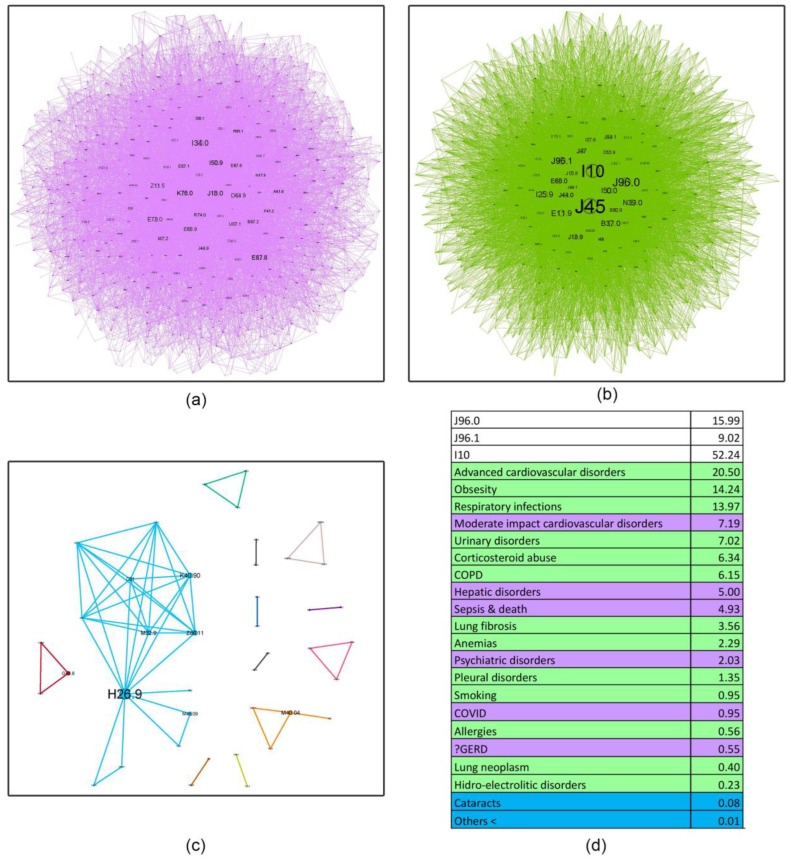
Asthma, a chronic respiratory disease characterized by airway inflammation and hyperresponsiveness, exhibits significant heterogeneity in its presentation. This study aimed to investigate age-related comorbidity patterns, seasonal variations, and demographic trends among a cohort of asthma patients within a defined geographical region. A retrospective analysis of 13,695 asthma patients admitted to a Romanian hospital from 2013 to 2023 was conducted. Comorbidity patterns were analyzed using network analysis across age groups, and seasonal trends were investigated through spectral analysis. Asthma admissions exhibited non-linear trends with female predominance (57.72%). The pandemic significantly impacted admission rates, with males experiencing greater COVID-19-related effects. Female admissions showed distinct seasonal patterns potentially linked to domestic responsibilities. Comorbidity patterns evolved with age, shifting from lifestyle factors in younger patients to complex cardiovascular and neurological disorders in older groups. The 60-69 age group showed the highest integration of comorbidity communities. The study revealed that asthma management focus should shift with patient age from the disease itself to addressing underlying comorbidities. Understanding these complex patterns may help personalize treatment strategies and improve long-term prognosis for asthma patients.
哮喘是一种以气道炎症和高反应性为特征的慢性呼吸道疾病,其临床表现存在显著的异质性。本研究旨在调查特定地理区域内一组哮喘患者的年龄相关合并症模式、季节变化和人口统计学趋势。对2013年至2023年入住罗马尼亚一家医院的13695例哮喘患者进行了回顾性分析。使用网络分析对各年龄组的合并症模式进行分析,并通过频谱分析研究季节趋势。哮喘住院病例呈现出非线性趋势,女性占主导(57.72%)。疫情对住院率产生了重大影响,男性受新冠病毒相关影响更大。女性住院病例呈现出与家务劳动相关的独特季节性模式。合并症模式随年龄演变,从年轻患者的生活方式因素转变为老年组复杂的心血管和神经系统疾病。60 - 69岁年龄组的合并症社区整合度最高。研究表明,哮喘管理重点应随着患者年龄从疾病本身转向处理潜在的合并症。了解这些复杂模式可能有助于制定个性化治疗策略并改善哮喘患者的长期预后。