Carella Maria Cristina, Carulli Eugenio, Loizzi Francesco, Quarta Simona, Freda Alessandra, Basile Paolo, Amati Fabio, Dicorato Marco Maria, Latorre Michele Davide, Naccarati Maria Ludovica, Lenoci Cosimo Daniele, Cicco Sebastiano, Pontone Gianluca, Forleo Cinzia, Guaricci Andrea Igoren, Ciccone Marco Matteo, Santobuono Vincenzo Ezio
Cardiology Unit, Interdisciplinary Department of Medicine (DIM), University of Bari "Aldo Moro", University Hospital Consortium Polyclinic of Bari, Piazza G. Cesare 11, 70124 Bari, Italy.
Cardiology Unit, SS Annunziata Hospital, 74100 Taranto, Italy.
J Clin Med. 2025 Mar 29;14(7):2354. doi: 10.3390/jcm14072354.
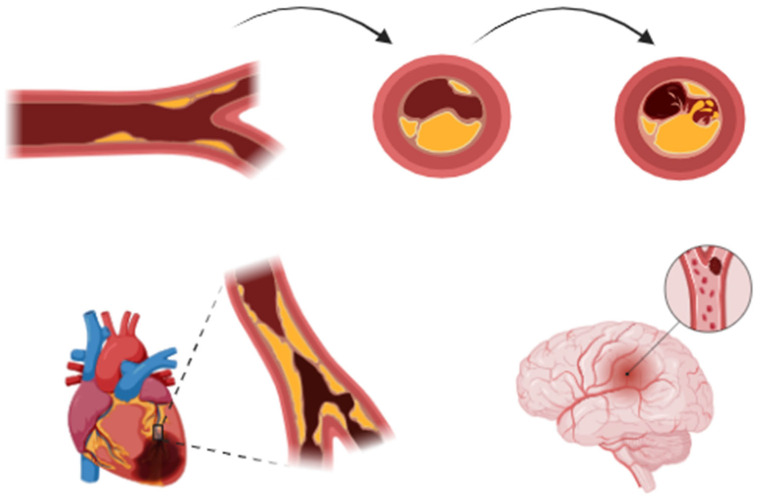
Acute coronary syndrome (ACS) and stroke are interconnected conditions that often share risk factors such as atherosclerosis, thrombosis, and systemic inflammation. When these events occur simultaneously, they present unique diagnostic and therapeutic challenges. This review explores the pathophysiological mechanisms linking ACS and stroke, including common pathways like plaque instability, cardioembolism, and endothelial dysfunction, while highlighting the distinct features of ischemic and hemorrhagic strokes. The manuscript provides an overview of diagnostic strategies, emphasizing the role of biomarkers, advanced neuroimaging, and risk stratification tools in guiding acute management. Furthermore, the review delves into treatment approach, emphasizing the need to balance reperfusion therapies for ACS with thrombolysis or thrombectomy for ischemic stroke while carefully managing the challenges posed by anticoagulation in cases complicated by bleeding. Long-term strategies for secondary prevention are examined, including antithrombotic regimens tailored to the dual risk of thrombosis and bleeding, as well as lipid-lowering and blood pressure management. Future perspectives highlight the potential of novel pharmacological agents, neuroprotective therapies, and AI-driven tools to enhance patient outcomes. This review underscores the importance of integrated, multidisciplinary care and identifies key areas for future research to optimize the management of these high-risk patients.
急性冠状动脉综合征(ACS)和中风是相互关联的病症,通常具有共同的危险因素,如动脉粥样硬化、血栓形成和全身炎症。当这些事件同时发生时,会带来独特的诊断和治疗挑战。本综述探讨了连接ACS和中风的病理生理机制,包括斑块不稳定、心源性栓塞和内皮功能障碍等共同途径,同时强调了缺血性和出血性中风的不同特征。该文稿概述了诊断策略,强调了生物标志物、先进神经影像学和风险分层工具在指导急性治疗中的作用。此外,本综述深入探讨了治疗方法,强调在急性冠状动脉综合征的再灌注治疗与缺血性中风的溶栓或取栓治疗之间取得平衡的必要性,同时在出血并发症病例中谨慎应对抗凝带来的挑战。研究了二级预防的长期策略,包括针对血栓形成和出血双重风险的抗血栓治疗方案,以及降脂和血压管理。未来展望突出了新型药物、神经保护疗法和人工智能驱动工具改善患者预后的潜力。本综述强调了综合、多学科护理的重要性,并确定了未来研究的关键领域,以优化这些高危患者的管理。