
摩尔质量、酸类型和凝固浴组成如何影响壳聚糖长丝的凝固动力学、力学性能和溶胀行为:全因子试验法
How Molar Mass, Acid Type, and Coagulation Bath Composition Influence Coagulation Kinetics, Mechanical Properties, and Swelling Behavior of Chitosan Filaments: A Full Factorial Approach.
作者信息
da Silva Henrique Nunes, Barbosa Milena Costa da Silva, de Souza Matheus Ferreira, Lima Athirson Mikael de Sousa, Duarte Rafaella Resende de Almeida, Navarro Rômulo Feitosa, Silva Suédina Maria de Lima, Fook Marcus Vinícius Lia
机构信息
Postgraduate Program in Materials Science and Engineering, Department of Materials Engineering, Federal University of Campina Grande, Campina Grande 58429-900, PB, Brazil.
Materials Engineering Academic Unit, Federal Universisty of Campina Grande, Campina Grande 58249-900, PB, Brazil.
出版信息
Polymers (Basel). 2025 Mar 29;17(7):927. doi: 10.3390/polym17070927.
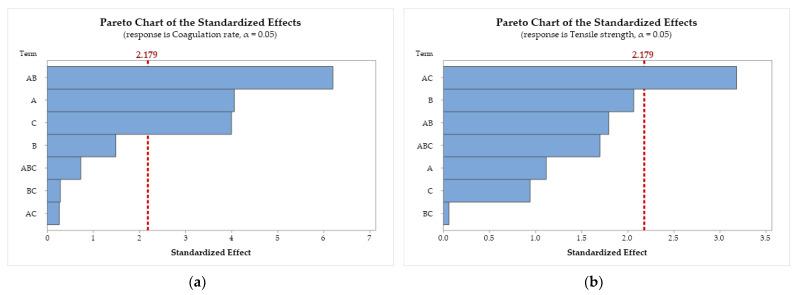
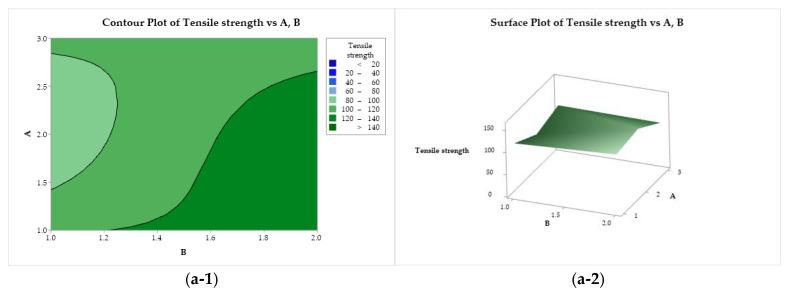
In this study, a full multilevel factorial design (2 × 3 × 2) × 2 was conducted to investigate the effects of molar mass of chitosan (CS), the type of acid used for dissolution, and the composition of the coagulation bath on the coagulation, mechanical properties, and swelling of the filaments. The results showed the statistical significance of the factors in the characteristics of these filaments. The coagulation followed Fick's second law of diffusion, with an increase in the chitosan molar mass reducing the coagulation rate, as did the use of acetic acid instead of lactic acid. CS with higher molar mass produced filaments with larger diameters, but without a proportional increase in tensile strength. Swelling was influenced by the acid and composition of the coagulation bath. The interaction of CS with acid and the CS molar mass factor were the terms of greatest statistical significance. Crystallinity was higher for samples dissolved in aqueous solutions of acetic acid and coagulated with ethanol, while lactic acid induced greater structural disorder. Samples coagulated with ethanol presented more homogeneous surfaces, while methanol resulted in rougher filaments. These findings emphasize the critical role of processing conditions in tailoring the properties of CS filaments, providing valuable insights for their optimization for biomedical applications.
在本研究中,进行了一项完全多水平析因设计(2×3×2)×2,以研究壳聚糖(CS)的摩尔质量、用于溶解的酸的类型以及凝固浴的组成对长丝的凝固、力学性能和溶胀的影响。结果表明,这些因素对这些长丝的特性具有统计学意义。凝固过程遵循菲克第二扩散定律,壳聚糖摩尔质量的增加会降低凝固速率,使用乙酸而非乳酸时也是如此。较高摩尔质量的CS生产出的长丝直径更大,但拉伸强度并未成比例增加。溶胀受酸和凝固浴组成的影响。CS与酸以及CS摩尔质量因素的相互作用是具有最大统计学意义的因素。溶解于乙酸水溶液并用乙醇凝固的样品结晶度较高,而乳酸会导致更大的结构无序。用乙醇凝固的样品表面更均匀,而甲醇则导致长丝更粗糙。这些发现强调了加工条件在定制CS长丝性能方面的关键作用,为其在生物医学应用中的优化提供了有价值的见解。





 Zotero 插件