Knoppersen Rosa S, Bose Tanay, Coutinho Teresa A, Hammerbacher Almuth
Department of Zoology and Entomology, Forestry and Agricultural Biotechnology Institute (FABI), University of Pretoria, Pretoria, 0002, South Africa.
Department of Biochemistry, Genetics and Microbiology, Forestry and Agricultural Biotechnology Institute (FABI), University of Pretoria, Pretoria, 0002, South Africa.
Microb Ecol. 2025 Apr 12;88(1):27. doi: 10.1007/s00248-025-02524-1.
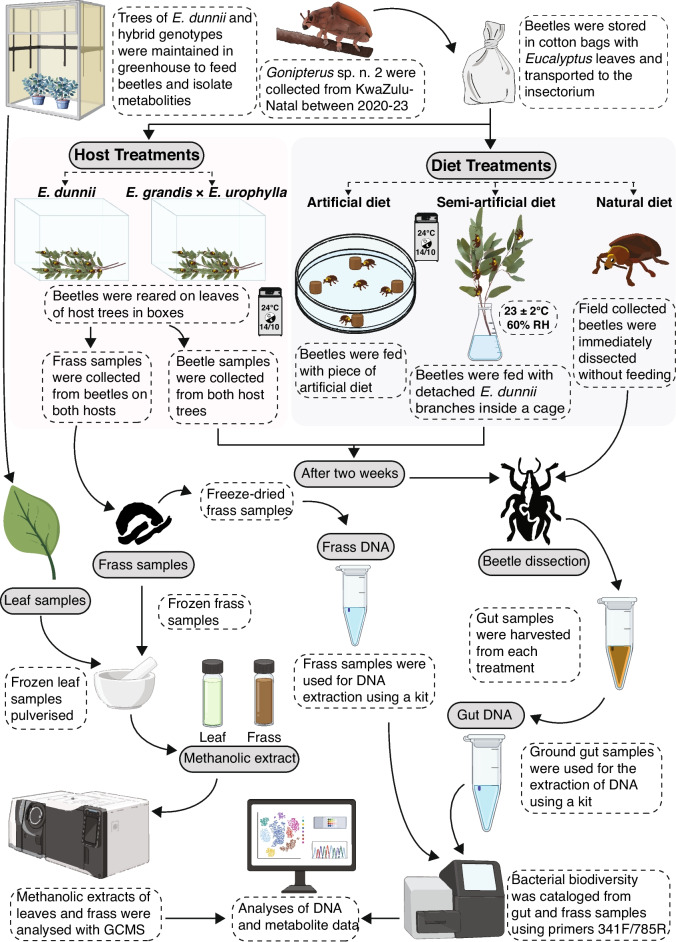
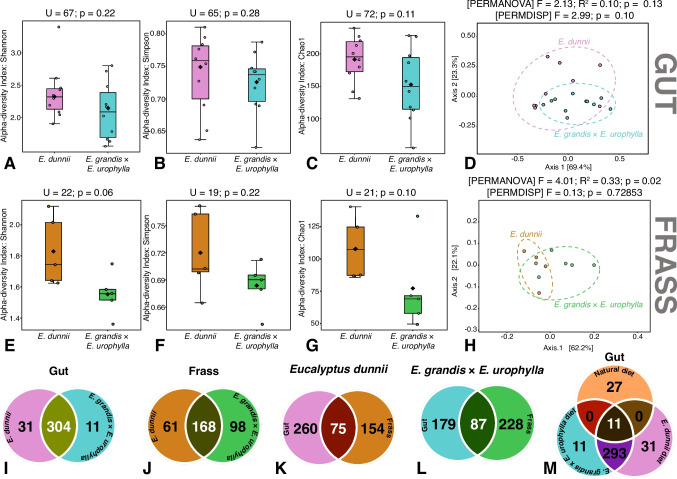
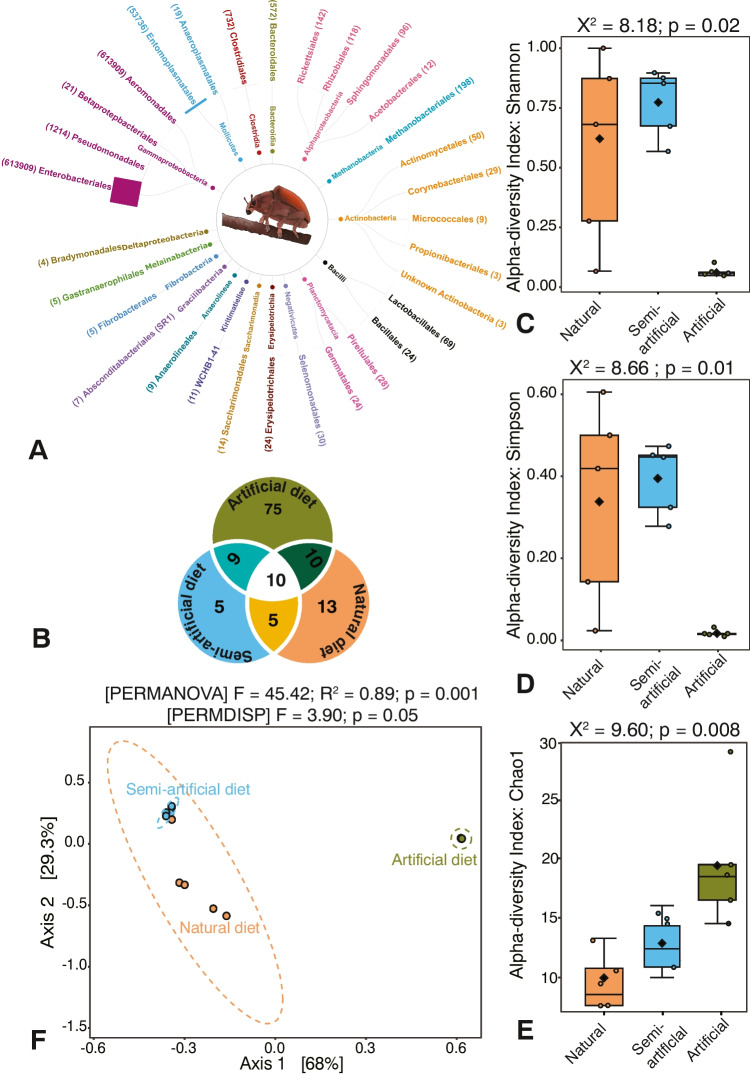
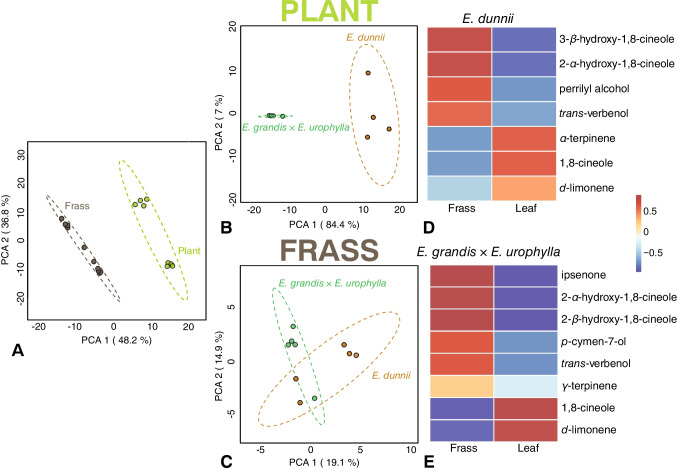
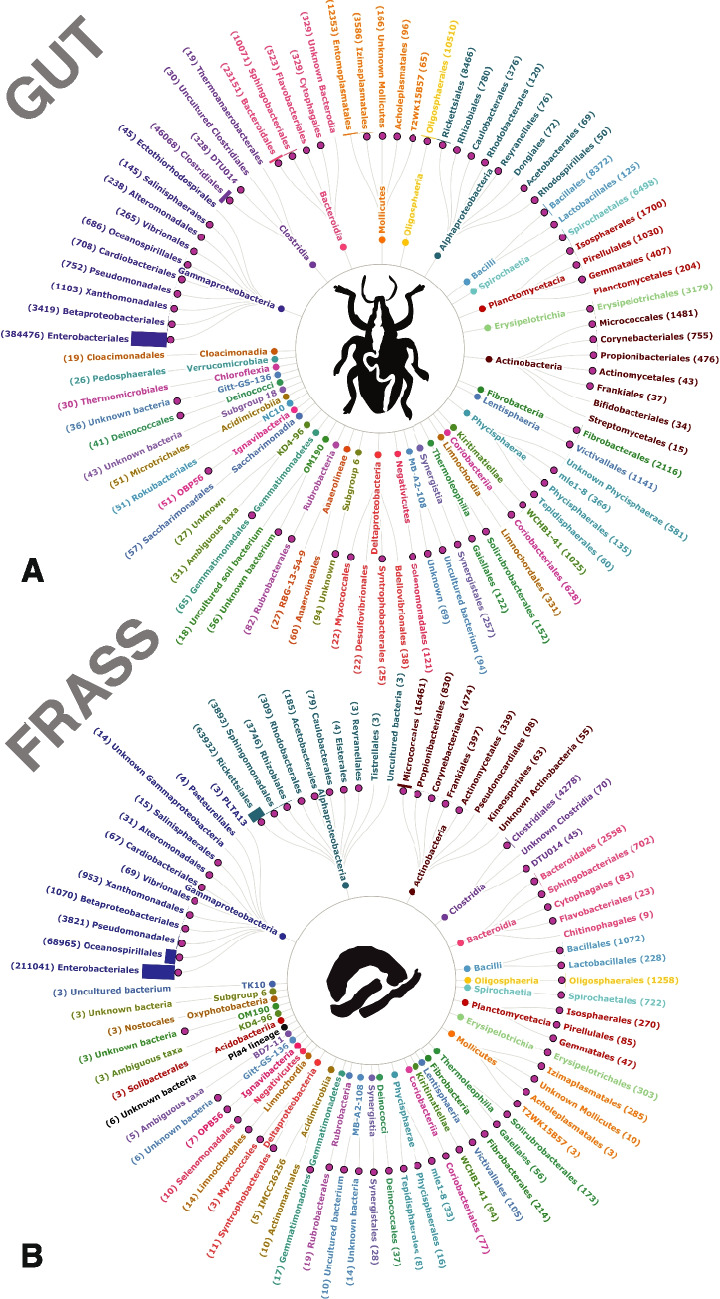
The Eucalyptus snout beetle (Gonipterus sp. n. 2) is a destructive invasive pest of Eucalyptus plantations, responsible for significant defoliation and wood yield losses globally. Native to Australia, this beetle has adapted to thrive on diverse Eucalyptus hosts, overcoming their chemical defences. However, the mechanisms by which Gonipterus tolerates or utilises these plant defence metabolites remain poorly understood. In South Africa, Gonipterus sp. n. 2 poses a significant threat to Eucalyptus plantations by causing extensive defoliation and leading to substantial reductions in growth and wood production. This study investigates the relationship between diet, host Eucalyptus species, and the gut microbiome of Gonipterus sp. n. 2. Using controlled feeding experiments, beetles were reared on artificial, semi-artificial, and natural diets, as well as two Eucalyptus genotypes with distinct secondary metabolite profiles. High-throughput 16S rDNA sequencing and gas chromatography-mass spectrometry (GC-MS) revealed significant shifts in gut bacterial diversity and composition across diets. Natural diets supported the most diverse microbial communities, while artificial diets fostered a homogenised microbiome dominated by opportunistic taxa like Serratia. Host-specific effects were observed in frass microbiota, with substantial biotransformation of monoterpenes into less toxic derivatives. The results highlight the plasticity of Gonipterus gut microbiota, which enables metabolic adaptability and resilience in diverse environments. This microbial flexibility underpins the invasiveness of Gonipterus, emphasising the role of gut symbionts in overcoming host chemical defences. Understanding these interactions offers novel insights for microbiome-targeted pest management strategies, providing a sustainable approach to mitigate the impact of Gonipterus on global Eucalyptus forestry.
桉象鼻虫(Gonipterus sp. n. 2)是桉树林的一种具有破坏性的入侵害虫,在全球范围内导致大量落叶和木材产量损失。这种甲虫原产于澳大利亚,已适应在多种桉树寄主上繁衍,克服了它们的化学防御机制。然而,关于桉象鼻虫耐受或利用这些植物防御代谢产物的机制仍知之甚少。在南非,Gonipterus sp. n. 2对桉树林构成重大威胁,它会造成大面积落叶,并导致生长和木材产量大幅下降。本研究调查了食物、寄主桉树种类与Gonipterus sp. n. 2肠道微生物群之间的关系。通过控制饲养实验,用人工饲料、半人工饲料、天然饲料以及两种具有不同次生代谢产物谱的桉树基因型饲养甲虫。高通量16S rDNA测序和气相色谱 - 质谱联用(GC - MS)分析表明,不同饲料条件下肠道细菌多样性和组成发生了显著变化。天然饲料支持的微生物群落最为多样,而人工饲料则促进了以沙雷氏菌等机会性类群为主导的同质化微生物群的形成。在粪便微生物群中观察到了寄主特异性效应,单萜烯大量生物转化为毒性较小的衍生物。研究结果突出了桉象鼻虫肠道微生物群的可塑性,使其能够在不同环境中实现代谢适应性和恢复力。这种微生物的灵活性是桉象鼻虫入侵性的基础,强调了肠道共生体在克服寄主化学防御中的作用。了解这些相互作用为以微生物群为靶点的害虫管理策略提供了新的见解,为减轻桉象鼻虫对全球桉树林业的影响提供了一种可持续的方法。