• 文献检索
  • 文档翻译
  • 深度研究
  • 学术资讯
  • Suppr Zotero 插件Zotero 插件
  • 邀请有礼
  • 套餐&价格
  • 历史记录
应用&插件
Suppr Zotero 插件Zotero 插件浏览器插件Mac 客户端Windows 客户端微信小程序
定价
高级版会员购买积分包购买API积分包
服务
文献检索文档翻译深度研究API 文档MCP 服务
关于我们
关于 Suppr公司介绍联系我们用户协议隐私条款
关注我们

Suppr 超能文献

核心技术专利:CN118964589B侵权必究
粤ICP备2023148730 号-1Suppr @ 2026

文献检索

告别复杂PubMed语法,用中文像聊天一样搜索,搜遍4000万医学文献。AI智能推荐,让科研检索更轻松。

立即免费搜索

文件翻译

保留排版,准确专业,支持PDF/Word/PPT等文件格式,支持 12+语言互译。

免费翻译文档

深度研究

AI帮你快速写综述,25分钟生成高质量综述,智能提取关键信息,辅助科研写作。

立即免费体验

在重症监护后综合征背景下,谵妄作为长期认知功能障碍的一个决定因素:拉丁美洲环境下的一项前瞻性研究。

Delirium as a Determinant of Long-Term Cognitive Dysfunction in the Context of Post-intensive Care Syndrome: A Prospective Study in a Latin American Environment.

作者信息

Mesa Patricia, Kotfis Katarzyna, Lecor Cinthya, Leyes Cecilia, Banchero Angel, De Mattos Sylvana, Somma Veronica, Orellano Maria, Favretto Silvina, Barros Mariana

机构信息

Intensive Care Unit, Hospital Pasteur, Montevideo, URY.

Intensive Care Unit, Hospital Español, Montevideo, URY.

出版信息

Cureus. 2025 Mar 14;17(3):e80578. doi: 10.7759/cureus.80578. eCollection 2025 Mar.

DOI:10.7759/cureus.80578
PMID:40225547
原文链接:https://pmc.ncbi.nlm.nih.gov/articles/PMC11994226/
Abstract

Introduction Cognitive dysfunction represents a major healthcare concern in the 21st century. Prolonged cognitive dysfunction and concomitant psychological and physical disorders in patients admitted to the intensive care unit (ICU) are components of the post-ICU syndrome (PICS). Notwithstanding the numerous published studies in this area, our work is the first to explore the relationship between PICS and delirium in the ICU in Uruguay. This research underscores the significance and potential of our study, which we believe will make a substantial contribution to this field of research in Latin America. Objectives The incidence rates of the cognitive, psychological, and physical sequelae constituting PICS were evaluated, and the relationships between these disorders and delirium in the ICU were studied. Methods This was a prospective cohort study in which patients were followed up for one year after admission to the ICU of Hospital Pasteur between 03/01/2017 and 05/31/2017. The pre-ICU condition of each patient was considered in the analysis. An initial telephone interview was conducted using the following scales: the Hamilton scale was used to assess anxiety, the Pfeiffer scale was used to assess cognitive impairment, and the Barthel scale was used to assess activities of daily living (ADLs). In a second face-to-face interview, the Mini-Mental State Examination (MMSE) and the Beck Depression Scale II (BDS-II) were used. Results Forty-three patients were divided into two groups: 15 (34%) with delirium in the ICU and 28 (66%) without delirium. The association of delirium with different sequelae was evaluated using the corresponding scales: Pfeiffer scale: Cognitive impairment was observed in 7/13 patients (53%) in the delirium group vs. 0/29 patients (0%) in the non-delirious group (p 0.001); MMSE score: Deterioration was observed in 6/7 patients (86%) in the delirium group vs. 1/7 patients (14%) in the non-delirious group (p 0.007). Cognitive impairment was found in 3/6 patients (50%) who presented with delirium in the ICU, while 1/8 patients (13%) who did not present with delirium experienced cognitive impairment (p = 0.036); Hamilton scale: Anxiety was found in 8/15 patients (57%) in the delirium group and 20/29 patients (68%) in the non-delirious group; BDS-II: Depression was found in 12/12 patients (100%) in the delirium group vs. 27/29 patients (93%) in the non-delirious group (p 0.57). Barthel scale: Dependence on others for ADLs was observed in 3/15 patients (20%) in the delirium group vs. 4/29 patients (14%) in the non-delirious group (p = 0.23). Conclusions Cognitive impairment was observed to be associated with delirium in the ICU, opening new avenues for research and possible treatment options. Although dependence on activities of daily living (ADLs) was more common in the delirium group, the difference between the two groups was not significant, highlighting the need for further research to understand the whole picture. Rates of anxiety and depression after ICU stay were also similar between the two groups, providing a baseline for comparison and informing future studies. The study highlights the urgent need for delirium-specific interventions in the ICU to address cognitive dysfunction and improve long-term outcomes in critically ill patients.

摘要

引言

认知功能障碍是21世纪主要的医疗保健问题。重症监护病房(ICU)患者出现的长期认知功能障碍以及伴随的心理和身体障碍是ICU后综合征(PICS)的组成部分。尽管该领域已发表了大量研究,但我们的工作是乌拉圭首个探索ICU中PICS与谵妄之间关系的研究。这项研究突出了我们研究的重要性和潜力,我们相信它将对拉丁美洲这一研究领域做出重大贡献。

目的

评估构成PICS的认知、心理和身体后遗症的发生率,并研究这些障碍与ICU中谵妄之间的关系。

方法

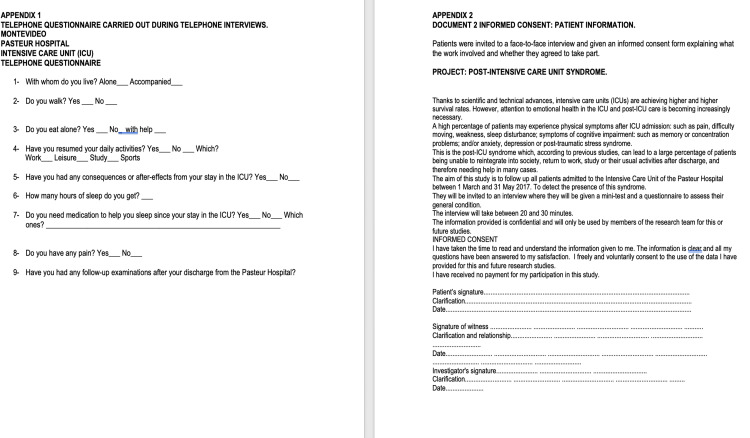
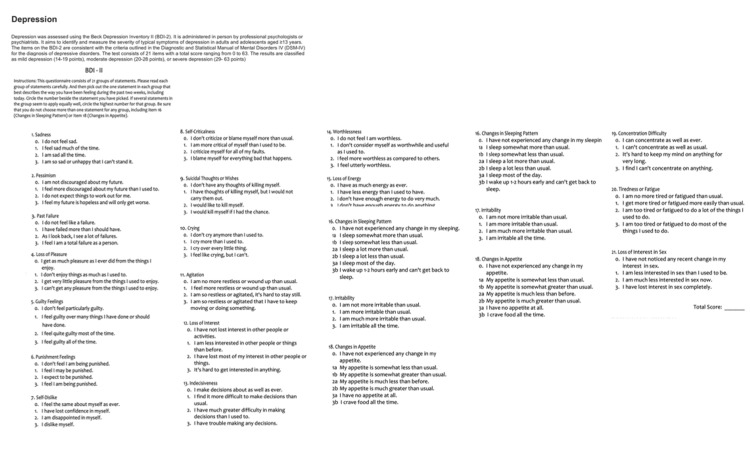
这是一项前瞻性队列研究,对2017年1月3日至2017年5月31日入住巴斯德医院ICU的患者进行了为期一年的随访。分析中考虑了每位患者入住ICU前的状况。首次电话访谈使用了以下量表:汉密尔顿量表用于评估焦虑, Pfeiffer量表用于评估认知障碍, Barthel量表用于评估日常生活活动(ADL)。在第二次面对面访谈中,使用了简易精神状态检查表(MMSE)和贝克抑郁量表II(BDS-II)。

结果

43名患者分为两组:15名(34%)在ICU中出现谵妄,28名(66%)未出现谵妄。使用相应量表评估谵妄与不同后遗症的关联:Pfeiffer量表:谵妄组13名患者中有7名(53%)出现认知障碍,而非谵妄组29名患者中无1名(0%)出现认知障碍(p<0.001);MMSE评分:谵妄组7名患者中有6名(86%)出现恶化,而非谵妄组7名患者中有1名(14%)出现恶化(p<0.007)。在ICU中出现谵妄的6名患者中有3名(50%)存在认知障碍,而未出现谵妄的8名患者中有1名(13%)存在认知障碍(p = 0.036);汉密尔顿量表:谵妄组15名患者中有8名(57%)存在焦虑,非谵妄组29名患者中有20名(68%)存在焦虑;BDS-II:谵妄组12名患者中有12名(100%)存在抑郁,非谵妄组29名患者中有27名(93%)存在抑郁(p>0.57)。Barthel量表:谵妄组15名患者中有3名(20%)在ADL方面依赖他人,非谵妄组29名患者中有4名(14%)在ADL方面依赖他人(p = 0.23)。

结论

观察到ICU中的认知障碍与谵妄相关,为研究和可能的治疗选择开辟了新途径。尽管谵妄组在日常生活活动(ADL)方面的依赖更为常见,但两组之间的差异不显著,这突出表明需要进一步研究以了解全貌。两组患者ICU住院后的焦虑和抑郁发生率也相似,为比较提供了基线并为未来研究提供了信息。该研究强调了在ICU中针对谵妄进行特定干预以解决认知功能障碍并改善重症患者长期预后的迫切需求。

https://cdn.ncbi.nlm.nih.gov/pmc/blobs/1aec/11994226/3b548040f71b/cureus-0017-00000080578-i07.jpg
https://cdn.ncbi.nlm.nih.gov/pmc/blobs/1aec/11994226/d2e060b95132/cureus-0017-00000080578-i01.jpg
https://cdn.ncbi.nlm.nih.gov/pmc/blobs/1aec/11994226/0391fb85ec70/cureus-0017-00000080578-i02.jpg
https://cdn.ncbi.nlm.nih.gov/pmc/blobs/1aec/11994226/dcab6b5faa51/cureus-0017-00000080578-i03.jpg
https://cdn.ncbi.nlm.nih.gov/pmc/blobs/1aec/11994226/052e2d51fb3f/cureus-0017-00000080578-i04.jpg
https://cdn.ncbi.nlm.nih.gov/pmc/blobs/1aec/11994226/19277a41bd38/cureus-0017-00000080578-i05.jpg
https://cdn.ncbi.nlm.nih.gov/pmc/blobs/1aec/11994226/2540143a446a/cureus-0017-00000080578-i06.jpg
https://cdn.ncbi.nlm.nih.gov/pmc/blobs/1aec/11994226/3b548040f71b/cureus-0017-00000080578-i07.jpg
https://cdn.ncbi.nlm.nih.gov/pmc/blobs/1aec/11994226/d2e060b95132/cureus-0017-00000080578-i01.jpg
https://cdn.ncbi.nlm.nih.gov/pmc/blobs/1aec/11994226/0391fb85ec70/cureus-0017-00000080578-i02.jpg
https://cdn.ncbi.nlm.nih.gov/pmc/blobs/1aec/11994226/dcab6b5faa51/cureus-0017-00000080578-i03.jpg
https://cdn.ncbi.nlm.nih.gov/pmc/blobs/1aec/11994226/052e2d51fb3f/cureus-0017-00000080578-i04.jpg
https://cdn.ncbi.nlm.nih.gov/pmc/blobs/1aec/11994226/19277a41bd38/cureus-0017-00000080578-i05.jpg
https://cdn.ncbi.nlm.nih.gov/pmc/blobs/1aec/11994226/2540143a446a/cureus-0017-00000080578-i06.jpg
https://cdn.ncbi.nlm.nih.gov/pmc/blobs/1aec/11994226/3b548040f71b/cureus-0017-00000080578-i07.jpg

相似文献

1
Delirium as a Determinant of Long-Term Cognitive Dysfunction in the Context of Post-intensive Care Syndrome: A Prospective Study in a Latin American Environment.在重症监护后综合征背景下,谵妄作为长期认知功能障碍的一个决定因素:拉丁美洲环境下的一项前瞻性研究。
Cureus. 2025 Mar 14;17(3):e80578. doi: 10.7759/cureus.80578. eCollection 2025 Mar.
2
Factual memories of ICU: recall at two years post-discharge and comparison with delirium status during ICU admission--a multicentre cohort study.重症监护病房的事实性记忆:出院两年后的回忆及与重症监护病房住院期间谵妄状态的比较——一项多中心队列研究
J Clin Nurs. 2007 Sep;16(9):1669-77. doi: 10.1111/j.1365-2702.2006.01588.x.
3
Interventions for preventing intensive care unit delirium in adults.成人重症监护病房谵妄的预防干预措施。
Cochrane Database Syst Rev. 2018 Nov 23;11(11):CD009783. doi: 10.1002/14651858.CD009783.pub2.
4
Follow-up services for improving long-term outcomes in intensive care unit (ICU) survivors.改善重症监护病房(ICU)幸存者长期预后的随访服务。
Cochrane Database Syst Rev. 2018 Nov 2;11(11):CD012701. doi: 10.1002/14651858.CD012701.pub2.
5
Cognitive Impairment, Physical Impairment, and Psychological Symptoms in Intensive Care Unit Survivors.重症监护病房幸存者的认知障碍、身体障碍和心理症状。
Am J Crit Care. 2023 Nov 1;32(6):410-420. doi: 10.4037/ajcc2023946.
6
Delirium-related psychiatric and neurocognitive impairment and the association with post-intensive care syndrome-A narrative review.谵妄相关的精神和神经认知障碍及其与重症监护后综合征的关联——一项叙述性综述
Acta Psychiatr Scand. 2023 May;147(5):460-474. doi: 10.1111/acps.13534. Epub 2023 Feb 21.
7
Long term outcome after delirium in the intensive care unit.ICU 谵妄后的长期结局。
J Clin Nurs. 2009 Dec;18(23):3349-57. doi: 10.1111/j.1365-2702.2009.02933.x. Epub 2009 Sep 4.
8
Critical Care Recovery Center: a model of agile implementation in intensive care unit (ICU) survivors.重症监护康复中心:重症监护病房(ICU)幸存者敏捷实施的典范。
Int Psychogeriatr. 2020 Dec;32(12):1409-1418. doi: 10.1017/S1041610219000553. Epub 2019 Aug 30.
9
Incidence and risk factors of Post-intensive care syndrome (PICS) in surgical ICU survivors: a prospective Chinese cohort study.重症加强治疗病房(ICU)术后生存患者发生 ICU 后综合征(PICS)的发病率和危险因素:一项前瞻性中国队列研究。
BMC Public Health. 2024 Nov 26;24(1):3277. doi: 10.1186/s12889-024-20757-6.
10
Frequency of Follow-Up Assessment for Post-Intensive Care Syndrome Among Alert and Non-Delirious Critically Ill Patients.警觉且无谵妄的重症患者中重症监护后综合征的随访评估频率
Cureus. 2022 Nov 29;14(11):e32027. doi: 10.7759/cureus.32027. eCollection 2022 Nov.

本文引用的文献

1
The spectrum of psychological disorders in family members of patients suffering from delirium associated with critical illness: a prospective, observational study.谵妄相关危重症患者家属心理障碍谱:一项前瞻性观察研究。
Sci Rep. 2024 Feb 24;14(1):4562. doi: 10.1038/s41598-024-53968-3.
2
Postintensive care syndrome in COVID-19. Unicentric pilot study. Calm does not come after the storm.新型冠状病毒肺炎中的重症监护后综合征。单中心试点研究。风暴过后并非平静。
Med Clin (Engl Ed). 2022 Oct 7;159(7):321-326. doi: 10.1016/j.medcle.2021.11.013. Epub 2022 Sep 5.
3
The inter-relationship between delirium and dementia: the importance of delirium prevention.
谵妄与痴呆的相互关系:预防谵妄的重要性。
Nat Rev Neurol. 2022 Oct;18(10):579-596. doi: 10.1038/s41582-022-00698-7. Epub 2022 Aug 26.
4
Delirium, depression, and long-term cognition.谵妄、抑郁与长期认知。
Int Psychogeriatr. 2023 Aug;35(8):433-438. doi: 10.1017/S1041610221002556. Epub 2021 Nov 12.
5
Delirium in critical illness: clinical manifestations, outcomes, and management.危重病患者谵妄:临床表现、结局和管理。
Intensive Care Med. 2021 Oct;47(10):1089-1103. doi: 10.1007/s00134-021-06503-1. Epub 2021 Aug 16.
6
Prevalence of and risk factors for post-intensive care syndrome: Multicenter study of patients living at home after treatment in 12 Japanese intensive care units, SMAP-HoPe study.重症监护后综合征的患病率及危险因素:12 家日本重症监护病房治疗后居家患者的多中心研究,SMAP-HoPe 研究。
PLoS One. 2021 May 27;16(5):e0252167. doi: 10.1371/journal.pone.0252167. eCollection 2021.
7
Combination of delirium and coma predicts psychiatric symptoms at twelve months in critically ill patients: A longitudinal cohort study.谵妄与昏迷并存预测危重症患者 12 个月时的精神症状:一项纵向队列研究。
J Crit Care. 2021 Jun;63:76-82. doi: 10.1016/j.jcrc.2021.01.007. Epub 2021 Feb 6.
8
Use of Diaries in Intensive Care Unit Delirium Patients: German Nursing Perspectives.在 ICU 谵妄患者中使用日记:德国护理视角。
Crit Care Nurs Clin North Am. 2021 Mar;33(1):37-46. doi: 10.1016/j.cnc.2020.10.007. Epub 2020 Dec 24.
9
Depression predicts long-term cognitive impairment in survivors of critical illness.抑郁预测危重病幸存者的长期认知障碍。
J Trauma Acute Care Surg. 2021 Jan 1;90(1):79-86. doi: 10.1097/TA.0000000000002955.
10
Prevention and Management of Delirium in the Intensive Care Unit.《重症监护病房谵妄的预防与管理》。
Semin Respir Crit Care Med. 2021 Feb;42(1):112-126. doi: 10.1055/s-0040-1710572. Epub 2020 Aug 3.