Liu Long, Ba Yuhao, Yang Shuaixi, Zuo Aning, Liu Shutong, Zhang Yuyuan, Xu Shuqin, Weng Siyuan, Liu Benyu, Luo Peng, Cheng Quan, Deng Jinhai, Xu Hui, Chen Yukang, Zhang Chuhan, Zhou Xing, Ren Yuqing, Han Xinwei, Hou Zhenyu, Liu Zaoqu
Department of Interventional Radiology, The First Affiliated Hospital of Zhengzhou University, Zhengzhou, Henan, 450052, China.
Department of hepatobiliary surgery, the First Affiliated Hospital of Xi'an Jiaotong University, Xi'an, Shanxi, 710061, China.
Theranostics. 2025 Mar 21;15(10):4593-4613. doi: 10.7150/thno.111625. eCollection 2025.
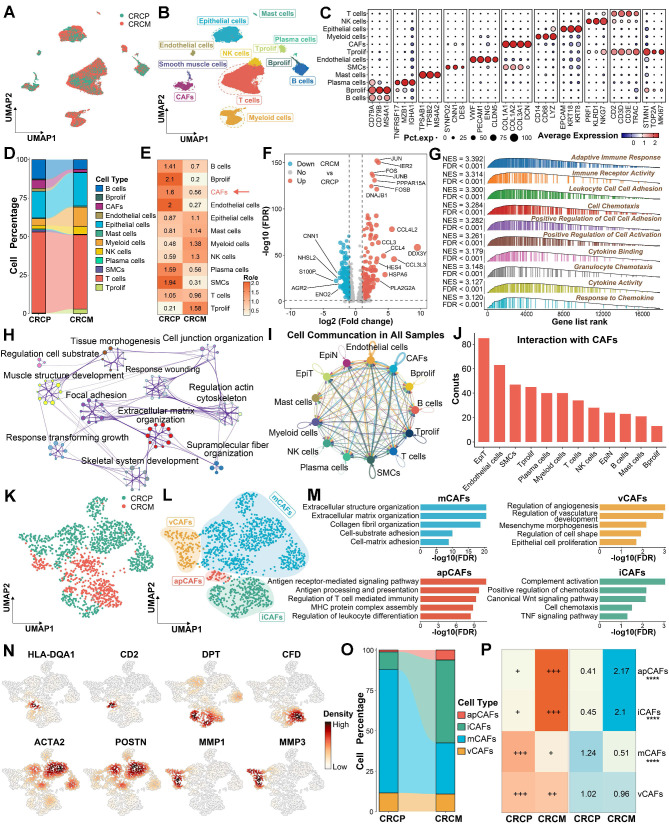
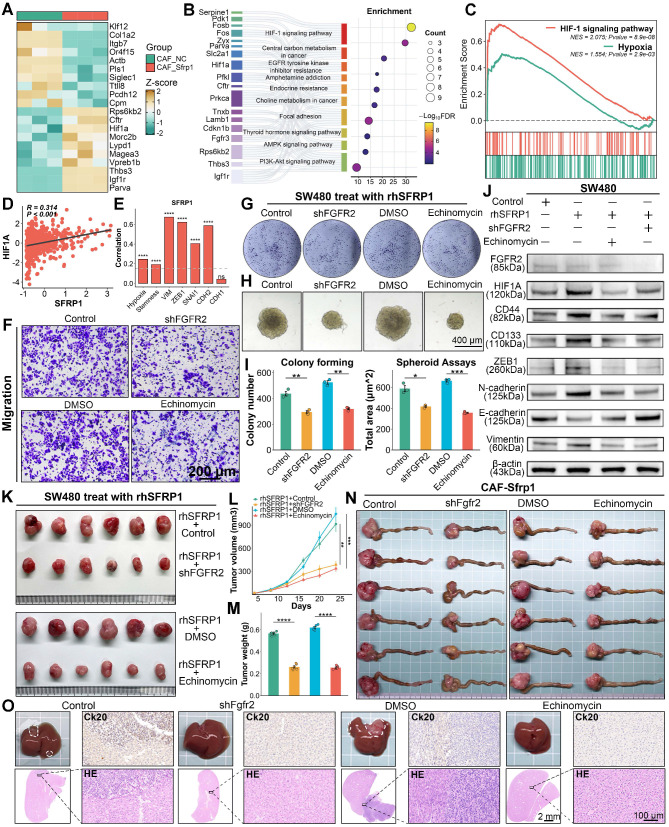
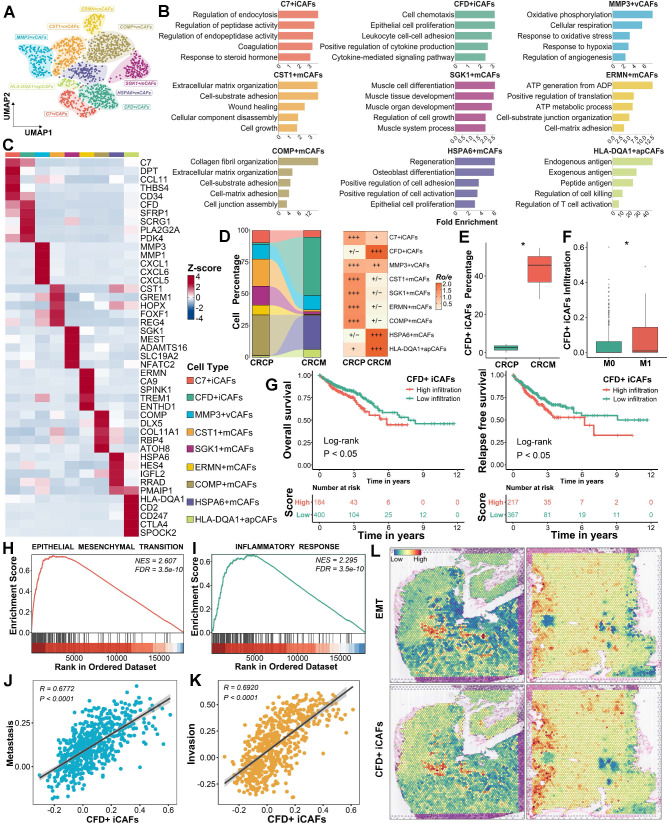
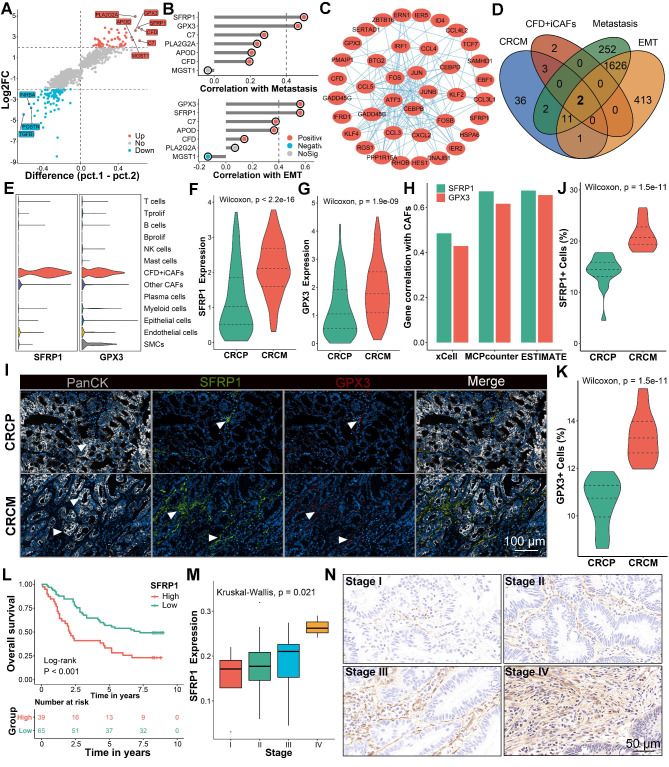
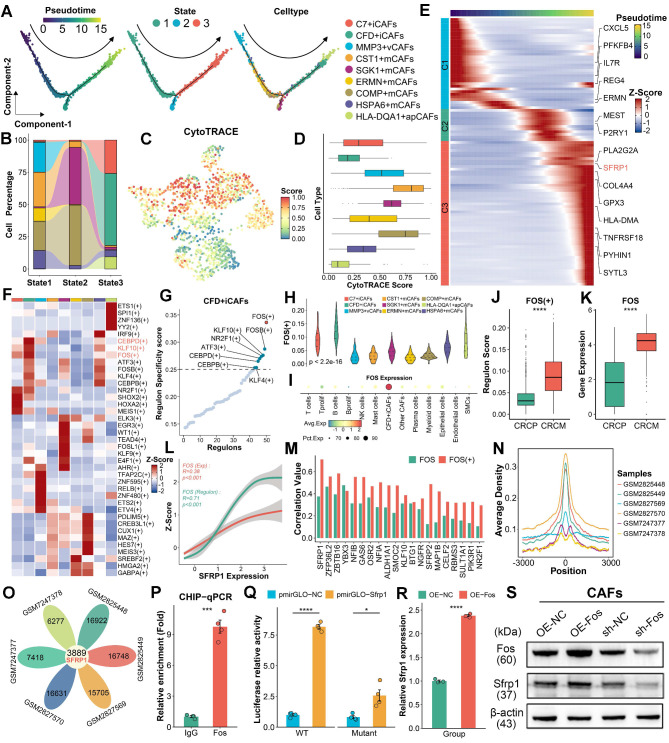
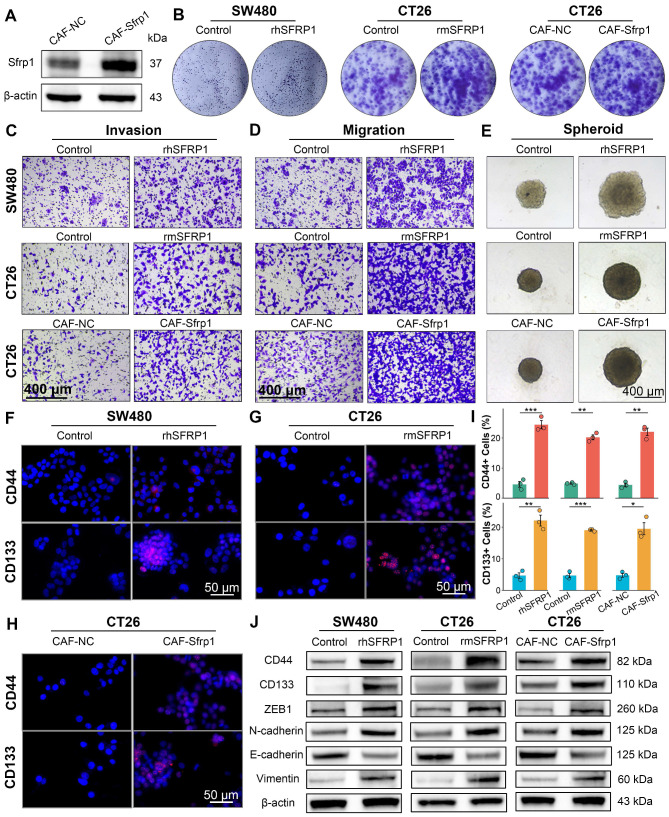
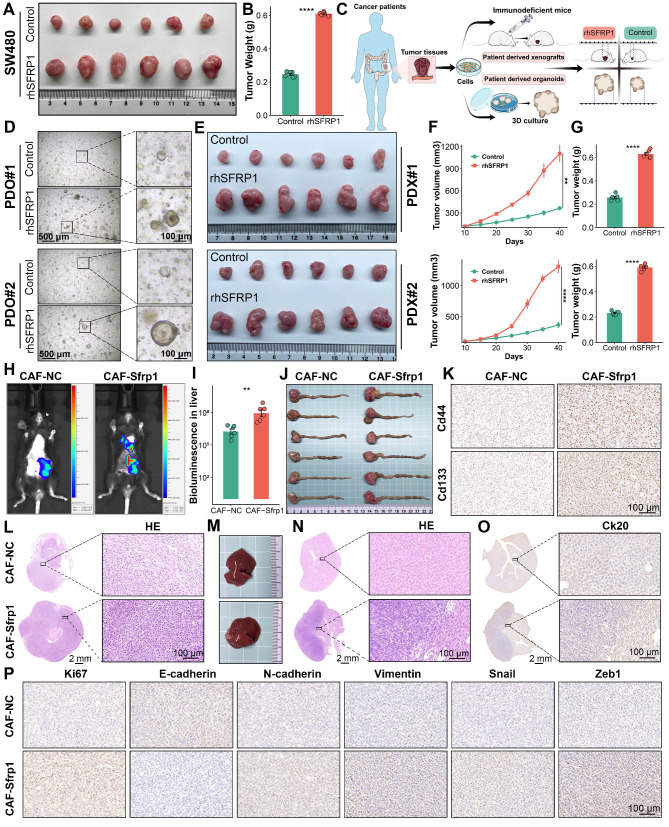
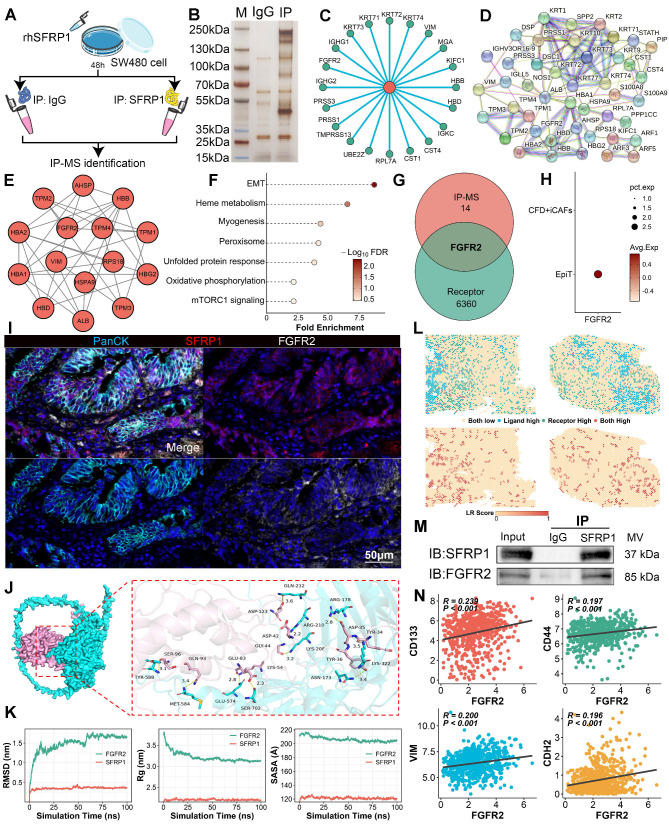
Cancer-associated fibroblasts (CAFs) exhibit diverse functions, yet their roles in colorectal cancer liver metastasis (CRLM) remain poorly understood. Through integrated analysis of single-cell RNA sequencing and spatial transcriptomics from colorectal cancer patients (CRCP: non-metastatic primary tumors; CRCM: metastatic primary tumors with liver metastases), combined with and models to investigate the role of CAFs in CRLM. experiments included six groups to reveal the role of SFRP1-producing CAFs, comprising PBS (control) and recombinant human SFRP1 (rhSFRP1) treated SW480 cells, PBS (control) and recombinant mouse SFRP1 (rmSFRP1) treated CT26 cells, and conditioned medium (CM) derived from CAF-NC and CAF-Sfrp1 treated CT26 cells. Preclinical models were further employed to elucidate the role of SFRP1 in CRLM. Subcutaneous xenografts models were constructed from PBS (control) and rhSFRP1 treated SW480 cells. For orthotopic tumor metastasis models, CT26 cells were pre-cultured with CAF-NC or CAF-Sfrp1 and then orthotopically injected into BALB/c mice. We identified an inflammatory CAF subtype (CFD iCAFs) associated with poor clinical outcomes, advanced staging, and metastasis. Transcriptional regulation analysis revealed FOS-mediated differentiation of CFD iCAFs drives SFRP1 overexpression. and experiments confirmed that SFRP1-producing CAFs promote tumor stemness and epithelial-mesenchymal transition (EMT). Mechanistically, SFRP1 from CFD iCAFs binds FGFR2, activating the HIF1 signaling pathway to enhance tumor stemness, EMT, and CRLM progression. This study highlights CFD iCAFs as key regulators of tumor-stromal interactions and identifies SFRP1 as a potential therapeutic target in CRLM.
癌症相关成纤维细胞(CAFs)具有多种功能,但其在结直肠癌肝转移(CRLM)中的作用仍知之甚少。通过对结直肠癌患者(CRCP:非转移性原发性肿瘤;CRCM:伴有肝转移的转移性原发性肿瘤)的单细胞RNA测序和空间转录组学进行综合分析,并结合实验模型来研究CAFs在CRLM中的作用。实验包括六组,以揭示产生SFRP1的CAFs的作用,包括PBS(对照)和重组人SFRP1(rhSFRP1)处理的SW480细胞、PBS(对照)和重组小鼠SFRP1(rmSFRP1)处理的CT26细胞,以及来自CAF-NC和CAF-Sfrp1处理的CT26细胞的条件培养基(CM)。进一步采用临床前模型来阐明SFRP1在CRLM中的作用。从PBS(对照)和rhSFRP1处理的SW480细胞构建皮下异种移植模型。对于原位肿瘤转移模型,将CT26细胞与CAF-NC或CAF-Sfrp1预培养,然后原位注射到BALB/c小鼠体内。我们鉴定出一种与不良临床结局、晚期分期和转移相关的炎性CAF亚型(CFD iCAFs)。转录调控分析显示,FOS介导的CFD iCAFs分化驱动SFRP1过表达。实验证实,产生SFRP1的CAFs促进肿瘤干性和上皮-间质转化(EMT)。机制上,来自CFD iCAFs的SFRP1与FGFR2结合,激活HIF1信号通路,以增强肿瘤干性、EMT和CRLM进展。本研究强调CFD iCAFs是肿瘤-基质相互作用的关键调节因子,并确定SFRP1是CRLM中的一个潜在治疗靶点。