Department of Pathology, Medical University of Vienna, Vienna, Austria.
Biochemical Institute, University of Kiel, Kiel, Germany.
Mol Cancer. 2024 Oct 31;23(1):245. doi: 10.1186/s12943-024-02114-8.
Prostate cancer ranks as the second most frequently diagnosed cancer in men worldwide. Recent research highlights the crucial roles IL6ST-mediated signaling pathways play in the development and progression of various cancers, particularly through hyperactivated STAT3 signaling. However, the molecular programs mediated by IL6ST/STAT3 in prostate cancer are poorly understood.
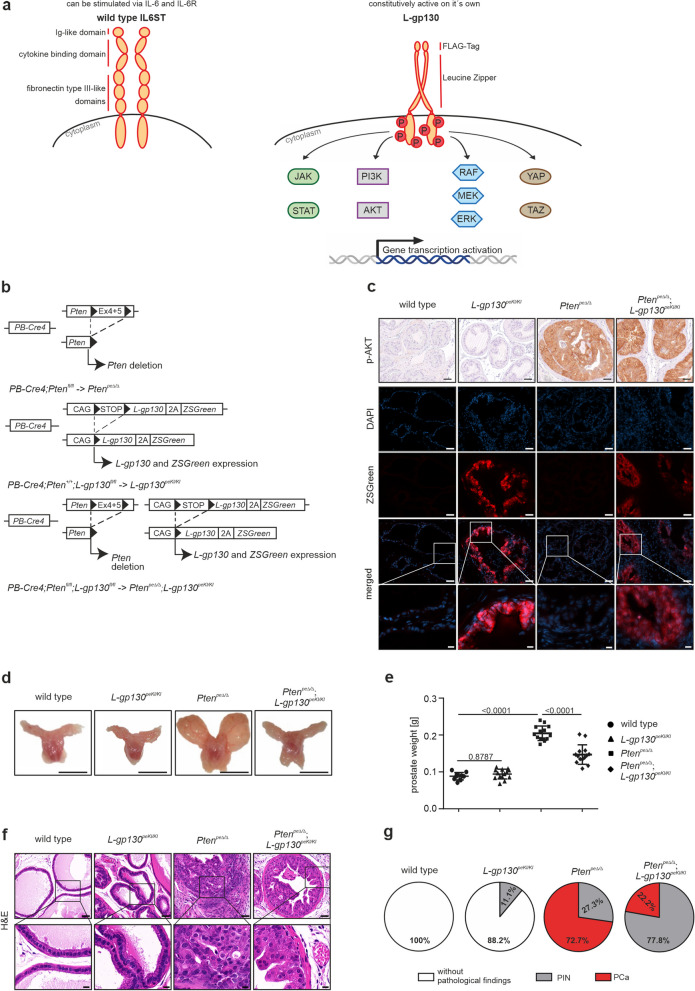
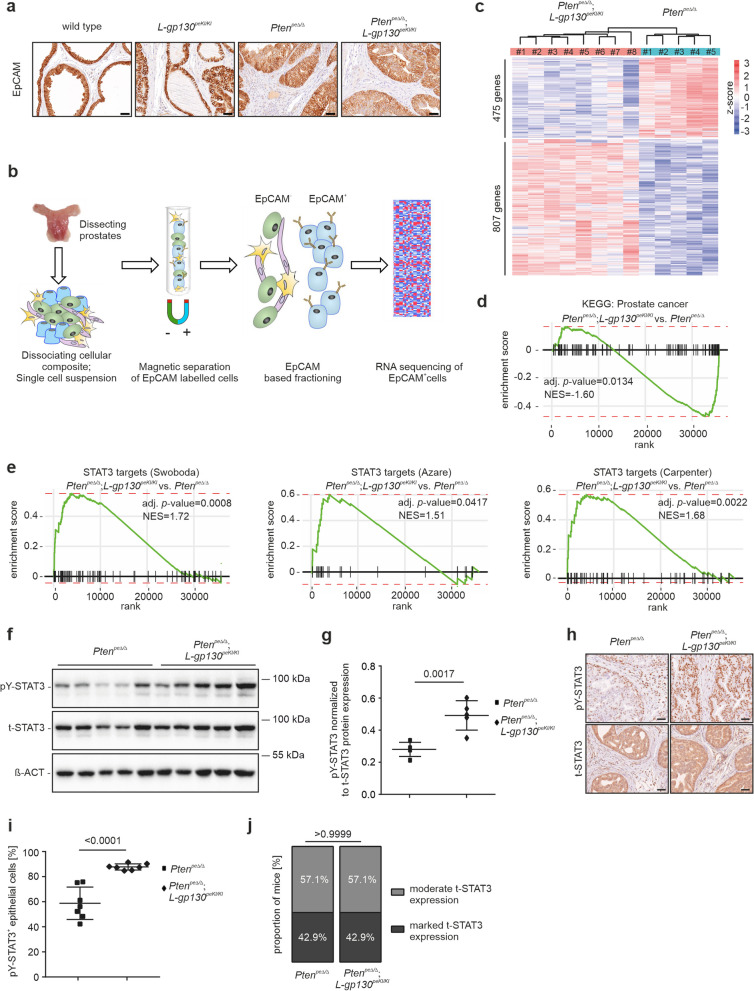
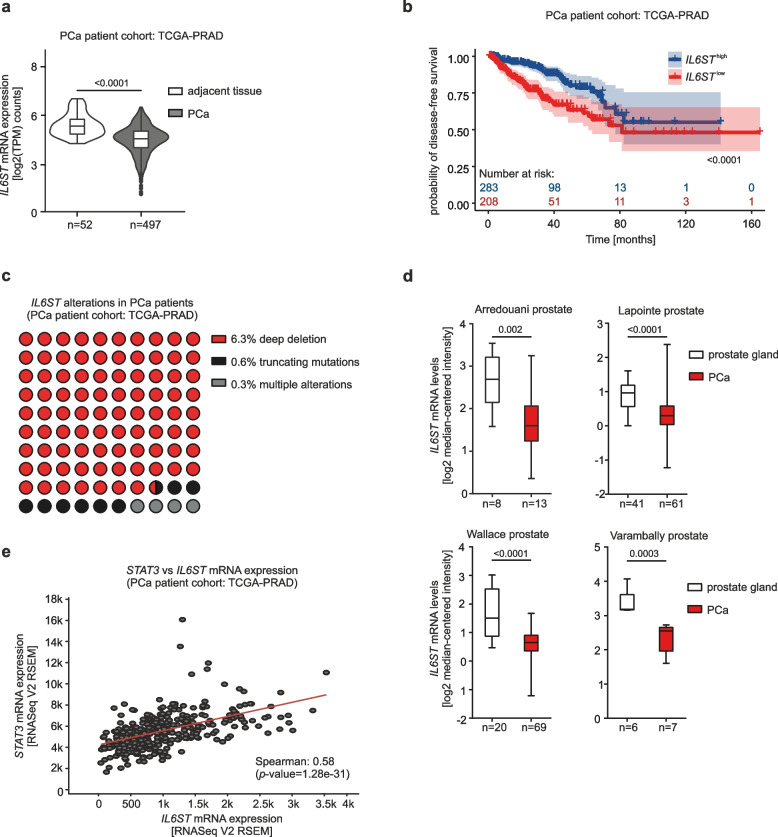
To investigate the role of IL6ST signaling, we constitutively activated IL6ST signaling in the prostate epithelium of a Pten-deficient prostate cancer mouse model in vivo and examined IL6ST expression in large cohorts of prostate cancer patients. We complemented these data with in-depth transcriptomic and multiplex histopathological analyses.
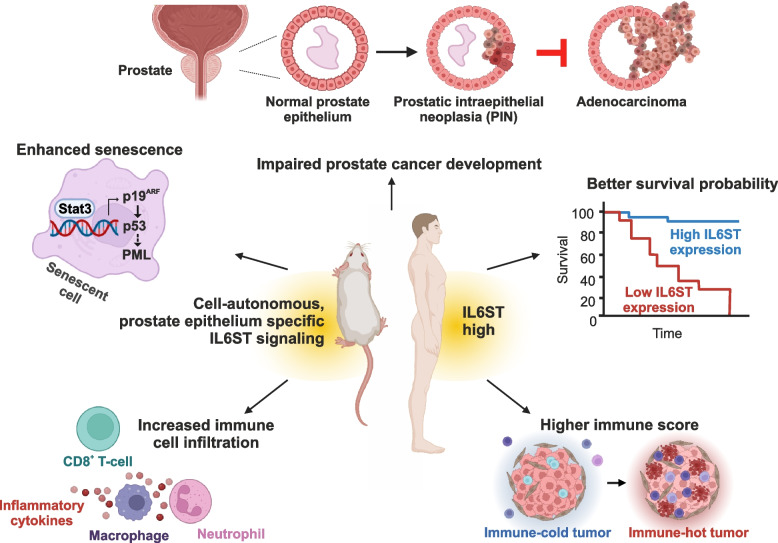
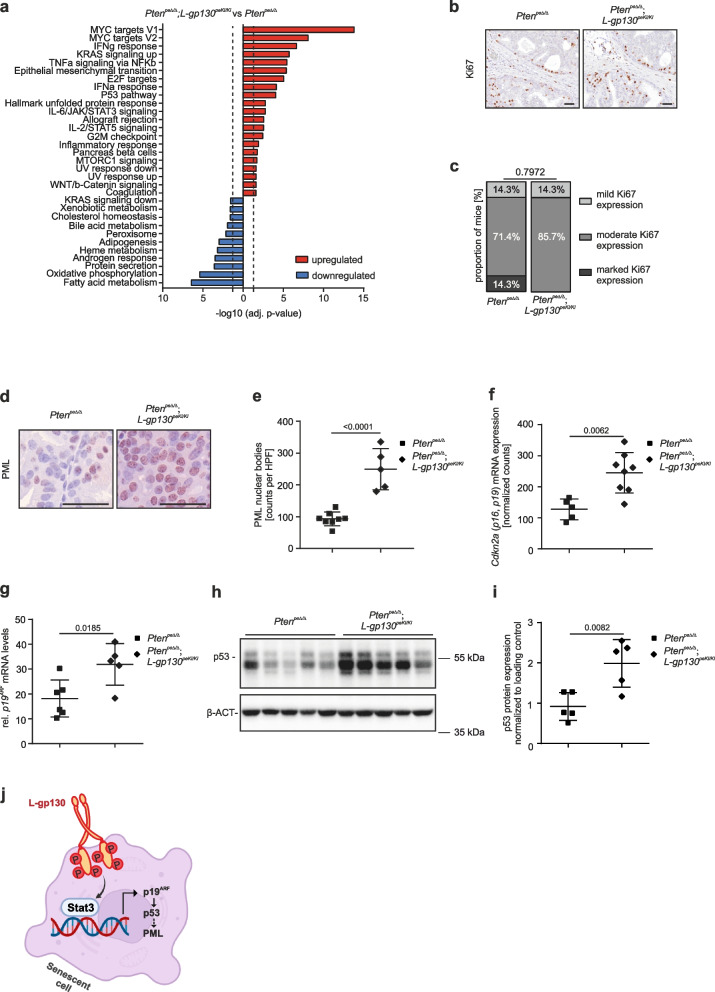
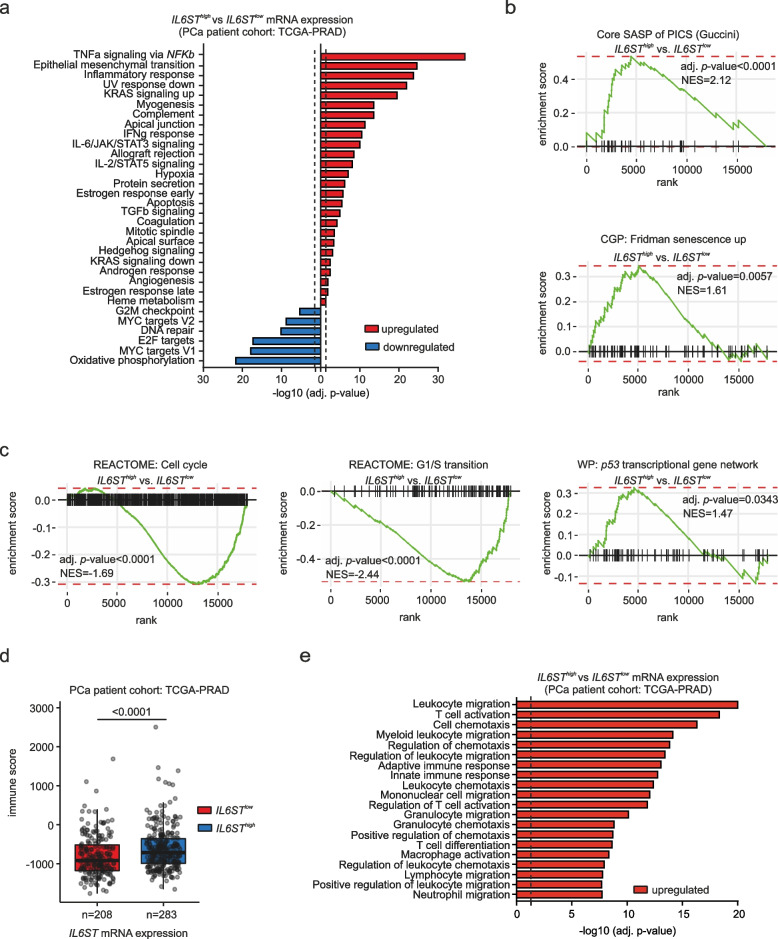
Genetic cell-autonomous activation of the IL6ST receptor in prostate epithelial cells triggers active STAT3 signaling and significantly reduces tumor growth in vivo. Mechanistically, genetic activation of IL6ST signaling mediates senescence via the STAT3/ARF/p53 axis and recruitment of cytotoxic T-cells, ultimately impeding tumor progression. In prostate cancer patients, high IL6ST mRNA expression levels correlate with better recurrence-free survival, increased senescence signals and a transition from an immune-cold to an immune-hot tumor.
Our findings demonstrate a context-dependent role of IL6ST/STAT3 in carcinogenesis and a tumor-suppressive function in prostate cancer development by inducing senescence and immune cell attraction. We challenge the prevailing concept of blocking IL6ST/STAT3 signaling as a functional prostate cancer treatment and instead propose cell-autonomous IL6ST activation as a novel therapeutic strategy.
前列腺癌是全球男性中第二大常见的癌症。最近的研究强调了 IL6ST 介导的信号通路在各种癌症的发展和进展中所起的关键作用,特别是通过过度激活 STAT3 信号。然而,IL6ST/STAT3 在前列腺癌中介导的分子程序还知之甚少。
为了研究 IL6ST 信号的作用,我们在体内 Pten 缺陷的前列腺癌小鼠模型中使前列腺上皮细胞中的 IL6ST 信号持续激活,并在大量前列腺癌患者中检查了 IL6ST 的表达。我们用深入的转录组学和多重组织病理学分析来补充这些数据。
在前列腺上皮细胞中遗传细胞自主激活 IL6ST 受体,触发活跃的 STAT3 信号,并显著减少体内肿瘤的生长。从机制上讲,IL6ST 信号的遗传激活通过 STAT3/ARF/p53 轴和募集细胞毒性 T 细胞来介导衰老,最终阻碍肿瘤的进展。在前列腺癌患者中,高 IL6ST mRNA 表达水平与无复发生存率增加、衰老信号增加以及从免疫冷肿瘤向免疫热肿瘤的转变相关。
我们的研究结果表明,IL6ST/STAT3 在致癌作用中有一个依赖于背景的作用,并通过诱导衰老和吸引免疫细胞,在前列腺癌的发展中发挥肿瘤抑制作用。我们挑战了阻断 IL6ST/STAT3 信号作为功能性前列腺癌治疗的既定概念,而是提出了细胞自主的 IL6ST 激活作为一种新的治疗策略。