Konstantinov Konstantin K, Konstantinova Alisa F
Softellect Systems, Inc., 414-300 Ave des Sommets, Verdun, QC, H3E 2B7, Canada.
Sci Rep. 2025 Apr 14;15(1):12806. doi: 10.1038/s41598-025-97319-2.
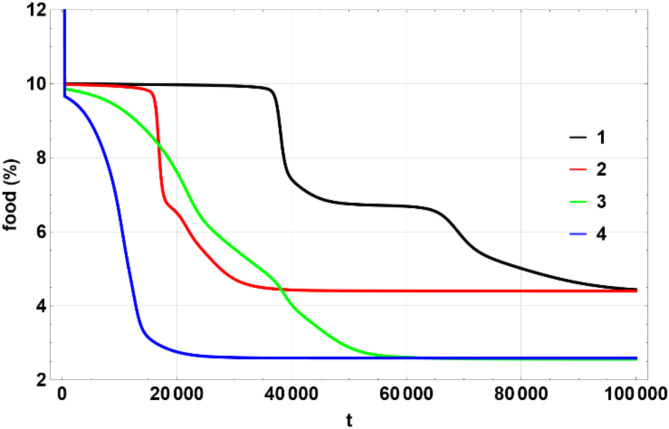
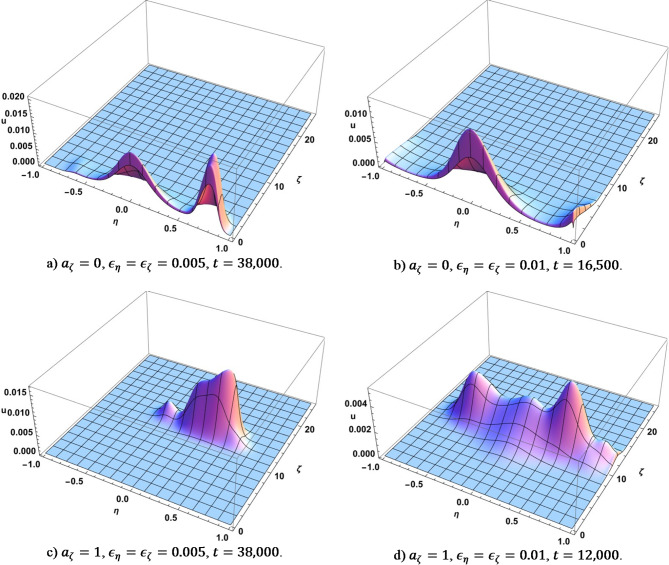
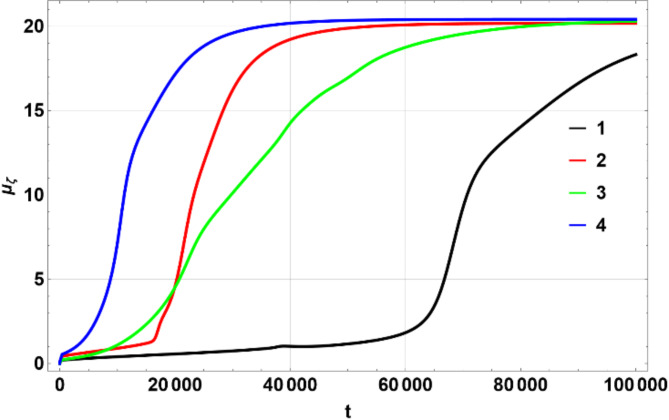
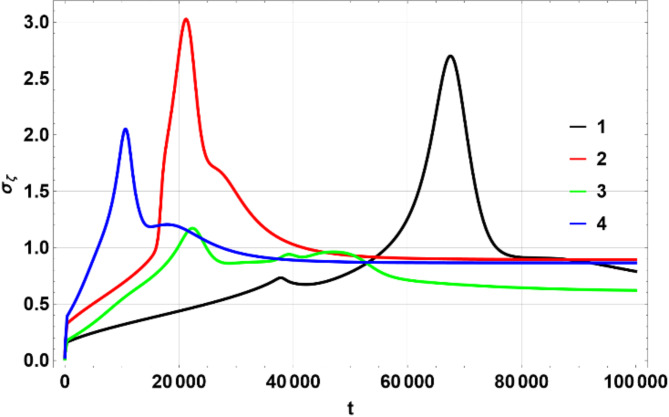
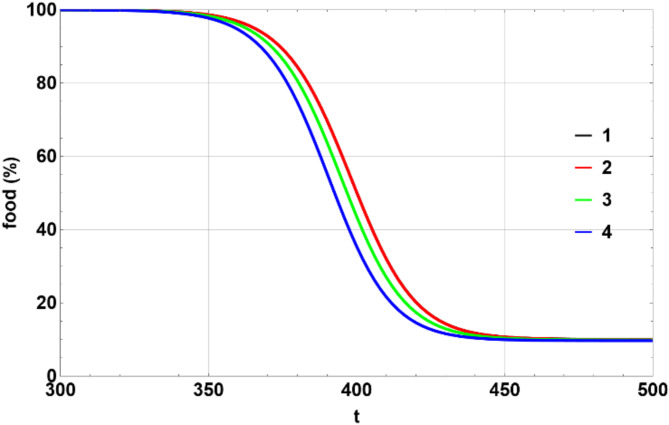
We study a linear evolutionary model based on the two-dimensional distribution of protocells by total enantiomeric excess and the amount of stored information, which they can pass from generation to generation, and without any mutual inhibition. We show that the evolution of such systems occurs in four distinct stages. The first stage is an exponential growth of the concentration of protocells near the point [Formula: see text] and it should take negligible time on a geological scale. The second stage is a diffusion-like process in both dimensions. This process can also be accompanied by a drift in the direction of increased information passed from generation to generation, provided that the appropriate linear coefficient in the information storage subspace is large enough. The third stage is a rapid symmetry breaking and formation of the species near [Formula: see text] value of enantiomeric excess (assuming a small positive global enantiomeric asymmetry factor). The fourth stage is a relaxation toward a global stationary point, which is a narrow peak located near [Formula: see text] value of enantiomeric excess and some optimal value of the amount of stored information.
我们研究了一种基于原细胞二维分布的线性进化模型,该分布由对映体总量过量以及它们可以代代相传的存储信息量决定,且不存在任何相互抑制作用。我们表明,此类系统的进化发生在四个不同阶段。第一阶段是原细胞浓度在点[公式:见文本]附近呈指数增长,在地质尺度上这一阶段所需时间可忽略不计。第二阶段是在两个维度上类似扩散的过程。只要信息存储子空间中的适当线性系数足够大,这个过程还可能伴随着朝着代代相传的信息增加方向的漂移。第三阶段是快速的对称破缺以及在对映体过量的[公式:见文本]值附近(假设存在一个小的正全局对映体不对称因子)形成物种。第四阶段是朝着全局稳定点的弛豫,该稳定点是位于对映体过量的[公式:见文本]值附近以及存储信息量的某个最优值处的一个窄峰。