Valido Ezra, Bertolo Alessandro, Wöllner Jens, Pannek Jürgen, Krebs Jörg, Stoyanov Jivko
SCI Population Biobanking and Translational Research, Swiss Paraplegic Research, Guido A. Zäch Str., Nottwil, Switzerland.
Department of Orthopedics, Inselspital, University of Bern, Bern, Switzerland.
Sci Rep. 2025 Apr 14;15(1):12825. doi: 10.1038/s41598-025-96939-y.
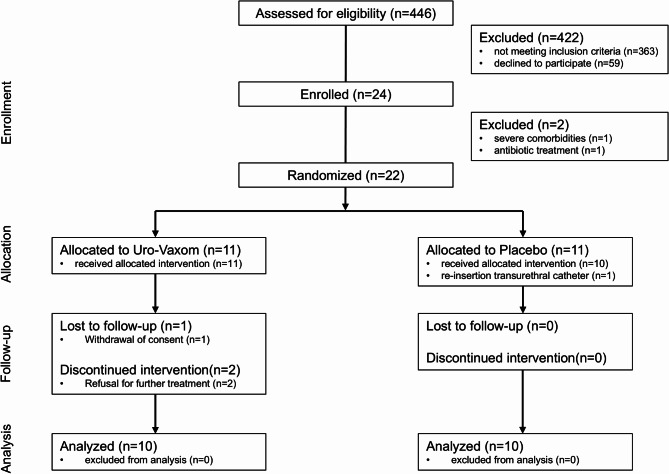
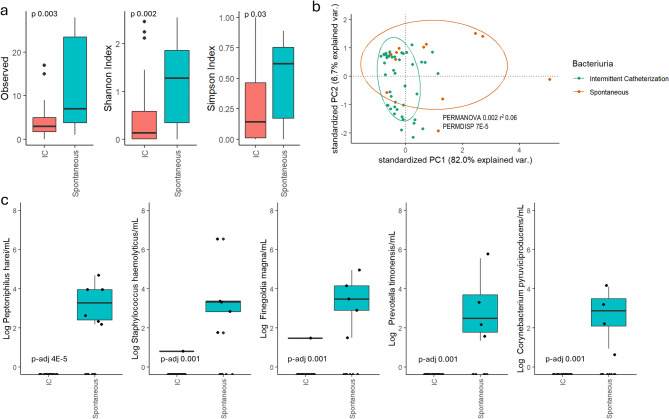
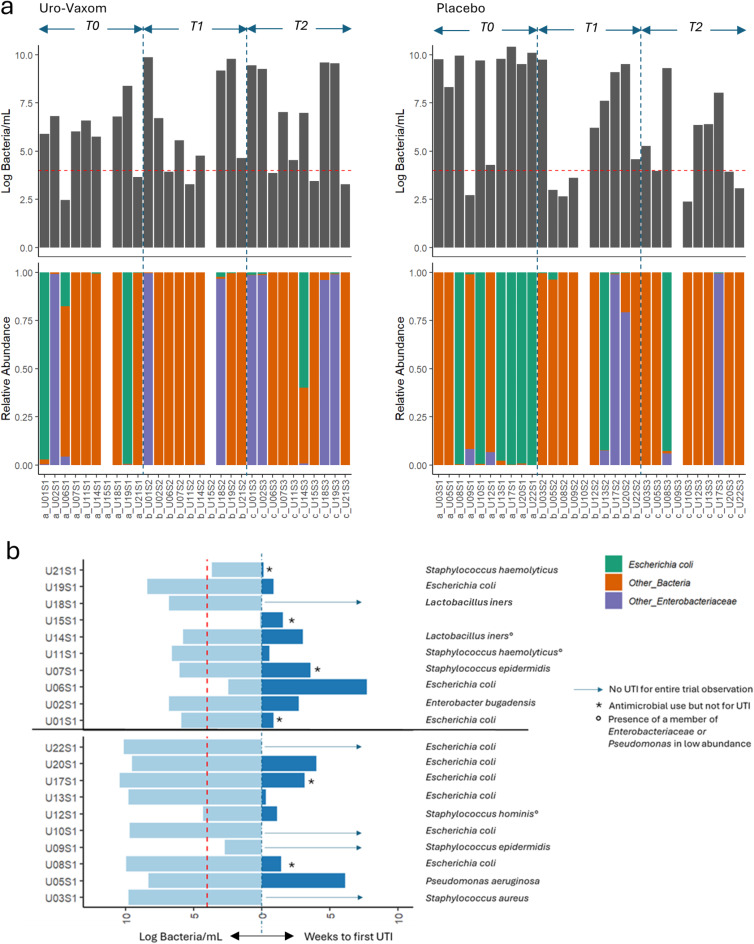
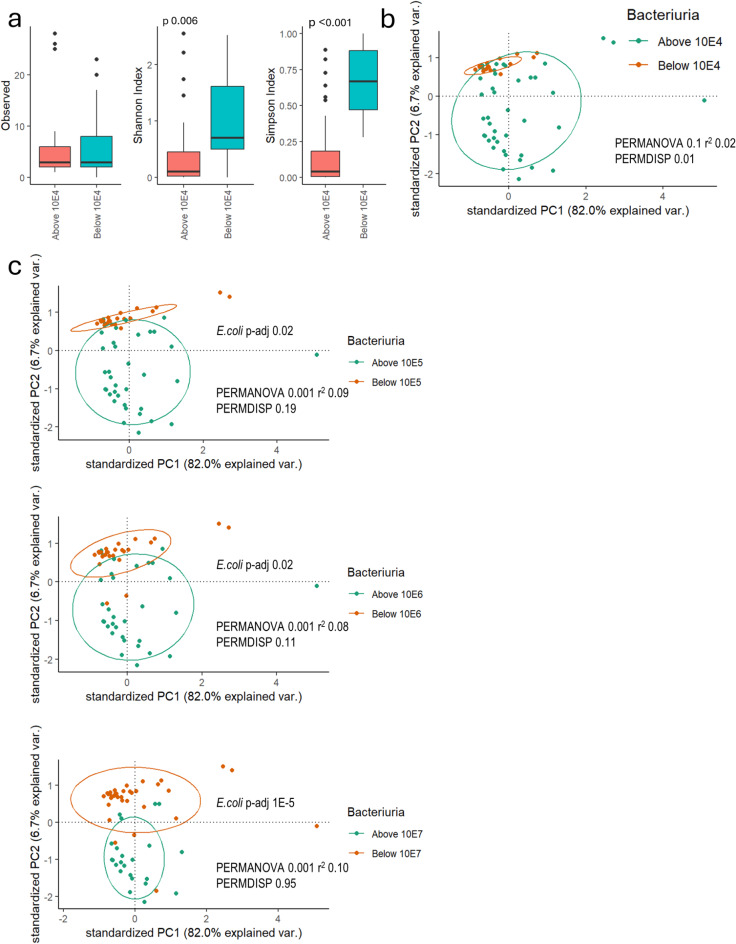
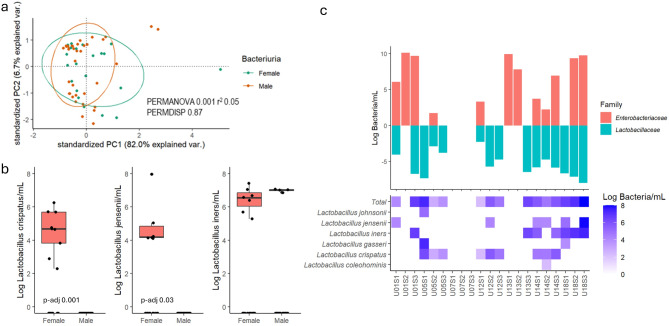
Individuals with spinal cord injury/disease (SCI/D) have a high incidence of urinary tract infections (UTI). This randomized controlled pilot trial investigated the effect of an immunomodulator (Uro-Vaxom) versus a placebo on the urinary tract microbiome of individuals with SCI/D to inform the design of a larger trial. Twenty participants with SCI/D undergoing primary rehabilitation were randomized to receive either Uro-Vaxom or a placebo for three months (ClinicalTrials.gov NCT04049994 08/08/2019). Urine was collected at baseline, immediately post-treatment, and three months post-treatment. DNA was extracted and sequenced using full-length 16 S rRNA using Oxford Nanopore technology. Internal controls were added for absolute abundance estimation. There were 10 participants in Uro-Vaxom and 10 in placebo analyzed. The prevalence of Escherichia coli was lower in the Uro-Vaxom group (2/10) compared to the placebo group (5/10) post-treatment, although this difference was not statistically significant. Significant alpha and beta diversity differences were associated with the microbial load, sex, and voiding method. Uro-Vaxom showed potential in reducing E. coli prevalence during the treatment period, but this result requires validation in a larger trial. Future trials should consider the baseline microbial load and optimal timing of intervention to ensure that the observed effects are attributable to immunomodulation.
脊髓损伤/疾病(SCI/D)患者尿路感染(UTI)的发生率很高。这项随机对照试验研究了一种免疫调节剂(Uro-Vaxom)与安慰剂对SCI/D患者尿路微生物群的影响,以为更大规模试验的设计提供参考。20名接受初级康复治疗的SCI/D患者被随机分为两组,分别接受Uro-Vaxom或安慰剂治疗三个月(ClinicalTrials.gov NCT04049994 2019年8月8日)。在基线、治疗后即刻和治疗后三个月收集尿液。使用牛津纳米孔技术对全长16S rRNA进行DNA提取和测序。添加内部对照用于绝对丰度估计。分析了10名接受Uro-Vaxom治疗的参与者和10名接受安慰剂治疗的参与者。治疗后,Uro-Vaxom组(2/10)大肠杆菌的患病率低于安慰剂组(5/10),尽管这种差异无统计学意义。显著的α和β多样性差异与微生物负荷、性别和排尿方式有关。Uro-Vaxom在治疗期间显示出降低大肠杆菌患病率的潜力,但这一结果需要在更大规模的试验中得到验证。未来的试验应考虑基线微生物负荷和最佳干预时机,以确保观察到的效果可归因于免疫调节。