Afolabi Ismail Bamidele, Aremu Abdulmujeeb Babatunde, Koryom Musa Jal-Paul, Buh Amos, Bainbridge Shannon A, Phillips Karen P
Department of Public Health, Cavendish University, Kampala, Uganda.
Interdisciplinary School of Health Sciences, University of Ottawa, Ottawa, Ontario, Canada.
Patient Prefer Adherence. 2025 Apr 10;19:981-996. doi: 10.2147/PPA.S514283. eCollection 2025.
Despite the effectiveness of hepatitis B virus (HBV) antiviral treatment therapy in reducing the risk of liver-related complications, such as cirrhosis and hepatocellular carcinoma among chronically infected patients, medication non-adherence continues to hamper the successful management of the infection. The extent of HBV treatment adherence, associated facilitators, and barriers in South Sudan is not established. This study aimed to explore the predictors of medication non-adherence among HBV patients attending a public health facility in, South Sudan.
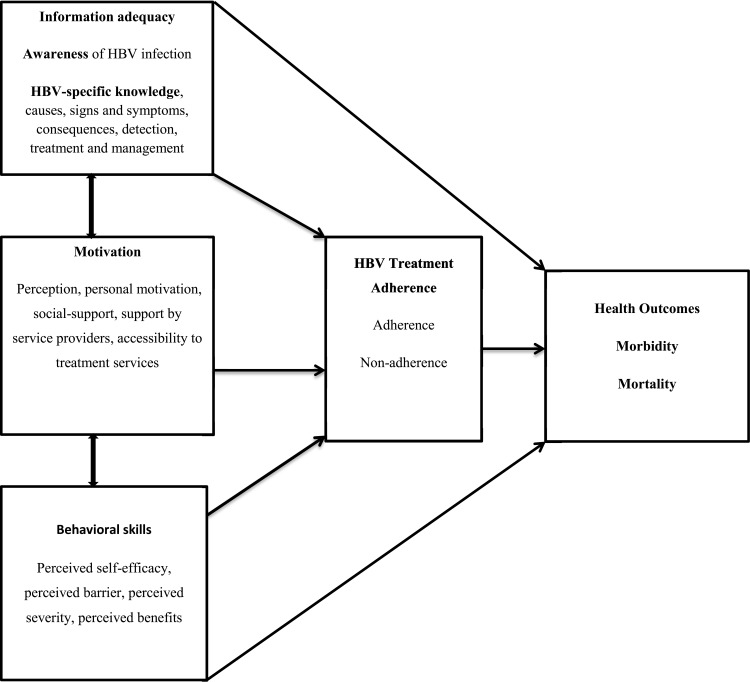
We conducted a facility-based cross-sectional study of 392 convenience-selected patients using a pretested interviewer-administered questionnaire premised on the information-motivation-behavioral skills (IMB) adherence model between December 2023 and March 2024. The relationship between medication non-adherence and antecedent variables was ascertained by logistic regression analysis.
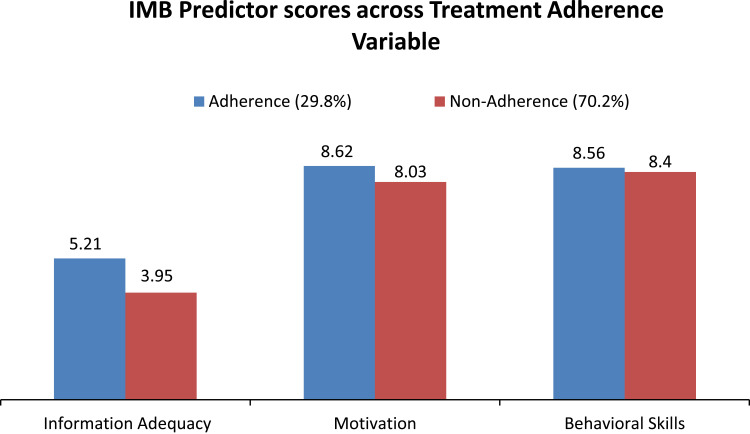
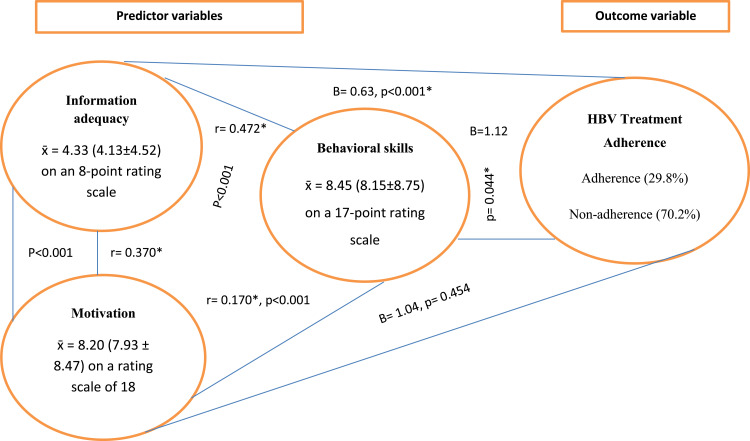
The sample was predominantly male (64.3%), and the mean age was 31.06 (30.19-31.93) years, with 28.1% reporting no formal education. The patients demonstrated inadequate HBV information (4.33±1.93), low motivation (8.20±2.69), and inadequate behavioral skills toward medication adherence (8.45±2.99), as measured on their respective rating scales. Further, more than two-thirds of the patients (70.2%) were HBV medication non-adherent. Younger age (AOR = 4.74, 95% CI = 2.13-10.56), being currently unmarried (AOR = 3.25, 95% CI = 1.76-6.01), unemployment (AOR = 4.19, 95% CI = 1.84-9.56), and increased behavioral skills (AOR = 1.12, 95% CI = 1.84-9.56) significantly influenced medication non-adherence. Lower education (AOR = 0.21, 95% CI = 0.10-0.46) and information adequacy (AOR = 0.63, 95% CI = 0.53-0.75) were associated with lower odds of non-adherence.
The study highlights key factors influencing the concerning rate of medication non-adherence among HBV patients in South Sudan. While these identified factors may explain the lingering burden of HBV-related complications, targeted interventions addressing demographic, socioeconomic barriers, and HBV-specific education are essential to enhance adherence and improve health outcomes.
尽管乙肝病毒(HBV)抗病毒治疗在降低慢性感染患者发生肝硬化和肝细胞癌等肝脏相关并发症的风险方面具有有效性,但药物治疗依从性不佳仍然阻碍着对该感染的成功管理。南苏丹HBV治疗依从性的程度、相关促进因素和障碍尚未明确。本研究旨在探讨在南苏丹一家公共卫生机构就诊的HBV患者中药物治疗不依从的预测因素。
我们在2023年12月至2024年3月期间,对392名方便选取的患者进行了一项基于机构的横断面研究,使用基于信息-动机-行为技能(IMB)依从性模型预先测试的访谈者管理问卷。通过逻辑回归分析确定药物治疗不依从与先行变量之间的关系。
样本以男性为主(64.3%),平均年龄为31.06(30.19 - 31.93)岁,28.1%的患者报告未接受过正规教育。根据各自的评分量表测量,患者在HBV信息方面不足(4.33±1.93)、动机较低(8.20±2.69)以及在药物治疗依从性方面行为技能不足(8.45±2.99)。此外,超过三分之二的患者(70.2%)未坚持服用HBV药物。年龄较小(调整后比值比[AOR]=4.74,95%置信区间[CI]=2.13 - 10.56)、目前未婚(AOR = 3.25,95% CI = 1.76 - 6.01)、失业(AOR = 4.19,95% CI = 1.84 - 9.56)以及行为技能增加(AOR = 1.12,95% CI = 1.84 - 9.56)显著影响药物治疗不依从。较低的教育程度(AOR = 0.21,95% CI = 0.10 - 0.46)和信息充足性(AOR = 0.63,95% CI = 0.53 - 0.75)与不依从的较低几率相关。
该研究突出了影响南苏丹HBV患者令人担忧的药物治疗不依从率的关键因素。虽然这些已确定的因素可能解释了HBV相关并发症持续存在的负担,但针对人口统计学、社会经济障碍和HBV特定教育的有针对性干预对于提高依从性和改善健康结果至关重要。