Lal Radhey, Singh Rajiv Kumar, Nishad Dinesh Kumar, Khalid Saifullah
Department of Electronics and Communication Engineering, Institute of Engineering and Technology Lucknow, Dr. APJ Abdul, Kalam Technical University, Lucknow, 226021, India.
Department of Electrical Engineering, Dr. Shakuntala Misra National Rehabilitation University, Lucknow, India.
Sci Rep. 2025 Apr 16;15(1):13139. doi: 10.1038/s41598-025-98110-z.
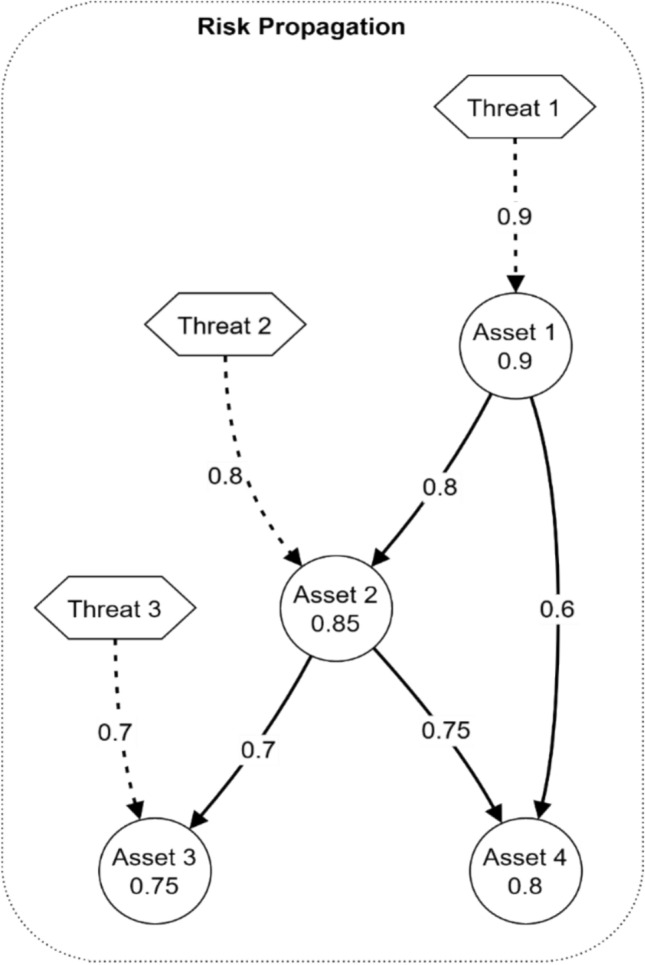
This research investigates the application of fuzzy graph theory to address critical security challenges in electromagnetic radiation therapy systems. Through comprehensive theoretical analysis and experimental validation, we introduce novel approaches leveraging fuzzy cognitive maps and fuzzy graph-based architectures for access control, intrusion detection, secure communication, and risk assessment. The study demonstrates significant improvements over traditional security measures across multiple performance metrics. The fuzzy graph-based access control model achieved a 2.5% false acceptance rate compared to 7.8% in traditional systems, while intrusion detection accuracy improved to 95% with only 3% false positives. Secure communication protocols demonstrated 98% confidentiality and 96% integrity rates, surpassing conventional methods. Risk assessment coverage increased to 92% with reduced false positives. The system maintained linear scaling in processing time from 180 ms at 1000 to 320 ms at 100,000 records, with CPU utilization remaining between 65 and 72%. These findings underscore the immense potential of fuzzy graph theory in strengthening the safety and privacy of electromagnetic radiation therapy systems, providing a foundation for future research and clinical adoption. The study also identifies key directions for future research, including machine learning integration, blockchain implementation, and scalability optimization.
本研究探讨模糊图论在解决电磁辐射治疗系统关键安全挑战中的应用。通过全面的理论分析和实验验证,我们引入了利用模糊认知图和基于模糊图的架构进行访问控制、入侵检测、安全通信和风险评估的新方法。该研究表明,在多个性能指标上,与传统安全措施相比有显著改进。基于模糊图的访问控制模型的误接受率为2.5%,而传统系统为7.8%,同时入侵检测准确率提高到95%,误报率仅为3%。安全通信协议的保密性和完整性率分别达到98%和96%,超过了传统方法。风险评估覆盖率提高到92%,误报率降低。该系统在处理时间上保持线性扩展,从1000条记录时的180毫秒增加到100000条记录时的320毫秒,CPU利用率保持在65%至72%之间。这些发现强调了模糊图论在加强电磁辐射治疗系统安全性和隐私性方面的巨大潜力,为未来的研究和临床应用奠定了基础。该研究还确定了未来研究的关键方向,包括机器学习集成、区块链实施和可扩展性优化。