
电磁辐射在提升Wi-Fi热点的量子阶乘网络性能中的作用。
The role of EM radiation in enhancing quantum factorial network performance for Wi-Fi hotspots.
作者信息
Lal Radhey, Singh Rajiv Kumar, Nishad Dinesh Kumar, Shah Dharti Raj
机构信息
Dr. APJ Abdul, Kalam Technical University Lucknow, Lucknow, 226021, India.
Institute of Engineering and Technology, Lucknow, India.
出版信息
Sci Rep. 2025 Aug 12;15(1):29588. doi: 10.1038/s41598-025-09668-7.
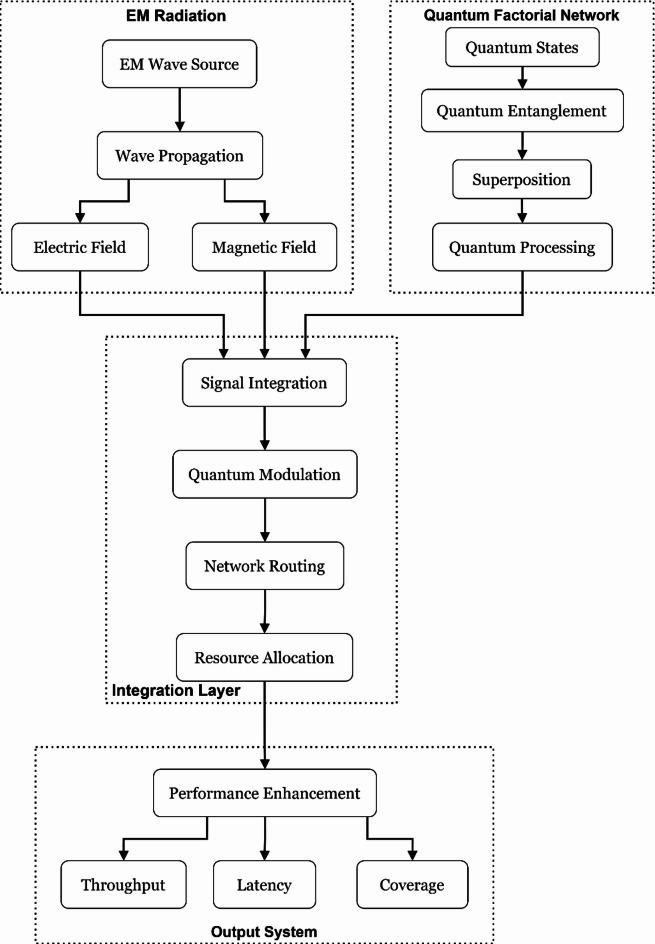
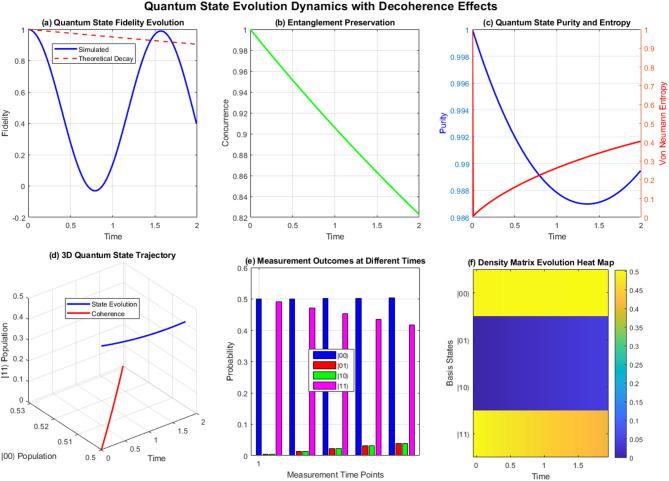
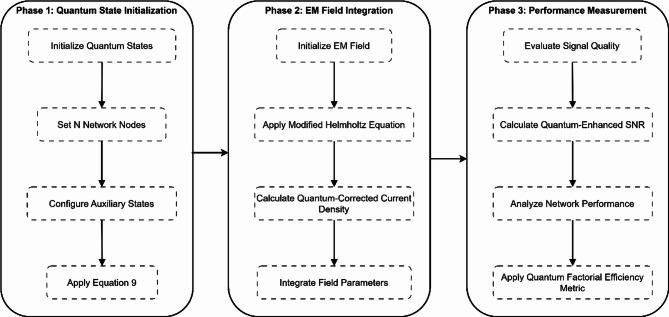
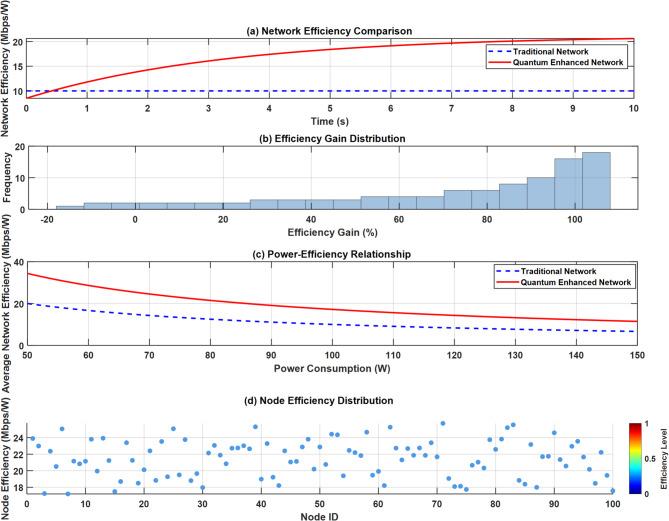
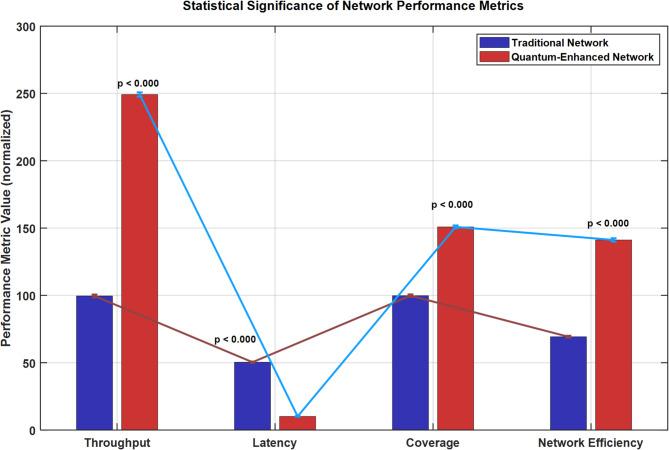
This study investigates the integration of electromagnetic (EM) radiation with quantum factorial networks to enhance Wi-Fi hotspot performance through a comprehensive experimental framework.A novel quantum factorial network architecture was developed, leveraging quantum superposition and entanglement principles to optimize wireless communication systems. The experimental methodology employed MATLAB/Simulink simulations with 100 network nodes operating at 2.4 GHz frequency, incorporating quantum enhancement coefficients and modified Maxwell equations for EM field propagation. Statistical analysis using ANOVA (F(2,297) = 156.7, p < 0.001, η = 0.51) demonstrated significant performance improvements: throughput increased from 1.2 Gbps to 3.0 Gbps (150% enhancement), latency reduced from 25 to 5 ms (80% improvement), and coverage expanded from 30 to 45 m (50% increase). Cross-validation between theoretical models and simulation results achieved correlation coefficients exceeding 0.98 across all performance metrics. The quantum enhancement factor ξq = 2.5 was validated through quantum state tomography with 95% confidence intervals. Real-world applicability was demonstrated across smart city infrastructure, industrial IoT environments, and healthcare systems. These findings establish quantum factorial networks as a viable solution for next-generation wireless communication, though scalability challenges and hardware requirements for quantum-enhanced nodes remain critical considerations for practical deployment.
本研究通过一个全面的实验框架,研究电磁(EM)辐射与量子因子网络的集成,以提高Wi-Fi热点性能。开发了一种新颖的量子因子网络架构,利用量子叠加和纠缠原理优化无线通信系统。实验方法采用MATLAB/Simulink模拟,100个网络节点在2.4 GHz频率下运行,纳入量子增强系数和用于电磁场传播的修正麦克斯韦方程。使用方差分析(F(2,297) = 156.7,p < 0.001,η = 0.51)的统计分析表明性能有显著提升:吞吐量从1.2 Gbps提高到3.0 Gbps(提高150%),延迟从25毫秒降低到5毫秒(提高80%),覆盖范围从30米扩大到45米(增加50%)。理论模型与模拟结果之间的交叉验证在所有性能指标上的相关系数均超过0.98。通过量子态层析成像在95%置信区间内验证了量子增强因子ξq = 2.5。在智能城市基础设施、工业物联网环境和医疗系统中展示了实际适用性。这些发现确立了量子因子网络作为下一代无线通信的可行解决方案,尽管对于实际部署而言,量子增强节点的可扩展性挑战和硬件要求仍然是关键考虑因素。








 Zotero 插件