Alfaez Abdulkarim, Christopher Michael W, Garrett Timothy J, Papp Bernadett
Department of Pathology, Immunology, and Laboratory Medicine, University of Florida, College of Medicine, Gainesville, FL 32610, USA.
Department of Clinical Laboratory Sciences, College of Applied Medical Sciences, King Saud University, Riyadh, 11433, Saudi Arabia.
Int J Mol Sci. 2025 Mar 28;26(7):3109. doi: 10.3390/ijms26073109.
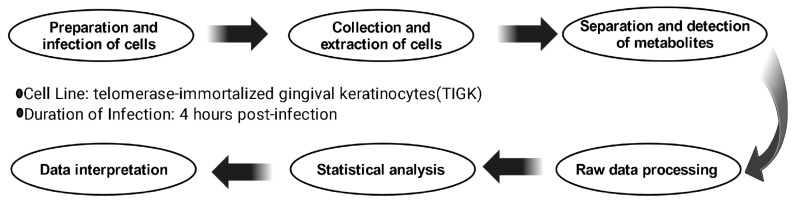
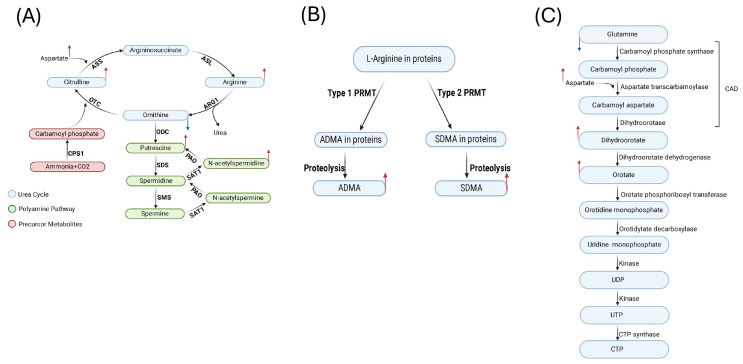
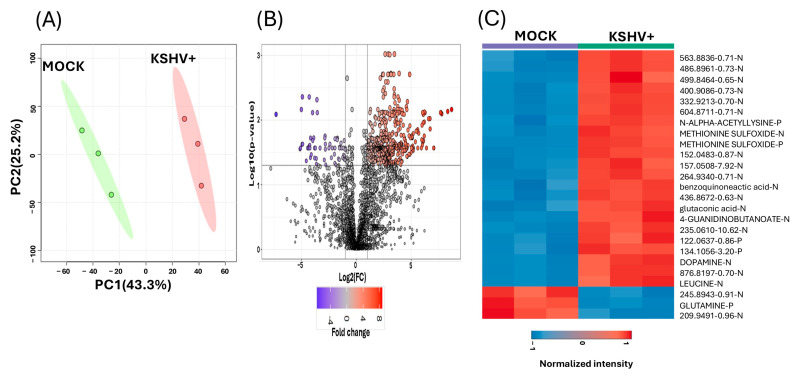
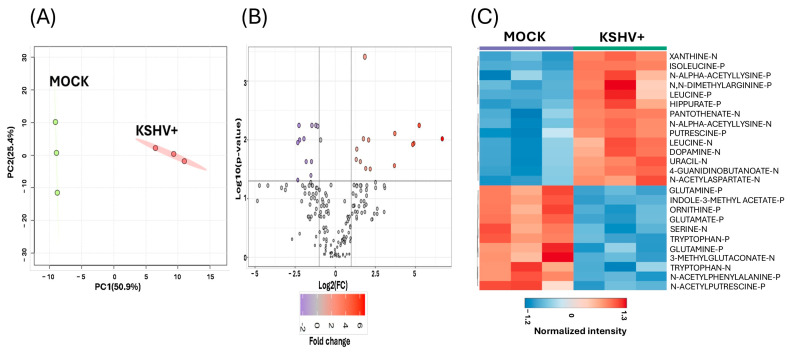
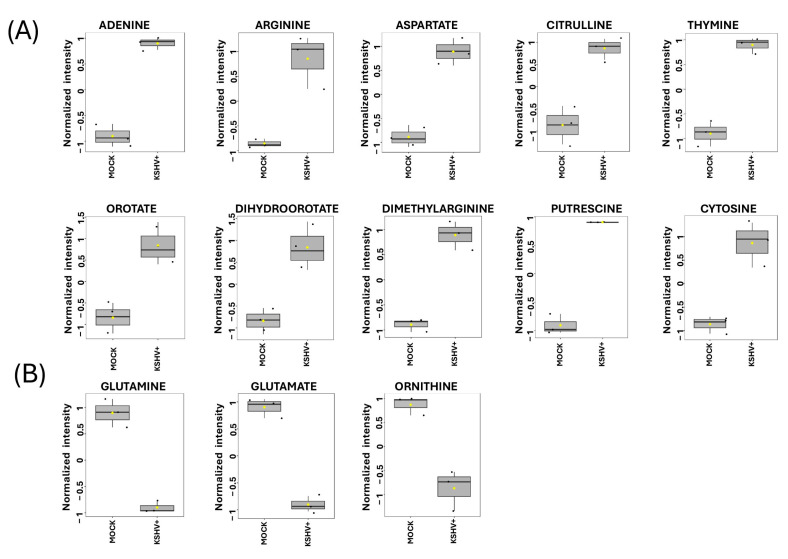
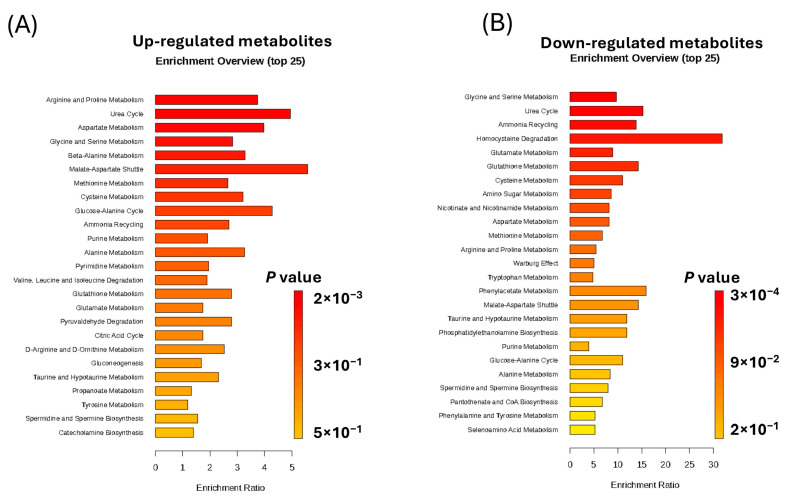
Kaposi's sarcoma-associated herpesvirus (KSHV) is an oncogenic double-stranded DNA virus. There are no vaccines or antiviral therapies for KSHV. Identifying the cellular metabolic pathways that KSHV manipulates can broaden the knowledge of how these pathways contribute to sustaining lytic infection, which can be targeted in future therapies to prevent viral spread. In this study, we performed an untargeted metabolomic analysis of KSHV infected telomerase-immortalized gingival keratinocytes (TIGK) cells at 4 h post-infection compared to mock-infected cells. We found that the metabolomic landscape of KSHV-infected TIGK differed from that of the mock. Specifically, a total of 804 differential metabolic features were detected in the two groups, with 741 metabolites that were significantly upregulated, and 63 that were significantly downregulated in KSHV-infected TIGK cells. The differential metabolites included ornithine, arginine, putrescine, dimethylarginine, orotate, glutamate, and glutamine, and were associated with pathways, such as the urea cycle, polyamine synthesis, dimethylarginine synthesis, and de novo pyrimidine synthesis. Overall, our untargeted metabolomics analysis revealed that KSHV infection results in marked rapid alterations in the metabolic profile of the oral epithelial cells. We envision that a subset of these rapid metabolic changes might result in altered cellular functions that can promote viral lytic replication and transmission in the oral cavity.
卡波西肉瘤相关疱疹病毒(KSHV)是一种致癌双链DNA病毒。目前尚无针对KSHV的疫苗或抗病毒疗法。确定KSHV操纵的细胞代谢途径可以拓宽我们对这些途径如何有助于维持裂解感染的认识,而这在未来的治疗中可以作为靶点来预防病毒传播。在本研究中,我们对感染KSHV的端粒酶永生化牙龈角质形成细胞(TIGK)在感染后4小时进行了非靶向代谢组学分析,并与模拟感染的细胞进行了比较。我们发现,感染KSHV的TIGK细胞的代谢组格局与模拟感染的细胞不同。具体而言,两组共检测到804个差异代谢特征,其中741种代谢物在感染KSHV的TIGK细胞中显著上调,63种显著下调。差异代谢物包括鸟氨酸、精氨酸、腐胺、二甲基精氨酸、乳清酸、谷氨酸和谷氨酰胺,并且与尿素循环、多胺合成、二甲基精氨酸合成和从头嘧啶合成等途径相关。总体而言,我们的非靶向代谢组学分析表明,KSHV感染导致口腔上皮细胞的代谢谱发生显著快速变化。我们设想,这些快速代谢变化中的一部分可能导致细胞功能改变,从而促进病毒在口腔中的裂解复制和传播。