Wang Chun-Wei, Fang Shih-Hua, Yu Tse-An, Chen Liang-You, Wang Chung-Kai, Wang Soun-Cheng, He Cheng-Shiun
Department of Sport Performance, National Taiwan University of Sport, Taichung, 404401, Taiwan.
Department of Athletics Sports, National Chung Cheng University, Chiayi, 621301, Taiwan.
Sports Med Open. 2025 Apr 18;11(1):39. doi: 10.1186/s40798-025-00850-9.
Dark chocolate, rich in flavanols, may support vascular health by reducing arterial stiffness and blood pressure across menstrual phases. This study examined the effects of 85% dark chocolate on nitric oxide (NO) levels and vascular function during high-intensity resistance exercise in healthy women across the early follicular and mid-luteal phases.
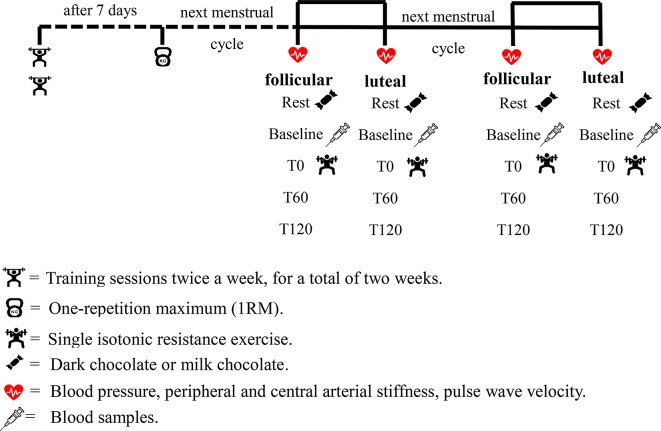
Thirty-one healthy women (aged 20-30 years) with regular menstrual cycles completed a randomized, crossover study (conducted at National Chung Cheng University, Sep-Dec 2023). Participants consumed either 85% dark chocolate or milk chocolate (1 g/kg body weight) before high-intensity resistance exercise during the early follicular (days 2-5) and mid-luteal (days 18-24) phases of two menstrual cycles. Finger-toe pulse wave velocity (ftPWV), arterial stiffness, blood pressure, and plasma NO levels were measured at rest, 2 h after chocolate consumption (baseline), immediately post-exercise (T0), and at 60 (T60) and 120 (T120) minutes post-exercise.
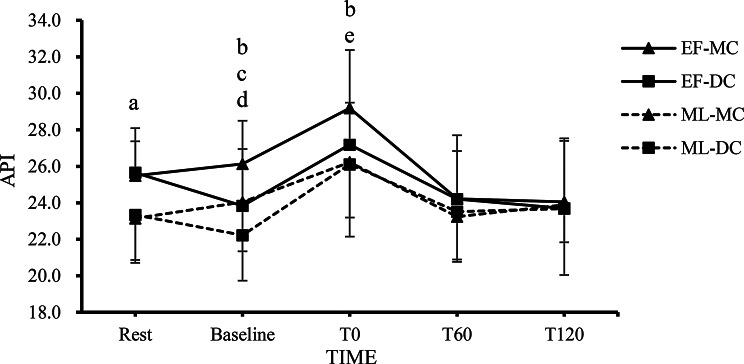
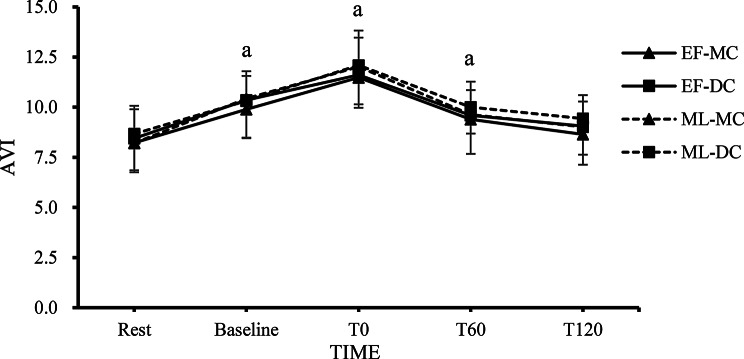
Dark chocolate supplementation significantly increased NO levels and reduced systolic blood pressure (SBP), ftPWV, and arterial pressure volume index (API) (p < 0.05) compared to milk chocolate across both menstrual phases. During the early follicular phase, dark chocolate also attenuated exercise-induced increases in arterial stiffness and blood pressure (p < 0.05).
85% dark chocolate supplementation may reduce the negative vascular effects of high-intensity resistance exercise, particularly by lowering blood pressure, arterial stiffness, and API, especially in the early follicular phase. These findings suggest that dark chocolate could be a practical, non-pharmacological intervention for improving cardiovascular health in women.
ClinicalTrials.gov, NCT06908941. Registered 19 March 2025 - Retrospectively registered, https://clinicaltrials.gov/study/NCT06908941 .
富含黄烷醇的黑巧克力可能通过降低整个月经周期的动脉僵硬度和血压来维持血管健康。本研究调查了85%黑巧克力对处于卵泡早期和黄体中期的健康女性在进行高强度抗阻运动期间一氧化氮(NO)水平和血管功能的影响。
31名月经周期规律的健康女性(年龄20 - 30岁)完成了一项随机交叉研究(于2023年9月至12月在国立中正大学进行)。在两个月经周期的卵泡早期(第2 - 5天)和黄体中期(第18 - 24天)进行高强度抗阻运动前,参与者分别食用85%黑巧克力或牛奶巧克力(1克/千克体重)。在静息状态、食用巧克力2小时后(基线)、运动后即刻(T0)以及运动后60分钟(T60)和120分钟(T120)测量手指至脚趾脉搏波速度(ftPWV)、动脉僵硬度、血压和血浆NO水平。
与牛奶巧克力相比,在两个月经周期中,补充黑巧克力均显著提高了NO水平,并降低了收缩压(SBP)、ftPWV和动脉压力容积指数(API)(p < 0.05)。在卵泡早期,黑巧克力还减弱了运动引起的动脉僵硬度和血压升高(p < 0.05)。
补充85%黑巧克力可能减轻高强度抗阻运动对血管的负面影响,特别是通过降低血压、动脉僵硬度和API,尤其是在卵泡早期。这些发现表明,黑巧克力可能是一种改善女性心血管健康的实用非药物干预措施。
ClinicalTrials.gov,NCT06908941。于2025年3月19日注册 - 追溯注册,https://clinicaltrials.gov/study/NCT06908941 。