Pan Yinghuan, Liu Zeyu, Tu Ruxin, Feng Xianjing, Yu Fang, Wei Minping, Feng Jie, Xie Weijia, Deng Bi, Xia Jian, Yin Jun
Department of Neurology, Xiangya Hospital, Central South University, Changsha, Hunan, China.
Clinical Research Center for Cerebrovascular Disease of Hunan Province, Central South University, Changsha, Hunan, China.
Sci Rep. 2025 Apr 21;15(1):13672. doi: 10.1038/s41598-025-97538-7.
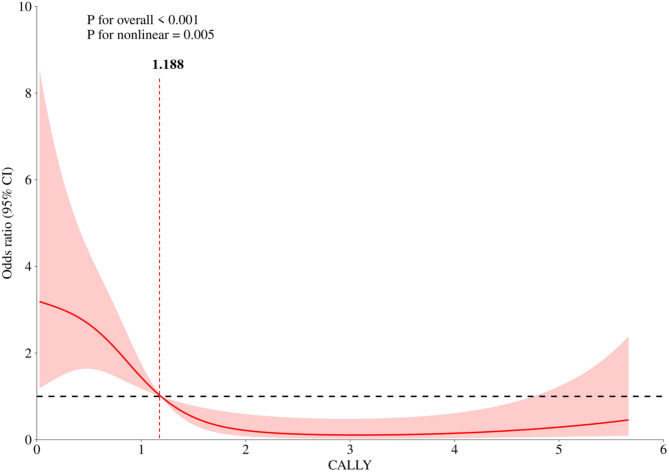
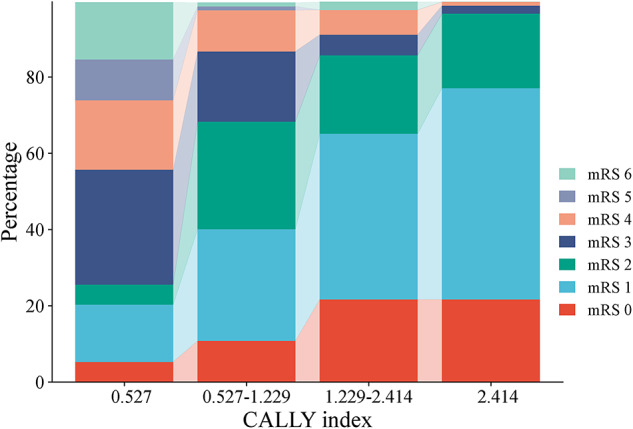
This study aims to evaluate the predictive capability of CRP-albumin-lymphocyte (CALLY) index in relation to hemorrhagic transformation (HT) and functional outcome in acute ischemic stroke (AIS). A total of 439 AIS patients were included in this analysis. Multivariate logistic regression was conducted to examine the relationship between the CALLY index, HT, and functional outcomes. To address its non-linear association, a restricted cubic spline (RCS) model identified an optimal threshold for the CALLY index. Subgroup analyses further explored the association between the CALLY index and HT. The receiver operating characteristic (ROC) curve, the net reclassification index (NRI), and the integrated discrimination index (IDI) were used to assess and compare the predictive performance of the CALLY index with established models for HT. Furthermore, mediation analysis was performed to elucidate the causal pathways linking the CALLY index, HT, and functional outcomes. Among the participants, 9.79% (43/439) experienced HT, and 49.32% (182/369) encountered adverse outcomes. A higher CALLY index was associated with a lower risk of developing HT (OR 0.449, 95% CI 0.283-0.713) and poor outcome (OR 0.691, 95% CI 0.558-0.855). RCS curves demonstrated an increased risk of HT when the CALLY index fell below 1.188. Compared to existing HT prediction models, the CALLY index demonstrates superior predictive performance, with an AUC of 0.746. Furthermore, the CALLY index exhibits improved reclassification ability, as indicated by enhanced NRI and IDI values. The CALLY index independently predicts HT and adverse outcomes in AIS, demonstrating superior accuracy to existing risk scores and offering a practical biomarker for clinical prognosis.
本研究旨在评估C反应蛋白-白蛋白-淋巴细胞(CALLY)指数对急性缺血性卒中(AIS)出血性转化(HT)及功能结局的预测能力。本分析共纳入439例AIS患者。采用多因素logistic回归分析来检验CALLY指数、HT及功能结局之间的关系。为处理其非线性关联,采用受限立方样条(RCS)模型确定CALLY指数的最佳阈值。亚组分析进一步探讨CALLY指数与HT之间的关联。采用受试者工作特征(ROC)曲线、净重新分类指数(NRI)和综合判别指数(IDI)来评估和比较CALLY指数与已建立的HT预测模型的预测性能。此外,进行中介分析以阐明连接CALLY指数、HT及功能结局的因果途径。在参与者中,9.79%(43/439)发生HT,49.32%(182/369)出现不良结局。较高的CALLY指数与发生HT的较低风险(OR 0.449,95%CI 0.283-0.713)及不良结局(OR 0.691,95%CI 0.558-0.855)相关。RCS曲线显示当CALLY指数低于1.188时HT风险增加。与现有的HT预测模型相比,CALLY指数显示出更好的预测性能,AUC为0.746。此外,如NRI和IDI值升高所示,CALLY指数具有更好的重新分类能力。CALLY指数可独立预测AIS中的HT和不良结局,显示出比现有风险评分更高的准确性,并为临床预后提供了一种实用的生物标志物。