Niazi Sinaz, Gandomi Farzaneh, Soufivand Parviz, Ghazaleh Leila
Sports Injuries and Corrective Exercises Department, Sport Sciences Faculty Razi University Kermanshah Iran.
Rheumatology Department, Clinical Research Development Center, Imam Reza Hospital Kermanshah University of Medical Sciences Kermanshah Iran.
Health Sci Rep. 2025 Apr 21;8(4):e70748. doi: 10.1002/hsr2.70748. eCollection 2025 Apr.
Nonspecific chronic neck pain (ns-CNP) is a common cause of disability among office workers. However, the effectiveness of tissue release and stretching strategies in managing pain and fatigue of neck muscles in employees affected by ns-CNP has not been assessed.
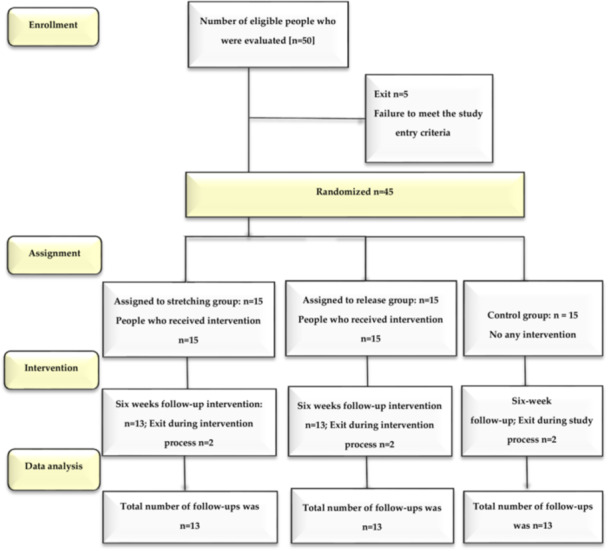
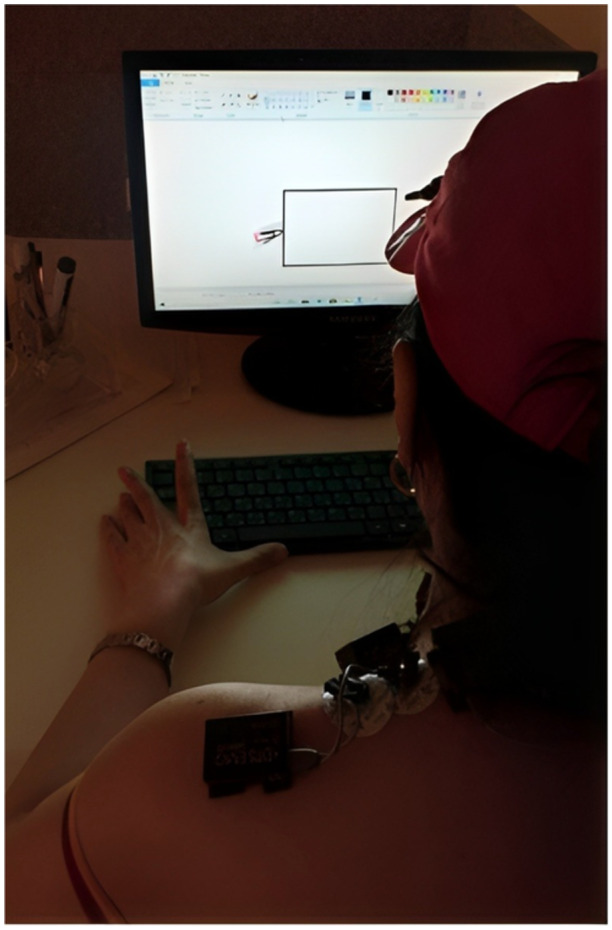
Thirty-nine employees who suffered from ns-CNP were randomly assigned to stretching, tissue release interventions or control group ( = 13). Neck pain and fatigue in neck extensors, upper trapezius, and sternocleidomastoid muscles were measured during 40 min of typing with a 45-degree head flexion at baseline and immediately after a 6-week intervention using visual analog scale and surface electromyography.
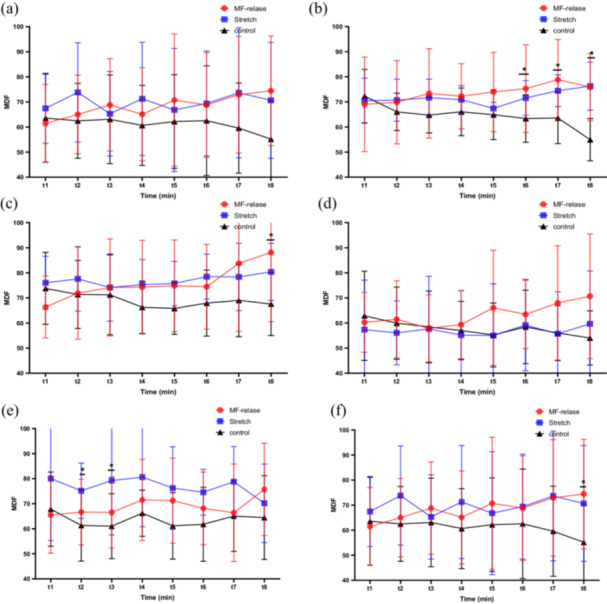
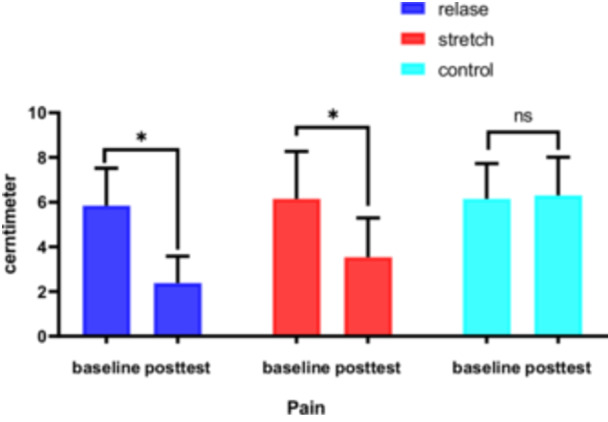
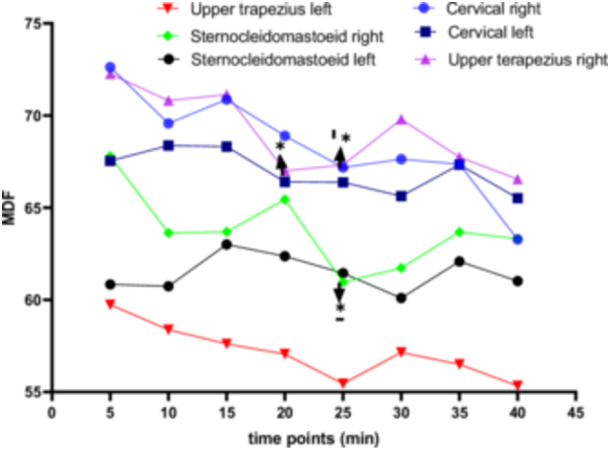
Pain significantly decreased after 6 weeks of both interventions ( < 0.05). There were no significant within-group differences for right cervical muscle fatigue in the intervention groups, but a significant difference was noted in the control group at the 25th and 40th minutes ( < 0.05). Additionally, a significant difference was observed between the release and control group at the 30th, 35th, and 40th minutes ( < 0.05). Left cervical muscle fatigue significantly decreased at the 25th and 40th minutes only for the release group ( < 0.05). A significant difference was observed between the release and control groups at the 40th minute for the right upper trapezius ( < 0.05).
Only the stretching group showed a significant difference with the control in the left sternocleidomastoid at the 10th and 15th minutes, and the release group with the control in the last 5-min. Stretching and release interventions could control neck pain and muscle fatigue in the 45-degree head flexion position.
非特异性慢性颈部疼痛(ns-CNP)是上班族残疾的常见原因。然而,组织松解和拉伸策略对受ns-CNP影响的员工颈部肌肉疼痛和疲劳的管理效果尚未得到评估。
39名患有ns-CNP的员工被随机分配到拉伸组、组织松解干预组或对照组(每组13人)。在基线时以及6周干预结束后,使用视觉模拟量表和表面肌电图,在45度头部前屈打字40分钟期间测量颈部伸肌、上斜方肌和胸锁乳突肌的颈部疼痛和疲劳情况。
两种干预6周后疼痛均显著降低(P<0.05)。干预组右侧颈部肌肉疲劳在组内无显著差异,但对照组在第25分钟和第40分钟有显著差异(P<0.05)。此外,在第30分钟、第35分钟和第40分钟,松解组与对照组之间存在显著差异(P<0.05)。仅松解组在第25分钟和第40分钟时左侧颈部肌肉疲劳显著降低(P<0.05)。在第40分钟时,右侧上斜方肌松解组与对照组之间存在显著差异(P<0.05)。
仅拉伸组在第10分钟和第15分钟时,左侧胸锁乳突肌与对照组相比有显著差异,松解组在最后5分钟与对照组相比有显著差异。拉伸和松解干预可控制45度头部前屈位时的颈部疼痛和肌肉疲劳。