Li Haiting, Moosavian Seyedeh Parisa, Ghanbari Niloufar, Mirlohi Seyed Hossein, Rahimlou Mehran
Department of Physical Education, Henan University of Animal Husbandry and Economy, No.6, Longzihu North Road, Zhengdong New District, Zhengzhou, Henan Province, 450000, China.
Department of Community Nutrition, Vice-Chancellery for Health, Shiraz University of Medical Sciences, Shiraz, Iran.
BMC Nutr. 2025 Apr 22;11(1):83. doi: 10.1186/s40795-025-01069-3.
Anemia, characterized by a deficiency in red blood cells or hemoglobin, remains a significant public health concern worldwide, particularly among children and adolescents. Inadequate dietary intake, including micronutrient deficiencies, has been associated with anemia. Dietary diversity, characterized by the consumption of a variety of food groups, may contribute to adequate iron intake and a reduced likelihood of anemia. This systematic review and meta-analysis examined the association between dietary diversity and odds of anemia among children and adolescents.
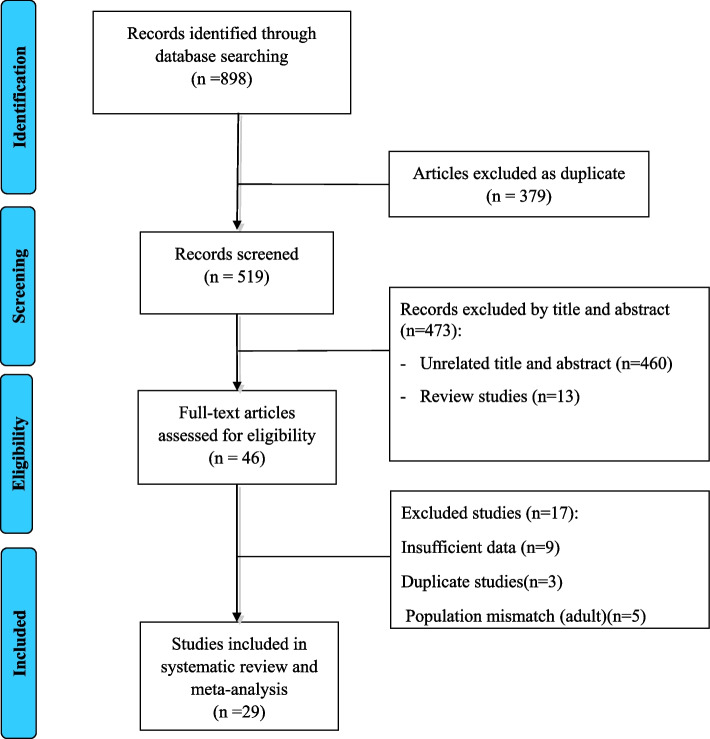
A comprehensive search of electronic databases (PubMed, Web of Science, Scopus) was conducted for observational studies (cross-sectional or case-control) published before April 2024 that assessed the association between dietary diversity and anemia among children and adolescents. The odds of Bias in Non-Randomized Studies of Exposures (ROBINS-E) tool was used to assess the quality of included studies, ensuring a standardized and rigorous evaluation process. Subgroup analyses explored potential variations in this association based on age group, geographic location, and type of anemia.
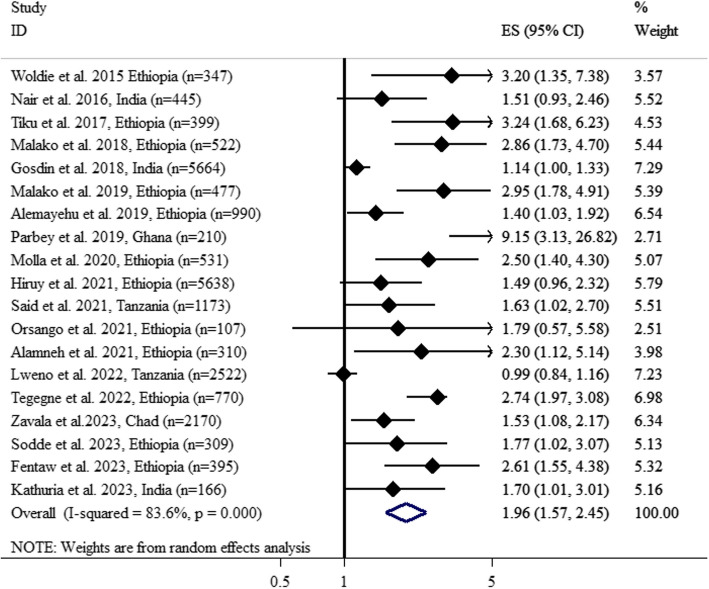
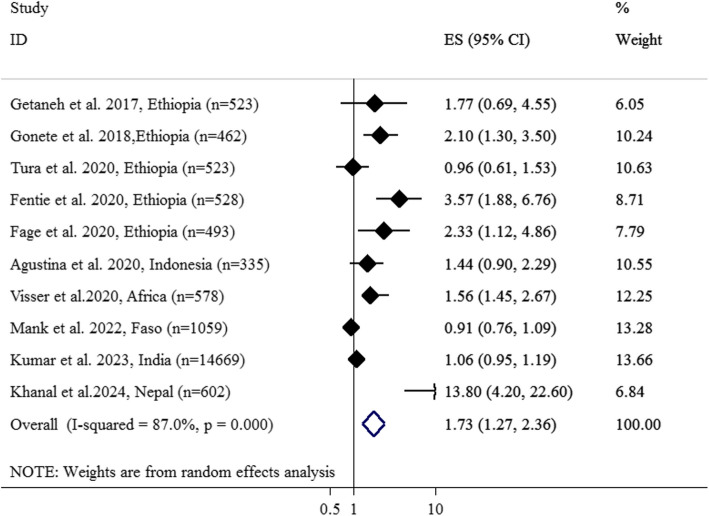
Nineteen studies (18 cross-sectional and 1 case-control) examined the association between dietary diversity and anemia in children under 5 years old. Pooled analysis revealed a significant association between lower dietary diversity and higher odds of anemia among children aged 0 to 5 years (OR = 1.96; 95% CI: 1.57, 2.45; I = 83.6%, τ2 = 0.38 P < 0.001). Ten studies examined the relationship in children and adolescents aged 6-18 years, showing a similar pattern (OR = 1.73; 95% CI: 1.27, 2.36; I = 87%, τ2 = 0.44; P < 0.001). Subgroup analyses suggested that the association varied across specific geographic regions.
This meta-analysis indicates a significant association between lower dietary diversity and higher odds of anemia in children and adolescents. These findings underscore the importance of dietary diversity as a potential factor related to anemia prevalence. Future research should focus on standardizing dietary diversity assessment methods and incorporating detailed dietary quality measurements.
贫血以红细胞或血红蛋白缺乏为特征,仍然是全球范围内一个重大的公共卫生问题,尤其是在儿童和青少年中。饮食摄入不足,包括微量营养素缺乏,与贫血有关。饮食多样性以食用多种食物类别为特征,可能有助于充足的铁摄入并降低贫血的可能性。本系统评价和荟萃分析探讨了饮食多样性与儿童和青少年贫血几率之间的关联。
对电子数据库(PubMed、Web of Science、Scopus)进行全面检索,查找2024年4月之前发表的观察性研究(横断面研究或病例对照研究),这些研究评估了饮食多样性与儿童和青少年贫血之间的关联。使用暴露的非随机研究中的偏倚几率(ROBINS-E)工具评估纳入研究的质量,确保评估过程标准化且严格。亚组分析基于年龄组、地理位置和贫血类型探讨了这种关联的潜在差异。
19项研究(18项横断面研究和1项病例对照研究)考察了5岁以下儿童饮食多样性与贫血之间的关联。汇总分析显示,0至5岁儿童饮食多样性较低与贫血几率较高之间存在显著关联(OR = 1.96;95% CI:1.57,2.45;I = 83.6%,τ2 = 0.38;P < 0.001)。10项研究考察了6至18岁儿童和青少年的这种关系,呈现出类似模式(OR = 1.73;95% CI:1.27,2.36;I = 87%,τ2 = 0.44;P < 0.001)。亚组分析表明,这种关联在特定地理区域有所不同。
这项荟萃分析表明,儿童和青少年饮食多样性较低与贫血几率较高之间存在显著关联。这些发现强调了饮食多样性作为与贫血患病率相关的潜在因素的重要性。未来的研究应侧重于使饮食多样性评估方法标准化,并纳入详细的饮食质量测量。