Yao Shuang, Zhang Jun, Pan Lili, Yu Yang, Luo Guanghua
Clinical Medical Research Center, The Third Affiliated Hospital of Soochow University, Changzhou, China.
Microbiol Spectr. 2025 Jun 3;13(6):e0023725. doi: 10.1128/spectrum.00237-25. Epub 2025 Apr 24.
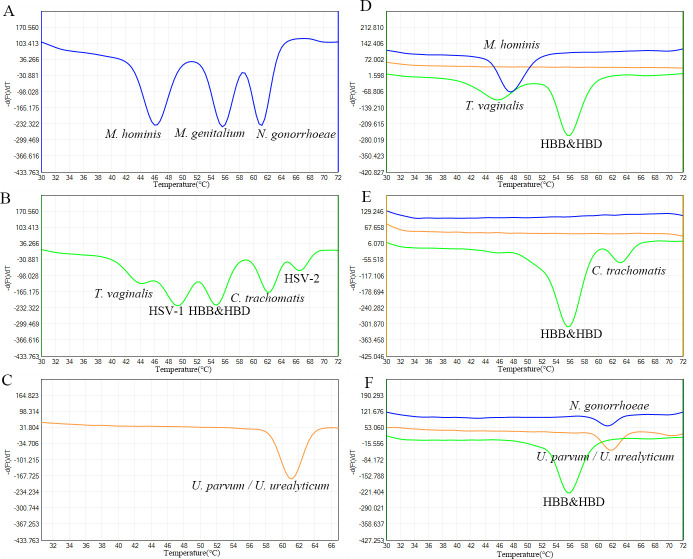
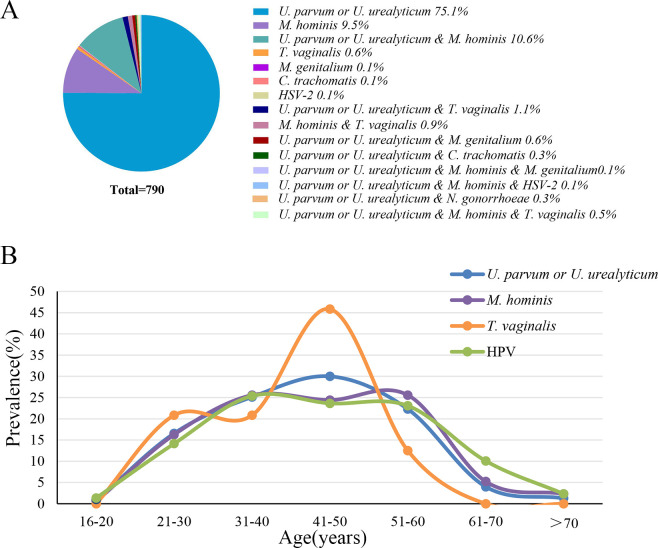
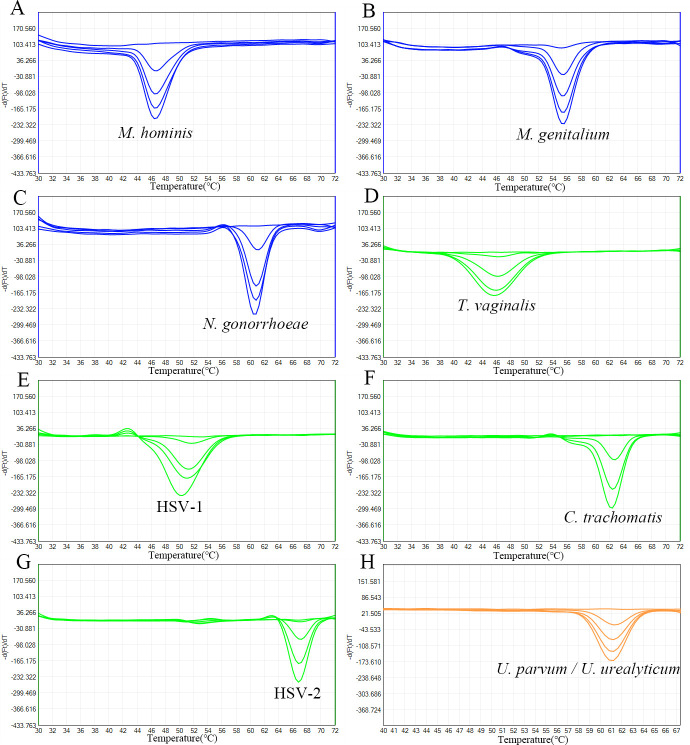
This study developed a two-dimensional PCR (2D-PCR) method for simultaneous detection of nine sexually transmitted disease pathogens (STDPs) in cervical brush samples collected after human papillomavirus (HPV) screening, aiming to evaluate co-infection rates and epidemiological trends. The 2D-PCR assay was optimized under single-tube closed conditions, with sensitivity and accuracy validated. The prevalent nine STDPs were assessed in 2,193 females undergoing routine gynecological inspections and HPV screening. Statistical analysis revealed correlations between HPV genotypes and identified pathogens. Results showed detection limits (LODs) of 10²-10³ copies/μL for STDPs, with high concordance to triplex real-time PCR (Kappa = 0.90). Overall, 48.6% of samples tested positive for ≥1 pathogen, with 36.02% positive for ≥1 STDP. The most prevalent STDPs were / (27.04%), (3.42%), and (0.23%). HPV-positive individuals exhibited higher STDP infection rates (46.32%) than HPV-negative counterparts (32.86%). Significant associations were observed between HPV infection and or . HPV 52 was the predominant genotype in STDP-infected individuals (6.2%), with genotypes 52, 53, 6, 11, 42, 43, and 61 significantly more prevalent in STDP-positive groups. The 2D-PCR method proved sensitive and specific for multiplex STDPs detection, while epidemiological data highlighted significant STDP-HPV correlations.
This study introduces the first single-tube 2D-PCR method for efficient, high-throughput detection of nine STDPs, addressing a critical gap in co-infection diagnostics. The high prevalence of STDPs and their strong association with human papillomavirus (HPV) infection underscore the clinical relevance of co-pathogen screening, particularly in HPV-positive populations. The significant linkage between /, , and HPV infection suggests potential synergistic mechanisms influencing HPV persistence or progression. Notably, the predominance of HPV 52 and increased prevalence of genotypes 53, 6, 11, 42, 43, and 61 in STDP-infected individuals highlight how pathogen co-infections may modulate HPV genotype distribution. These findings provide a robust tool for integrated STDPs/HPV screening and offer epidemiological insights to guide targeted prevention strategies, ultimately enhancing management of sexually transmitted infections and HPV-related cervical disease.
本研究开发了一种二维聚合酶链反应(2D-PCR)方法,用于同时检测人乳头瘤病毒(HPV)筛查后采集的宫颈刷样本中的九种性传播疾病病原体(STDPs),旨在评估合并感染率和流行病学趋势。2D-PCR检测在单管封闭条件下进行了优化,并验证了其灵敏度和准确性。对2193名接受常规妇科检查和HPV筛查的女性进行了常见的九种STDPs评估。统计分析揭示了HPV基因型与已鉴定病原体之间的相关性。结果显示,STDPs的检测限(LOD)为10² - 10³拷贝/μL,与三重实时PCR的一致性较高(Kappa = 0.90)。总体而言,48.6%的样本检测出≥1种病原体呈阳性,36.02%的样本检测出≥1种STDP呈阳性。最常见的STDPs是 /(27.04%)、 (3.42%)和 (0.23%)。HPV阳性个体的STDP感染率(46.32%)高于HPV阴性个体(32.86%)。在HPV感染与 或 之间观察到显著关联。HPV 52是STDP感染个体中的主要基因型(6.2%),52、53、6、11、42、43和61基因型在STDP阳性组中显著更常见。2D-PCR方法被证明对多种STDPs检测具有灵敏性和特异性,而流行病学数据突出了STDP与HPV之间的显著相关性。
本研究引入了第一种用于高效、高通量检测九种STDPs的单管2D-PCR方法,填补了合并感染诊断中的关键空白。STDPs的高流行率及其与人类乳头瘤病毒(HPV)感染的强关联强调了共同病原体筛查的临床相关性,特别是在HPV阳性人群中。 /、 与HPV感染之间的显著联系表明存在影响HPV持续感染或进展的潜在协同机制。值得注意的是,HPV 52的优势以及53、6、11、42、43和61基因型在STDP感染个体中的患病率增加,突出了病原体合并感染可能如何调节HPV基因型分布。这些发现为STDPs/HPV联合筛查提供了有力工具,并提供了流行病学见解以指导针对性预防策略,最终加强性传播感染和HPV相关宫颈疾病的管理。