Digman Alexis, Pajarillo Edward, Kim Sanghoon, Ajayi Itunu, Son Deok-Soo, Aschner Michael, Lee Eunsook
Department of Pharmaceutical Sciences, Florida A&M University, Tallahassee, Florida, USA.
Department of Biochemistry, Cancer Biology, Neuroscience and Pharmacology, Meharry Medical College, Nashville, Tennessee, USA.
J Biol Chem. 2025 Apr 23;301(6):108529. doi: 10.1016/j.jbc.2025.108529.
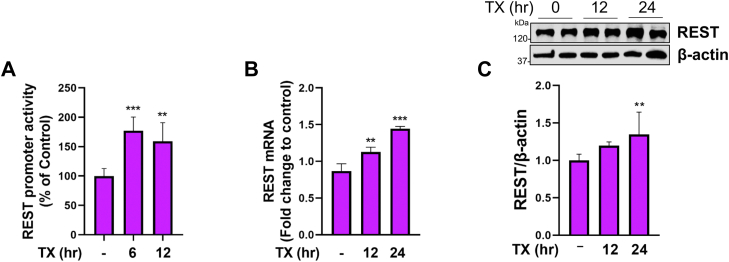
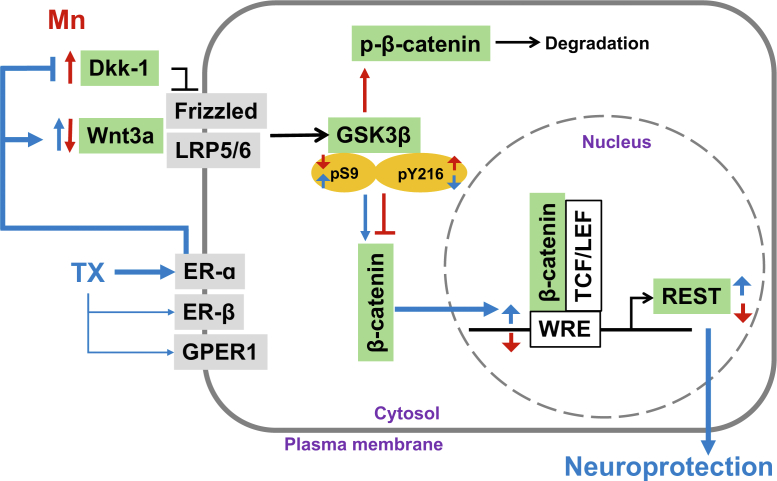
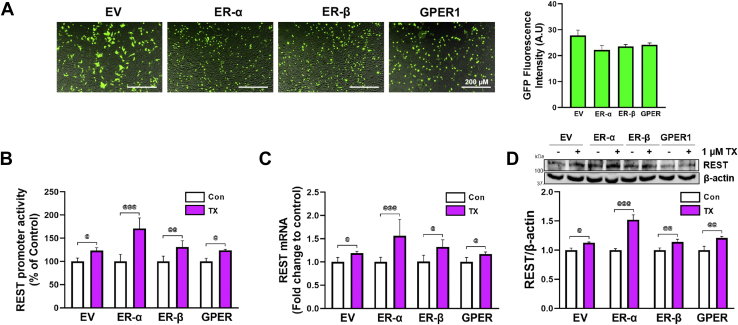
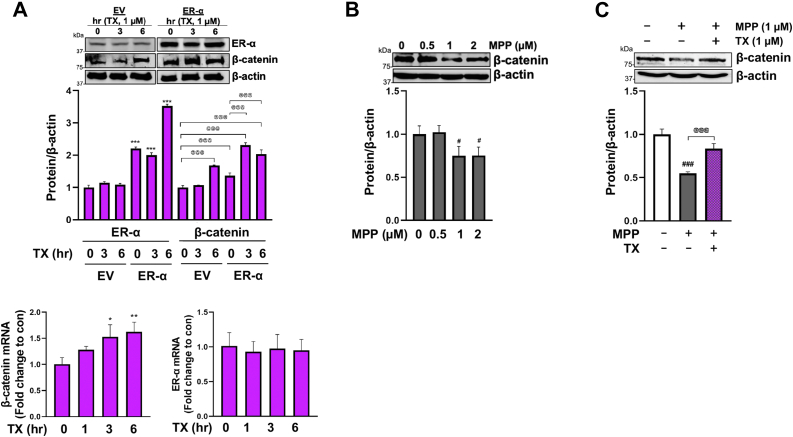
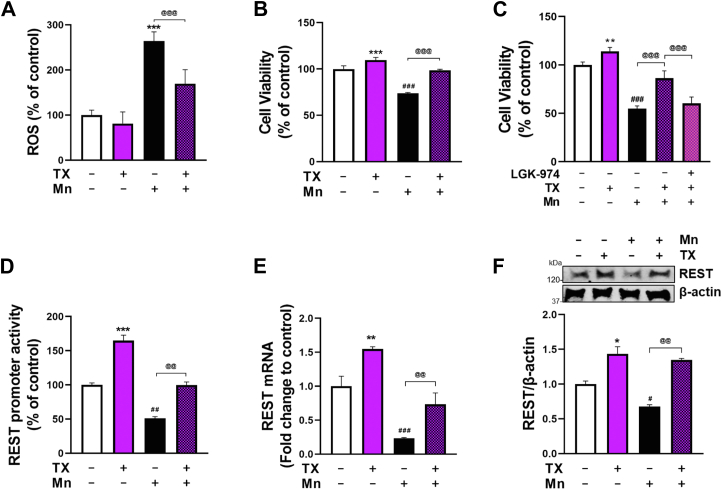
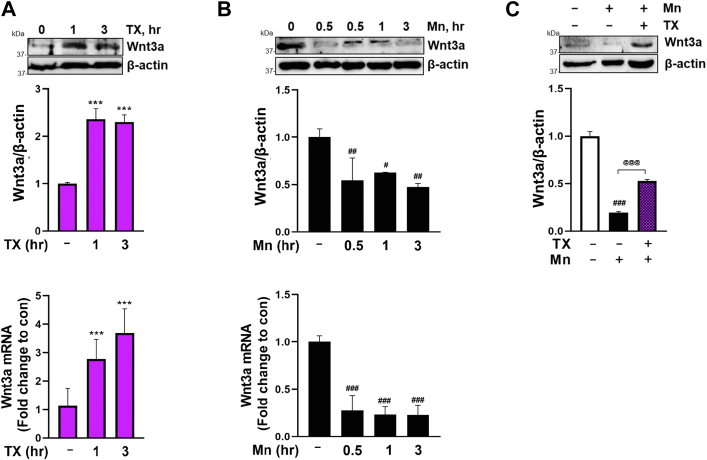
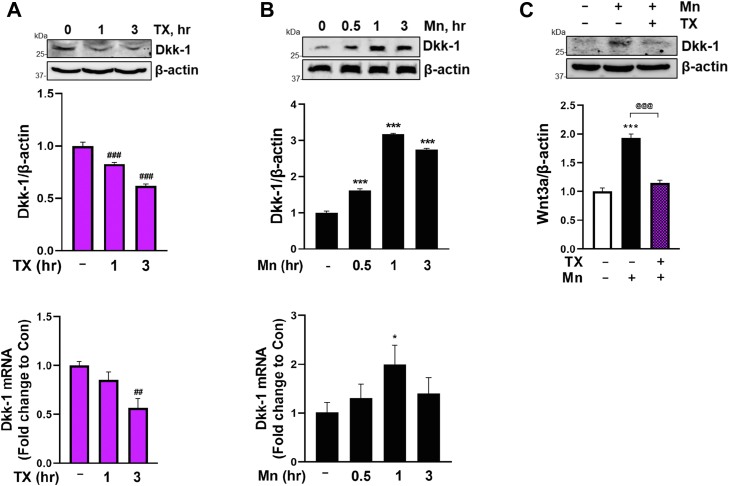
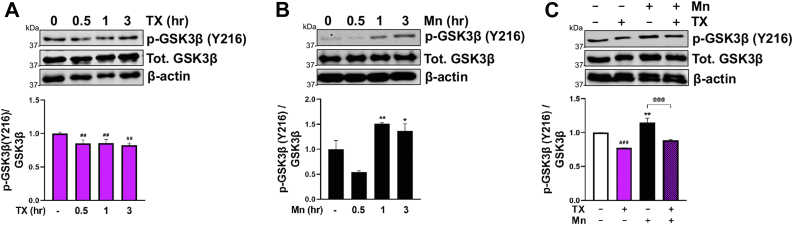
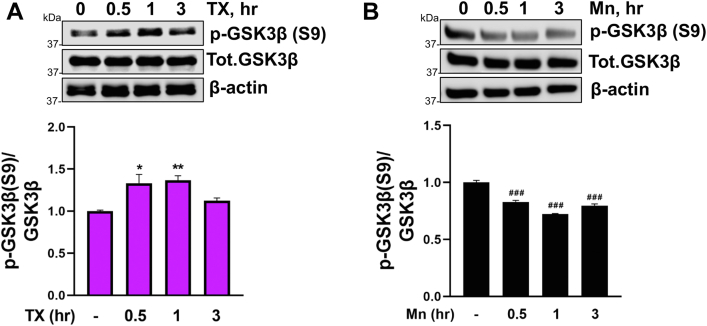
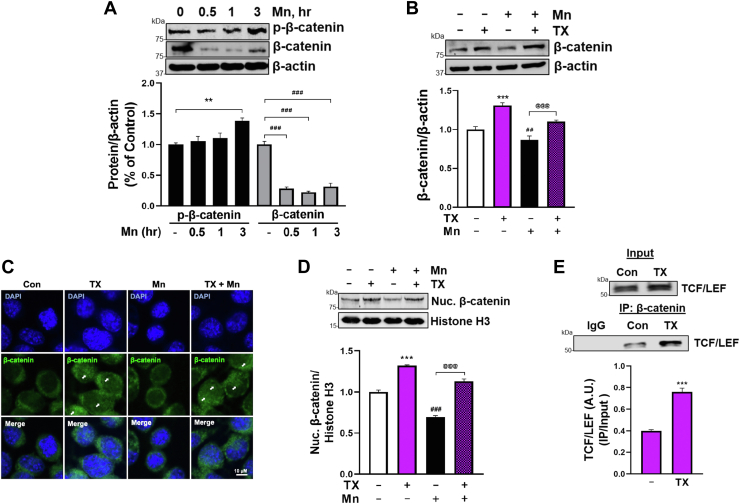
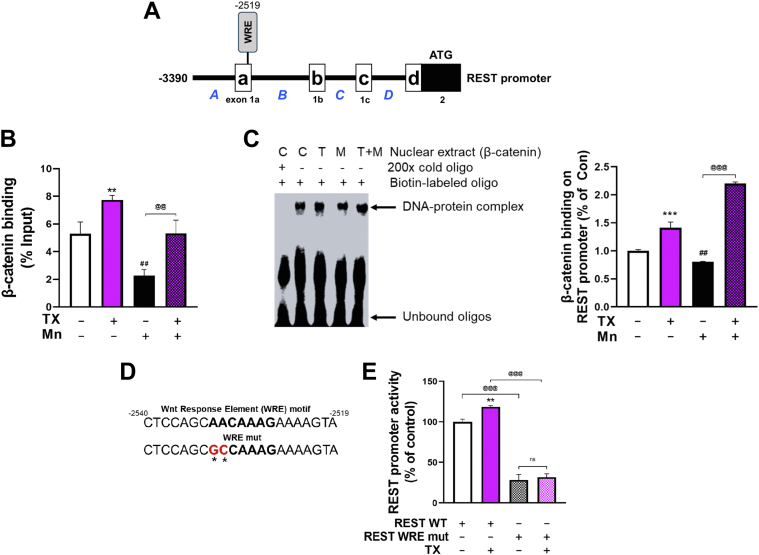
Chronic exposure to elevated levels of manganese (Mn) causes a neurological disorder referred to as manganism, with symptoms resembling Parkinson's disease (PD). The repressor element-1 silencing transcription factor (REST) has been shown to be neuroprotective in several neurological disorders, including PD, suggesting that identifying REST upregulation mechanisms is an important avenue for the development of novel therapeutics. 17β-estradiol (E2) activates the Wnt/β-catenin signaling, which is known to increase REST transcription. E2 and tamoxifen (TX), a selective estrogen receptor modulator, exerted protection against Mn toxicity. In this study, we tested if TX upregulates REST potentially via Wnt/β-catenin signaling in Cath.a-differentiated (CAD) neuronal cells using luciferase assay, qPCR, Western blot analysis, immunocytochemistry, mutagenesis, chromatin immunoprecipitation, and electrophoretic mobility shift assay. TX (1 μM) increased REST promoter activities and mRNA/protein levels and attenuated Mn (250 μM)-decreased REST transcription in parallel with TX's protective effects against Mn-induced toxicity, potentially via Wnt. TX activated Wnt/β-catenin signaling by preventing β-catenin degradation via inactivation of glycogen synthase kinase-3 beta, leading to increased β-catenin levels and its nuclear translocation and binding to T-cell factor/lymphoid enhancer binding factor sites on Wnt-responsive elements (WRE) of the REST promoter. Mutation of WRE abolished TX-induced REST promoter activity. TX-induced Wnt signaling activation was primarily via the estrogen receptor (ER)-α, although ER-β and G protein-coupled estrogen receptor 1 also mediated TX's action on REST transcription. These findings underscore the critical role of Wnt/β-catenin signaling in TX-induced REST transcription, affording protection mechanisms against Mn toxicity and neurological disorders associated with REST dysfunction.
长期暴露于高水平的锰(Mn)会导致一种称为锰中毒的神经紊乱,其症状与帕金森病(PD)相似。抑制元件1沉默转录因子(REST)已被证明在包括PD在内的几种神经紊乱中具有神经保护作用,这表明确定REST上调机制是开发新型治疗方法的重要途径。17β-雌二醇(E2)激活Wnt/β-连环蛋白信号通路,已知该通路会增加REST转录。E2和他莫昔芬(TX),一种选择性雌激素受体调节剂,对锰毒性具有保护作用。在本研究中,我们使用荧光素酶测定、定量聚合酶链反应(qPCR)、蛋白质免疫印迹分析、免疫细胞化学、诱变、染色质免疫沉淀和电泳迁移率变动分析,测试了TX是否可能通过Wnt/β-连环蛋白信号通路在Cath.a分化(CAD)神经元细胞中上调REST。TX(1μM)增加了REST启动子活性以及mRNA/蛋白质水平,并减弱了锰(250μM)导致的REST转录减少,这与TX对锰诱导毒性的保护作用同时发生,可能是通过Wnt途径。TX通过使糖原合酶激酶-3β失活来阻止β-连环蛋白降解,从而激活Wnt/β-连环蛋白信号通路,导致β-连环蛋白水平增加及其核转位,并与REST启动子的Wnt反应元件(WRE)上的T细胞因子/淋巴增强子结合因子位点结合。WRE的突变消除了TX诱导的REST启动子活性。TX诱导的Wnt信号通路激活主要通过雌激素受体(ER)-α,尽管ER-β和G蛋白偶联雌激素受体1也介导了TX对REST转录的作用。这些发现强调了Wnt/β-连环蛋白信号通路在TX诱导的REST转录中的关键作用,提供了针对锰毒性和与REST功能障碍相关的神经紊乱的保护机制。