Yan Qiqi, Liu Guiling, Wang Ruifeng, Li Dandan, Wang Deguang
Department of Nephrology, the Second Affiliated Hospital of Anhui Medical University, No.678, Furong Road, Hefei, 230601, China.
J Health Popul Nutr. 2025 Apr 25;44(1):136. doi: 10.1186/s41043-025-00890-7.
Depression is common among patients with chronic kidney disease (CKD) and is associated with poor outcomes. This study aims to develop and validate a nomogram for predicting depression risk in patients with CKD.
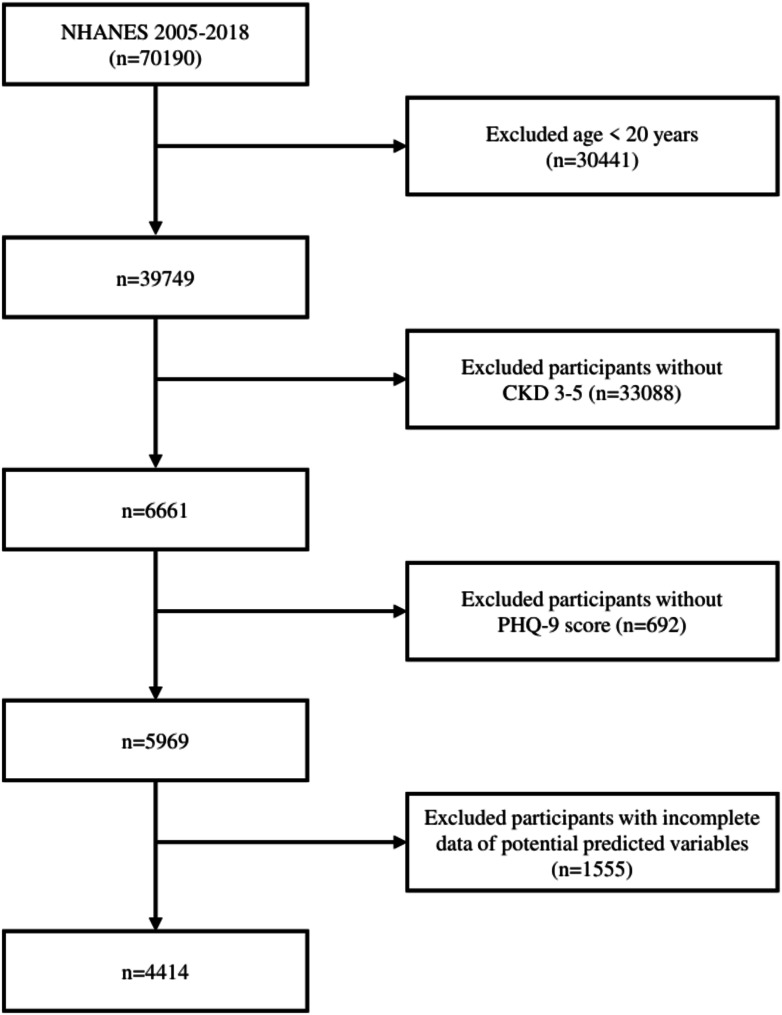
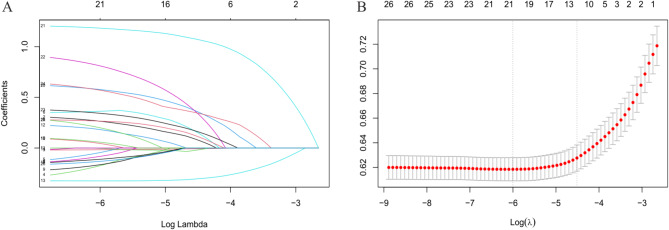
This cross-sectional study utilized data from the 2005-2018 National Health and Nutrition Examination Survey (NHANES) database. Participants were randomly divided into training and validation sets (7:3 ratio). A nomogram was developed based on predictors identified using Least Absolute Shrinkage and Selection Operator (LASSO) regression and multivariate logistic regression. Model performance was evaluated using ROC curves, calibration curves, and decision curve analysis.
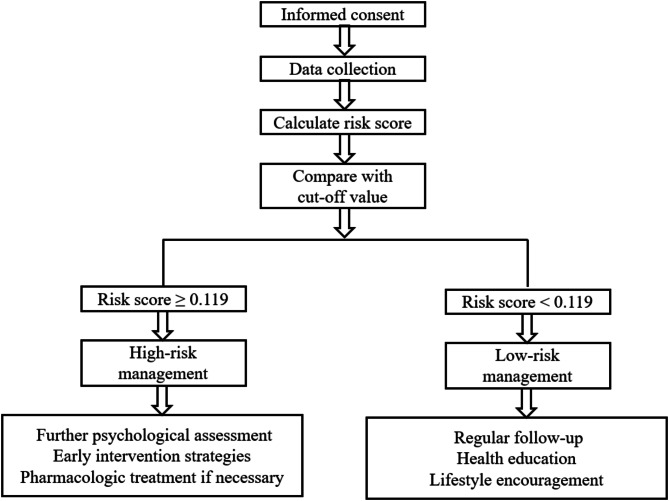
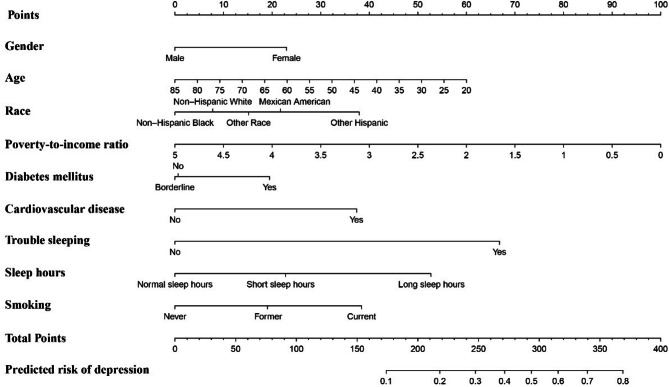
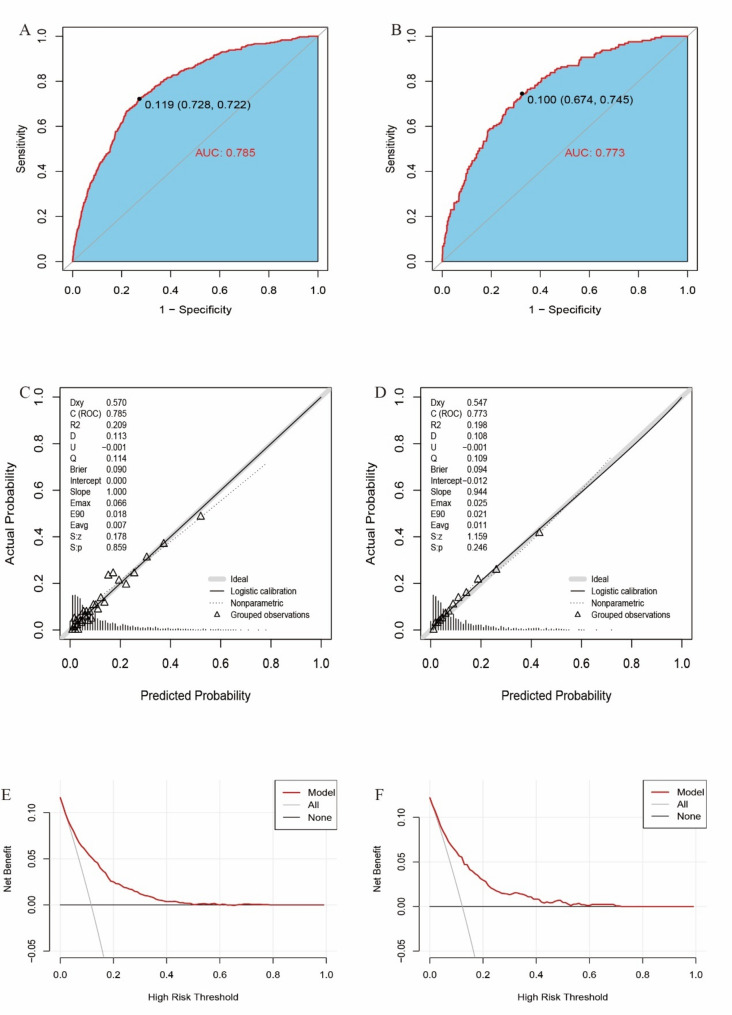
A total of 4414 participants were included. Gender, age, race, poverty-to-income ratio, diabetes mellitus, cardiovascular diseases, trouble sleeping, sleep hours, and smoking were included as predictors in the nomogram. The area under the curve (AUC) of the nomogram for predicting depression risk in patients with CKD was 0.785 (95% CI: 0.761-0.809) in the training set and 0.773 (95% CI: 0.737-0.810) in the validation set. The corrected C-index, calculated using bootstrap resampling, was 0.776, indicating good predictive performance. Calibration curves and decision curve analysis showed good calibration and clinical utility. Subgroup and sensitivity analyses further confirmed the robustness of the nomogram. A web-based risk calculator based on the nomogram was developed to enhance clinical applicability. A flowchart demonstrating the application of the nomogram for risk assessment and clinical decision-making in routine practice is provided.
This nomogram effectively predicts depression risk in patients with CKD and may serve as a user-friendly tool for the early identification of patients with CKD at high risk for depression using key demographic, comorbid, and lifestyle factors.
抑郁症在慢性肾脏病(CKD)患者中很常见,且与不良预后相关。本研究旨在开发并验证一种用于预测CKD患者抑郁风险的列线图。
这项横断面研究利用了2005 - 2018年国家健康与营养检查调查(NHANES)数据库中的数据。参与者被随机分为训练集和验证集(比例为7:3)。基于使用最小绝对收缩和选择算子(LASSO)回归及多变量逻辑回归确定的预测因子开发了列线图。使用受试者工作特征曲线(ROC曲线)、校准曲线和决策曲线分析来评估模型性能。
共纳入4414名参与者。性别、年龄、种族、贫困与收入比、糖尿病、心血管疾病、睡眠困难、睡眠时间和吸烟被纳入列线图的预测因子。预测CKD患者抑郁风险的列线图在训练集中的曲线下面积(AUC)为0.785(95%置信区间:0.761 - 0.809),在验证集中为0.773(95%置信区间:0.737 - 0.810)。使用自助重采样计算的校正C指数为0.776,表明具有良好的预测性能。校准曲线和决策曲线分析显示出良好的校准和临床实用性。亚组分析和敏感性分析进一步证实了列线图的稳健性。基于列线图开发了一个基于网络的风险计算器以提高临床适用性。提供了一个流程图,展示了列线图在常规实践中用于风险评估和临床决策的应用。
该列线图可有效预测CKD患者的抑郁风险,并可作为一种用户友好的工具,利用关键的人口统计学、合并症和生活方式因素早期识别CKD中抑郁高风险患者。